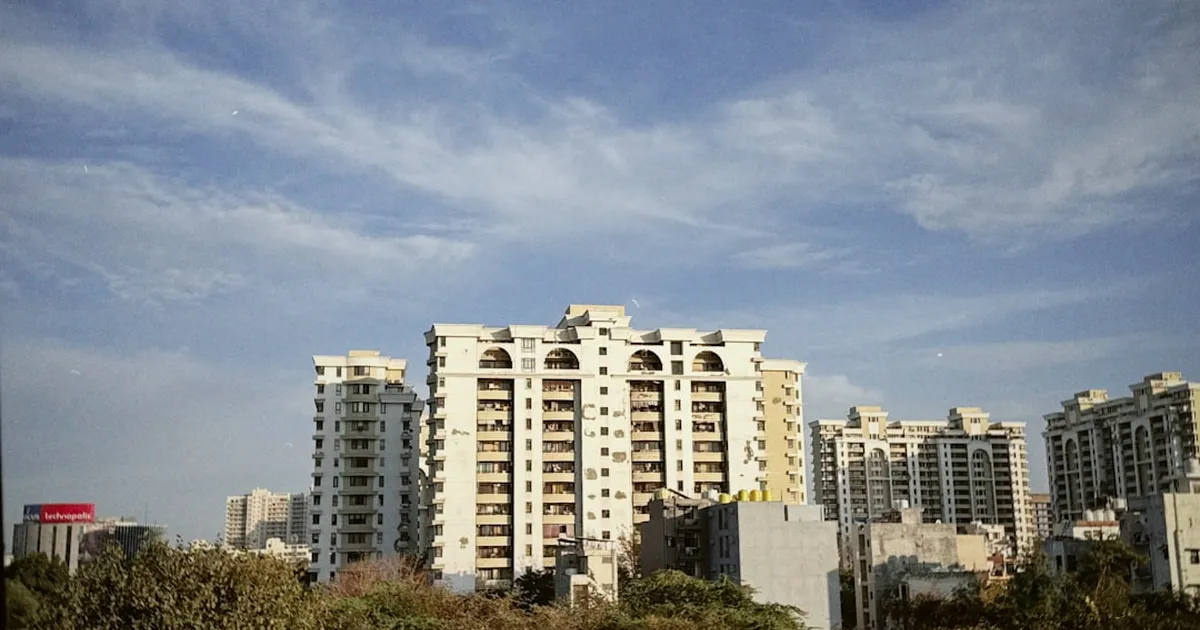
Rera Approved Projects In Gurugram 2026: The Ultimate Buyer's Checklist

Why Every Gurugram Homebuyer Needs This Checklist in 2026
Gurugram's real estate market is on fire — and not always in a good way. Property prices on Golf Course Extension Road jumped from ₹24,855 per sq ft in 2024 to ₹37,899 per sq ft in 2025. The Dwarka Expressway belt has seen circle rates surge up to 67% in a single revision cycle. Southern Peripheral Road prices have climbed 125% since December 2022. The numbers are extraordinary. But so are the risks for buyers who skip due diligence.
This guide is written for first-time homebuyers, upgraders, NRIs, and seasoned investors looking at RERA-approved projects in Gurugram in 2026. It covers everything: how the Haryana RERA system actually works, what RERA registration does and does not protect you from, a sector-by-sector price map, a verified project shortlist, and a 25-point checklist you should complete before signing anything. We've also included the honest negatives — because a guide with zero warnings is just advertising.
RERA registration is the starting line, not the finish line. Many buyers assume that seeing a RERA number on a brochure means the project is safe. It doesn't. It means the project is registered and must follow disclosure rules. Whether the builder actually follows those rules is a different question — and this checklist will show you exactly how to find out.
Understanding HRERA Gurugram: The Basics Every Buyer Must Know
Haryana is unique in India — it operates two separate RERA authorities. HRERA Gurugram (headquartered in Gurugram, under the jurisdiction of GGM) handles all real estate projects within Gurugram district. HRERA Panchkula handles the rest of Haryana. If you're buying anywhere in Gurugram — Sector 48, Sector 103, Golf Course Road, Dwarka Expressway — your project falls under HRERA Gurugram. Always verify on the correct portal.
The official website is haryanarera.gov.in. All RERA-registered projects in Gurugram will have registration numbers that typically follow the format GGM/[Project No.]/[Promoter No.]/[Year]/[Serial No.] — for example, GGM/993/725/2025/96 or GGM/869/601/2024/96. Older projects may have legacy formats like "HARERA/GGM/XXX" or simply a numeric code like "100 of 2025." If a builder gives you a registration number that doesn't match these formats, verify it manually on the portal before proceeding.
What RERA Actually Guarantees (And What It Doesn't)
Under the Real Estate (Regulation and Development) Act, 2016, RERA registration enforces several critical protections:
- 70% Escrow Rule (Section 4): Developers must deposit 70% of all buyer collections into a dedicated escrow account, to be used only for land and construction costs of that specific project. This prevents builders from diverting your money to other projects — one of the most common pre-RERA abuses.
- 10% Cap Before Agreement (Section 13): A builder cannot take more than 10% of the apartment value as booking or advance payment before executing a registered Agreement for Sale. If someone asks for 20–30% "token" before paperwork, that's illegal under RERA.
- Quarterly Progress Reports (QPR): Builders must upload construction progress reports quarterly on the HRERA portal. Buyers can access these for free and track whether construction is on schedule.
- 5-Year Defect Liability Period (DLP): After possession, the builder is liable for structural defects for five years. Any defect reported within this window must be rectified at the developer's cost.
- Delay Compensation: If a project is delayed beyond the RERA-registered completion date, buyers are entitled to interest at SBI's MCLR + 2% on amounts paid, or a full refund with interest if they choose to exit.
- Transparent Disclosures: Floor plans, approvals, financials, and timelines must be publicly visible on the HRERA portal for every registered project.
What RERA doesn't guarantee: RERA registration does not guarantee construction quality, timely possession, or that the builder is financially healthy. A project can be RERA-registered and still face delays, financial stress, or quality issues. Several Gurugram projects registered years ago are still undelivered. The checklist below is designed to go beyond RERA registration and assess the actual delivery risk.
Gurugram 2026: Sector-by-Sector Price Map
Before you shortlist projects, understand where prices stand today across Gurugram's key micro-markets. These are current market rates, not circle rates (circle rates are typically 20–40% lower than transaction values in premium sectors).
| Micro-Market / Corridor | Key Sectors | Avg. Price (₹/sq ft) | 3-Year Price Change | Buyer Profile |
|---|---|---|---|---|
| Golf Course Road | 42, 43, 54 | ₹25,000 – ₹45,000+ | +80–90% | Ultra-HNI, luxury end-user |
| Golf Course Extension Road (GCER) | 58, 59, 65, 66 | ₹20,000 – ₹38,000 | +100%+ (from ₹8,800 in 2019) | HNI, senior professionals |
| Southern Peripheral Road (SPR) | 70, 71, 72, 73 | ₹15,000 – ₹20,000 | +125% (Dec 2022–Dec 2025) | Mid-luxury, investment |
| Dwarka Expressway | 99–115 | ₹10,000 – ₹18,000 | +67% (circle rates alone) | End-users, mid-segment investors |
| Sohna Road / New Gurugram | 70–86, 91–95 | ₹6,500 – ₹12,000 | +40–60% | First-time buyers, rental investors |
| DLF Phases / Old Gurgaon | Phase 1–5, Sec 43, 55–56 | ₹8,000 – ₹14,000 | +30–50% | Resale buyers, schools proximity |
One critical context point: the city-wide average of approximately ₹11,416 per sq ft masks enormous variation. A flat in Sector 103 on Dwarka Expressway might cost ₹14,000/sq ft, while a comparable-sized flat in a DLF Camellias-adjacent sector could cross ₹40,000/sq ft. Always anchor your budget to the specific micro-market, not city-level averages.
Notable RERA-Registered Projects in Gurugram (2025–2026)
Below is a curated look at projects with verifiable RERA registrations and confirmed recent launches. Always cross-check these on haryanarera.gov.in before committing — registration status and completion timelines can change.
| Project Name | Developer | Location / Sector | Configuration | Price Range | RERA No. / Status | Possession (Approx.) |
|---|---|---|---|---|---|---|
| Central Park Delphine | Central Park | Dwarka Expressway | Ultra-luxury apartments | ₹6 Cr+ | RERA No. 100 of 2025 | 2028–2029 |
| M3M Mansion | M3M India | Sector 113, Dwarka Expwy | 3.5–4.5 BHK (2,600–4,000 sq ft) | ₹4 Cr – ₹8 Cr | HRERA Registered | 2028 |
| M3M Altitude | M3M India | Sector 65, GCER | Luxury tower | ₹5 Cr+ | HRERA Registered | June 2028 |
| Godrej Vrikshya | Godrej Properties | Sector 103, Dwarka Expwy | 3 & 4 BHK (2,500–3,700 sq ft) / 14.7 acres | ₹3.5 Cr – ₹6 Cr | HRERA Registered | 2028–2029 |
| Godrej Aristocrat | Godrej Properties | Sector 49 | Premium apartments | ₹4 Cr+ | HRERA Registered | June 2030 |
| Signature Global projects | Signature Global | Multiple sectors (Sohna Rd) | 2–4 BHK mid-luxury | ₹1.2 Cr – ₹3.5 Cr | GGM/XXX series (verify on portal) | 2026–2028 |
A word of caution on project tables like this: Possession timelines are builder-declared and subject to RERA extensions. Always check the current RERA-registered completion date on the portal — what's printed in a brochure or website may already be outdated. Several Gurugram projects have taken RERA-permitted extensions of one to two years.
The 25-Point RERA Buyer's Checklist for Gurugram 2026
Work through this checklist systematically. Don't shortcut it because a salesperson is pushing urgency — "prices go up next week" is the oldest line in real estate. A well-executed due diligence takes two to three weeks. A bad purchase decision takes years to undo.
Phase 1: Verify RERA Registration (Do This First — Before Any Payment)
- ☐ 1. Visit haryanarera.gov.in directly. Never rely on a registration number pasted in a brochure or sent via WhatsApp. Type the URL yourself. Select "RERA-GRG" (Gurugram) as the authority.
- ☐ 2. Search by Project Name AND Registration Number. Confirm both match. Fraudulent projects sometimes list real RERA numbers from different projects.
- ☐ 3. Check the registered land area vs. what's being sold. The HRERA portal shows the sanctioned layout. Ensure the tower/block you're booking is within the registered footprint.
- ☐ 4. Verify the RERA-registered completion date. This is the legally binding deadline — not the "expected possession" quoted by the sales team.
- ☐ 5. Check Quarterly Progress Reports (QPRs). Click on the project listing and find the uploaded QPRs. Is construction ahead or behind schedule? Has any QPR been skipped — a red flag for non-compliance?
- ☐ 6. Check if the developer appears on the HRERA defaulters list. The portal publishes a list of promoters who have violated RERA rules. If your builder is on it for another project, that's a serious warning signal.
- ☐ 7. Verify the promoter's PAN and GSTIN match the entity you're paying. Scams happen when buyers unknowingly pay a shell company, not the RERA-registered promoter.
Phase 2: Financial Health of the Builder
- ☐ 8. Check the escrow account compliance. Ask the builder for proof that 70% of collected funds are in the designated escrow account. Under RERA, they are obligated to share this. Reluctance here is a warning sign.
- ☐ 9. Research the builder's delivery track record. How many projects have they delivered in Gurugram? When were they promised and when were they actually handed over? A 2-year average delay is better than a 5-year delay.
- ☐ 10. Check for pending litigation. Search the promoter name on the National Consumer Disputes Redressal Commission (NCDRC) database and HRERA case records. Multiple pending cases are a red flag.
- ☐ 11. Verify if the project has a construction finance lender. Reputable banks (SBI, HDFC, ICICI) typically approve home loans for projects only after their own due diligence. If no bank has approved the project for home loans, investigate why.
Phase 3: Legal and Title Checks
- ☐ 12. Verify land title through an independent lawyer. RERA registration does not verify land title. The land could be disputed, mortgaged, or have encumbrances. Hire a lawyer to check the chain of title documents going back at least 30 years.
- ☐ 13. Check for bank mortgage / encumbrance on the land. If the developer has mortgaged the land to a lender, that lender has a prior claim. Ensure there's a No Objection Certificate (NOC) from the lender before you pay.
- ☐ 14. Verify Environmental Clearance (EC) and Building Plan Approval. Ask for the Haryana RERA disclosure that includes these approvals. Projects missing EC or planning approvals face stop-work orders.
- ☐ 15. Confirm fire NOC, aviation clearance (if near IGI Airport approach), and water/sewage approvals are in order. Many Gurugram projects near the airport have height restrictions that occasionally get violated.
Phase 4: Agreement and Payment Terms
- ☐ 16. Insist on a registered Agreement for Sale before paying more than 10%. This is your RERA-guaranteed right under Section 13. A "letter of allotment" is not the same as a registered Agreement for Sale.
- ☐ 17. Read the construction-linked payment plan carefully. Compare it with actual construction milestones on the QPR. Are you being asked to pay for a slab that isn't poured yet? Demand payment receipts linked to verified milestones.
- ☐ 18. Understand the carpet area vs. super built-up area. Post-RERA, pricing should be on carpet area basis. Verify the carpet area figure matches the RERA disclosure. Many builders still quote super built-up area informally — which inflates the effective price by 20–30%.
- ☐ 19. Check the maintenance and corpus fund terms. The Agreement should specify maintenance charges, corpus fund amount, and who manages it. Some builders hand over to their own society management company at inflated rates.
- ☐ 20. Confirm GST applicability. Under-construction properties attract 5% GST (1% for affordable housing). Ready-to-move properties are GST-exempt. Factor this into your cost comparison between under-construction and ready units.
Phase 5: Site Visit and Physical Due Diligence
- ☐ 21. Visit the site at least twice — on a weekday and a weekend. A weekday visit shows construction activity (or lack of it). A weekend visit lets you assess traffic, noise, and the neighbourhood's liveability.
- ☐ 22. Talk to buyers in already-delivered phases or adjacent projects by the same builder. Ask directly: Did you get possession on time? What defects did you find? How responsive is the maintenance team? Real buyer feedback is invaluable.
- ☐ 23. Check proximity to promised infrastructure — don't just trust the sales pitch. Is the metro station under construction or on a drawing board? Is the school named in the pitch actually within 5 minutes or 25 minutes in peak traffic? Drive it yourself.
- ☐ 24. Assess the micro-market supply pipeline. A sector with 8–10 large under-construction projects launching simultaneously may face an oversupply situation at possession time, which depresses resale prices and rental yields.
- ☐ 25. Get a home loan sanction letter before finalising. Your bank's due diligence is a second layer of protection. If a bank declines to approve a home loan for a specific project, take that signal seriously — they have seen the legal documents.
Red Flags: When to Walk Away
No guide is complete without the hard stop signals. These aren't concerns to negotiate — they're reasons to exit the conversation entirely.
- No HRERA registration number, or a number that doesn't appear on the portal. In 2026, there is no legitimate reason for a project of any size to be unregistered in Gurugram.
- Builder refuses to share a registered Agreement for Sale and insists on only "letters of allotment" or informal receipts.
- Sales team requests payment in cash or to a bank account different from the promoter's registered name.
- The project's RERA completion date has already passed and the developer cannot show a valid RERA-approved extension with a new completion date.
- QPRs on the HRERA portal are more than two quarters old, indicating the developer is not complying with mandatory reporting.
- The developer is listed as a defaulter on the HRERA portal for any other Gurugram project — possession defaults in one project often signal wider financial distress.
- No scheduled commercial bank has approved home loans for the project (private NBFCs or the builder's own finance arm approving loans is not the same thing).
Honest Perspective: Concerns Buyers Should Know About Gurugram 2026
Gurugram's real estate market has genuine strengths — deep employment base, robust corporate demand, improving infrastructure. But serious concerns exist alongside the positives, and buyers deserve to know them.
Delivery delays remain common. Even RERA-registered projects in Gurugram have a track record of delays. The RERA framework allows developers to seek extensions with regulatory approval, which many do. Budget for a possession timeline that is 18–24 months beyond the builder's promise, especially for under-construction projects in new sectors.
Infrastructure lags demand in outer sectors. The Dwarka Expressway belt (Sectors 99–115) is growing explosively on paper, but metro connectivity to this area is still in progress. Roads are functional but get congested. Buyers buying primarily for lifestyle should ensure the infrastructure they're counting on is operational today, not projected for 2028.
Price corrections are possible in oversupplied sub-markets. With so many simultaneous launches in sectors like 65–67 and 113–115, there's a real risk of localised oversupply when multiple projects deliver simultaneously in 2028–2029. Investors who bought expecting 20% annual appreciation may be disappointed if 15 projects in the same sector enter the resale market simultaneously.
Quality variance is significant. RERA does not standardise construction quality. The gap between a DLF or Sobha project and a lesser-known developer in adjacent sectors can be enormous — same RERA stamp, very different outcome. Ask for material specifications in writing and get them incorporated into the Agreement for Sale.
Comparing RERA-Approved Projects: What to Ask Side by Side
| Parameter | What to Compare | Why It Matters |
|---|---|---|
| Carpet Area | RERA-stated carpet area (not builder's loading) | Actual usable space; avoid paying for extra loading |
| Effective Price/sq ft | Total cost ÷ carpet area | Reveals true value; ignore super built-up claims |
| Construction Progress | QPR on HRERA portal vs. brochure promise | Actual build progress vs. marketing claim |
| RERA Completion Date | On portal (not brochure) | Legal deadline; basis for delay compensation |
| Home Loan Approvals | List of scheduled banks that have approved | Third-party validation of project legality |
| Escrow Compliance | Request builder's confirmation + bank certificate | Protects your money from diversion |
| Builder's Delivery Track Record | No. of Gurugram projects delivered, average delay | Past behaviour predicts future performance |
| Resale Liquidity | Volume of active listings in that sector | Indicates exit options if you need to sell |
How to File a Complaint with HRERA Gurugram
If a builder violates RERA — delays without compensation, modifies floor plans, fails to provide OC, or refuses refund — here's your escalation path:
- File a complaint on haryanarera.gov.in under the "Complaint Registration" section. You'll need your RERA registration number, booking documents, and a summary of the violation.
- HRERA must hear and decide complaints within 60 days of registration. If the adjudicating officer finds in your favour, the builder can be ordered to pay interest, compensation, or make a full refund.
- Appeals go to the Real Estate Appellate Tribunal (H-REAT), and thereafter to the High Court of Punjab and Haryana. The process is faster than civil courts but still takes months, not weeks.
- For larger grievances, consumer courts (NCDRC for cases above ₹1 crore) and NCLT (insolvency proceedings against insolvent developers) are parallel options.
The honest reality: HRERA Gurugram is better than no regulation, but enforcement has room to improve. Filing a complaint and getting a favourable order doesn't always mean immediate compliance by the builder. Buyers with very large sums at stake should engage a real estate lawyer from day one, not after a dispute arises.
Frequently Asked Questions
Is RERA registration the same as government approval for a project?
No. RERA registration means the project has been registered with the regulatory authority and the developer has submitted disclosures. It does not mean the government has inspected, approved the construction quality, or guaranteed delivery. Separately verify building plan sanctions, environmental clearance, and land title through an independent lawyer.
How do I check if a Gurugram project is RERA-registered in 2026?
Go to haryanarera.gov.in, navigate to Project Registration Search, select RERA-GRG as the authority, and search by project name, promoter name, or registration number. If the project doesn't appear, it's either unregistered (a legal violation if it's above 500 sq metres or 8 units) or you have an incorrect registration number.
What's the difference between HRERA Gurugram and HRERA Panchkula?
Both are under the same Haryana RERA framework but operate independently. HRERA Gurugram covers Gurugram district. HRERA Panchkula covers all other Haryana districts including Faridabad, Panchkula, Karnal, Ambala, etc. A project near Gurugram in Faridabad district would be under Panchkula's jurisdiction — verify using the district, not just the city name.
Can a builder increase the price of a flat after RERA registration?
The registered price and payment plan are part of the RERA disclosure. Unilateral price increases after Agreement for Sale signing are not permitted. However, pre-launch "pre-registration" prices quoted before RERA filing are not protected. Always lock in the price only after a registered Agreement for Sale is executed.
What happens if a project gets delayed in Gurugram?
Under RERA, buyers are entitled to interest at SBI's prevailing MCLR rate plus 2% on all amounts paid, for every month of delay. Alternatively, buyers can seek a full refund with the same interest. Buyers must formally claim this — the builder is unlikely to offer it proactively. File a complaint on the HRERA portal to trigger the formal process.
Is buying a ready-to-move flat safer than an under-construction RERA project?
In most cases, yes — because a ready flat eliminates construction risk, delivery risk, and the risk of builder insolvency. You also save GST (5% on under-construction, zero on ready-to-move with OC). The trade-off: ready inventory in premium Gurugram sectors is limited and often commands a 15–25% premium over comparable under-construction options. For buyers with a 3–5 year horizon, well-chosen under-construction projects from established developers can still offer better value — but the due diligence burden is significantly higher.
The Bottom Line: What Smart Buyers Do Differently in 2026
Gurugram's real estate market will continue attracting buyers at every price point through 2026 and beyond. The fundamentals — employment, infrastructure, lifestyle infrastructure — remain strong. But the market has also matured enough that smart buyers no longer assume a RERA stamp equals complete safety.
The buyers who make the best decisions in Gurugram's 2026 market are those who treat RERA verification as the first step, not the only step. They physically visit sites. They read Quarterly Progress Reports. They hire independent lawyers for title checks. They compare carpet-area-based prices rather than builder-quoted loading figures. They ask uncomfortable questions about escrow compliance, and they walk away when answers are vague.
The 25-point checklist above is not meant to intimidate you out of buying — Gurugram genuinely has some of India's best real estate opportunities right now. It's meant to make sure that when you do buy, you buy with your eyes fully open, your rights secured, and your money properly protected.
Start at haryanarera.gov.in. Verify everything. Then sign with confidence.
This guide was written by Ankur Tiwari, Principal Real Estate Writer with research support from artificial intelligence. AI assisted in compiling information from regulatory sources, industry references, and expert commentary. The final content was reviewed by our editor before publishing. We update guides when regulations change or when newer best-practice information emerges.
Sources consulted: State RERA portals · Developer official websites · Housing.com / 99acres guides · Industry publications · Expert commentary (quoted in the guide body).
Last reviewed: 22 April 2026 · Spot an error? Let us know
Related Guides
 Best Of
Hinjewadi It Corridor Property Buyer's Guide 2026: Tech Hub Living, Prices & Best Luxury Projects
Expert analysis of Hinjewadi's 2026 real estate market. Discover current property prices, the impact of Metro Line 3, and a ranking of the best luxury projects.
 Best Of
Top 10 Emerging Localities In Hyderabad For Real Estate Investment In 2026
The 2026 Hyderabad Real Estate Landscape: An Expert Overview Welcome to the RealtyPromoo Research Team's definitive guide to Hyderabad's real estate market in...
 Best Of
Pune Real Estate Investment Guide 2026: Top Growth Corridors And Rental Yields
Pune’s real estate market in 2026 has officially transitioned from a speculative playground into a mature, end-user-driven powerhouse. If you are looking to...
 Best Of
Thane Vs Navi Mumbai For Luxury Homebuyers In 2026
Thane vs Navi Mumbai for Luxury Homebuyers in 2026: The Definitive Guide This is the question every serious MMR homebuyer is wrestling with right now. You have...