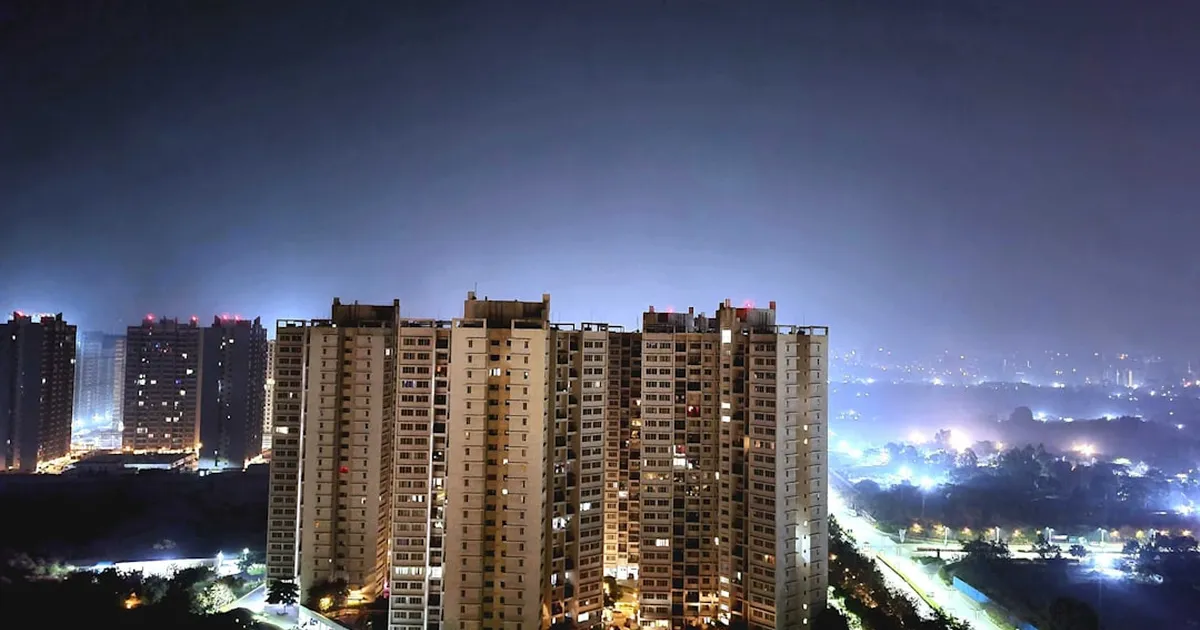
Pune Real Estate Investment Guide 2026: Top Growth Corridors And Rental Yields

Pune’s real estate market in 2026 has officially transitioned from a speculative playground into a mature, end-user-driven powerhouse. If you are looking to park your capital in Maharashtra's second-largest city this year, the rules of the game have fundamentally changed. The days of buying property anywhere on the outskirts and expecting double-digit annual returns are gone. Today, profitability is hyper-local, driven by specific infrastructure completions and shifting tenant preferences.
As we analyze the market data for 2026, Pune stands out as a remarkable anomaly in the Indian real estate landscape. While markets like Bengaluru and Mumbai grapple with peaking prices and stagnant yields, Pune continues to offer a sweet spot: average property prices that are still 40-50% lower than Mumbai, combined with some of the healthiest rental yields in the country. With citywide average asking prices now hovering around ₹12,961 per sq ft and property registrations showing a robust 13% year-on-year growth, the momentum is undeniable.
But where exactly should you invest? Whether you are an NRI looking for passive rental income, an IT professional wanting to live close to work, or a seasoned investor hunting for the next big appreciation wave, this guide breaks down the exact growth corridors, the real rental yields, and the hidden risks you must know before signing a builder-buyer agreement in 2026.
The 2026 Market Reality: By The Numbers
Before diving into specific neighborhoods, it is crucial to understand the macro trends shaping Pune's real estate ecosystem this year. The market is currently characterized by low unsold inventory and a massive shift toward quality. Buyers are no longer satisfied with standalone buildings; the demand has aggressively pivoted toward integrated townships and amenity-rich gated communities.
Here is what the data tells us right now:
- Capital Appreciation: Citywide property prices have grown by 6% to 10% annually over the last three years. Certain micro-markets, particularly in the Pimpri-Chinchwad (PCMC) belt, have seen recent surges exceeding 30%.
- Rental Yields: Residential properties in Pune are currently delivering gross rental yields between 2.8% and 4.5%. Commercial real estate is yielding between 6% and 9%, though it carries a significantly higher vacancy risk.
- Ticket Sizes: The most liquid asset class remains the 2 BHK and 2.5 BHK apartments, priced between ₹80 Lakhs and ₹1.2 Crores. These units lease out the fastest and are easiest to sell on the secondary market.
Top 6 Growth Corridors for Investment in 2026
Based on comprehensive data analysis, infrastructure timelines, and on-the-ground buyer sentiment, here is our definitive ranking of Pune's top real estate growth corridors for 2026.
1. Kharadi (East Pune's Commercial Anchor)
Kharadi has evolved from a dusty eastern suburb into Pune's most organized IT and business district. Anchored by the massive EON IT Park and the World Trade Center, Kharadi offers a true walk-to-work lifestyle that premium tenants are willing to pay top dollar for.
- Current Price Range: ₹10,500 to ₹14,000 per sq ft.
- The Bull Case: Kharadi boasts excellent social infrastructure, including Manipal Hospital, Wellington College International, and proximity to Phoenix Marketcity in Viman Nagar. The rental demand here is exceptionally strong, practically guaranteeing zero vacancy for well-maintained apartments. Projects like Kolte-Patil Tuscan Parkland are seeing massive traction.
- The Reality Check (Negatives): Nagar Road traffic is notoriously brutal during peak hours. Furthermore, specific low-lying pockets in Kharadi still struggle with waterlogging during the heavy monsoon months.
- Best For: Investors looking for immediate, stable rental cash flow and moderate, predictable capital appreciation.
2. Hinjewadi & Wakad (The Western IT Powerhouse)
The Hinjewadi-Wakad belt remains the undisputed engine of Pune's real estate market. While Hinjewadi Phase 1, 2, and 3 house the massive Rajiv Gandhi Infotech Park (employing lakhs of tech workers), Wakad serves as the premium residential spillover zone, offering the social life and connectivity that Hinjewadi historically lacked.
- Current Price Range: Wakad (₹8,500 – ₹11,500 per sq ft), Hinjewadi (₹7,000 – ₹9,500 per sq ft).
- The Bull Case: The upcoming Pune Metro Line 3, which connects Hinjewadi to Shivajinagar, is slated for operational commencement in 2026. Properties within a 1.5 km radius of upcoming metro stations are already commanding a 10-15% premium. Townships like Life Republic and Megapolis, alongside standalone premium towers like Kohinoor Westview, are dominating sales.
- The Reality Check (Negatives): Wakad faces severe municipal water supply deficits. If you speak to actual residents, you will find that many premium high-rises rely heavily on private water tankers, driving up monthly maintenance bills. Additionally, the Hinjewadi Chowk traffic bottleneck remains a daily frustration.
- Best For: IT professionals buying their first home and investors targeting the reliable tech-tenant demographic.
3. Baner & Balewadi (The Premium Upgrade)
Baner and Balewadi represent the aspirational face of West Pune. What started as an overspill for Aundh has now become a high-street retail, dining, and premium residential hub of its own.
- Current Price Range: ₹11,000 to ₹16,000+ per sq ft.
- The Bull Case: This corridor offers unparalleled connectivity to the Mumbai-Pune Expressway. The completion of the SPPU University Square Flyover in 2026 will finally solve the area's biggest connectivity headache to the central city. The tenant profile here includes senior management, expats, and successful entrepreneurs.
- The Reality Check (Negatives): Because capital values are so high, the percentage rental yield is actually lower here (often hovering around 2.5% to 3.2%). This is a high-barrier-to-entry market. If your budget is under ₹1.2 Crores, you will be forced to look at older, smaller units that lack modern amenities.
- Best For: High Net Worth Individuals (HNIs) focused on long-term capital preservation and luxury living, rather than aggressive rental yields.
4. Tathawade & Punawale (The Educational & Affordable Hub)
Sitting just past Wakad on the Mumbai-Bengaluru highway, Tathawade and Punawale have emerged as the smartest entry-level markets in West Pune. They offer proximity to the Hinjewadi IT park but at a 15-20% discount compared to Wakad.
- Current Price Range: ₹7,500 to ₹8,800 per sq ft.
- The Bull Case: Tathawade is a massive educational hub, home to institutions like Indira College and JSPM. This creates a unique dual-rental market: IT professionals and students. Compact 2BHKs in projects like Rohan Ananta and VJ IndiLife are generating fantastic rental yields because the capital entry price is still reasonable.
- The Reality Check (Negatives): The social infrastructure is still playing catch-up. You won't find premium malls or top-tier multiplexes right outside your door; residents still drive to Wakad or Baner for major entertainment and high-end healthcare.
- Best For: Budget-conscious buyers and investors looking to maximize rental yield percentages through student housing or co-living setups.
5. Pimpri-Chinchwad / PCMC (The Surprise Outperformer)
The twin cities of Pimpri-Chinchwad have shocked many traditional Pune investors by outperforming several central PMC areas in recent quarters. PCMC recently recorded a massive 31% surge in property rates, driven by superior civic planning and wide roads.
- Current Price Range: ₹8,000 to ₹12,000 per sq ft (highly variable by exact suburb, with Pimple Nilakh at the premium end).
- The Bull Case: Metro Line 1 is fully operational, seamlessly connecting PCMC to the rest of Pune. Areas like Pimple Nilakh offer a strategic location at the junction of the industrial belt and the Baner-Balewadi corridor. Projects like 24K Manor are proving that PCMC can support true luxury real estate.
- The Reality Check (Negatives): Certain pockets of PCMC are heavily industrial. Buying too close to manufacturing zones can mean dealing with heavy truck traffic, noise, and lower aesthetic appeal compared to the leafy lanes of West Pune.
- Best For: Local manufacturing professionals and investors looking for areas with superior civic infrastructure and wide roads.
6. Wagholi (The Budget Entry Point)
Wagholi continues to absorb the massive demand from buyers who are priced out of Kharadi and Viman Nagar but still need to be on the eastern side of the city.
- Current Price Range: ₹6,000 to ₹7,500 per sq ft.
- The Bull Case: Affordability is the ultimate driver here. Over the last five years, Wagholi has delivered a consistent 8-12% annual capital appreciation. You can still buy a spacious 2BHK here for the price of a 1BHK in Kharadi.
- The Reality Check (Negatives): Wagholi is the poster child for infrastructure deficit. Despite being merged into the PMC, the area suffers from severe water scarcity, unregulated patchy development, and heavy dust pollution from the highway and nearby industrial zones. Buyer reviews frequently complain about the lack of paved internal roads in newer sectors.
- Best For: First-time homebuyers with strict budget constraints who are willing to wait 5-7 years for civic infrastructure to catch up.
Rental Yields: Where Are the Best Returns?
If your primary goal is generating monthly cash flow, you must look at the ratio of rental income to the property's purchase price. Here is our proprietary 2026 data table comparing the top micro-markets.
| Growth Corridor | Avg. Price (Per Sq.Ft) | Avg. 2BHK Rent (Monthly) | Expected Rental Yield | Primary Tenant Profile |
|---|---|---|---|---|
| Kharadi | ₹10,898 | ₹28,000 - ₹35,000 | 3.5% - 4.5% | IT & Corporate Professionals |
| Wakad | ₹8,657 | ₹22,000 - ₹32,000 | 3.5% - 4.0% | Mid-Level IT Employees |
| Tathawade | ₹7,781 | ₹18,000 - ₹25,000 | 3.5% - 4.0% | Students & Young Techies |
| Baner | ₹11,138 | ₹30,000 - ₹45,000 | 2.5% - 3.2% | Senior Management & Expats |
| Wagholi | ₹6,627 | ₹15,000 - ₹20,000 | 3.0% - 3.5% | Entry-Level Workforce |
| Viman Nagar | ₹12,500 | ₹35,000 - ₹45,000 | 3.2% - 3.8% | Aviation, IT, Students |
Expert Tip: To maximize your yield in areas like Tathawade or Viman Nagar, consider furnishing the apartment. A fully furnished 2BHK catering to corporate executives or a co-living setup can bump your gross yield past the 4.5% mark, though it requires more hands-on property management.
The Infrastructure Effect: What's Moving Markets in 2026?
Infrastructure is the single biggest driver of real estate appreciation. In 2026, Pune is seeing the culmination of several mega-projects that have been in the pipeline for years. Do not invest without understanding how these projects map to your chosen location.
- Pune Metro Line 3 (Hinjewadi to Shivajinagar): Targeted for operational readiness by March 2026, this 23.3 km elevated corridor is a game-changer. It will drastically reduce the notorious commute times from the central city to the IT park. Properties in Hinjewadi, Wakad, and Baner are already pricing in this advantage.
- The Pune Ring Road: This ambitious 172 km expressway is designed to divert heavy inter-city traffic away from Pune's internal roads. Land acquisition is largely complete, and early-stage work has begun. This project is unlocking massive land parcels in peripheral areas like Talegaon, Chakan, and Purandar, making them hotbeds for logistics and affordable housing investments.
- Mumbai-Pune Expressway Missing Link: Slated to open in 2026, this tunnel and elevated road project bypasses the congested Khandala Ghat section. It will cut travel time between Mumbai and Pune by nearly 30 minutes, directly boosting the appeal of West Pune localities like Bavdhan, Punawale, and Ravet for Mumbai-based investors.
- SPPU University Square Flyover: A major relief for residents of Aundh, Baner, and Pashan. Its completion in 2026 will untangle one of Pune's worst traffic bottlenecks, further cementing the premium status of the western corridor.
The Reality Check: Risks & Challenges in Pune Real Estate
We believe in total transparency. A guide that only highlights the positives is a marketing brochure, not an investment analysis. If you are buying property in Pune in 2026, you must navigate these specific risks:
1. The Water Crisis in Merged Villages: Over the last few years, the Pune Municipal Corporation (PMC) absorbed 34 surrounding villages (including Wagholi, Sus, Mahalunge, and Undri). However, municipal water infrastructure has not kept pace. Many massive, luxury high-rises in these areas have zero piped municipal water. They survive entirely on private water tankers. This not only increases monthly maintenance costs by ₹2,000 to ₹4,000 but also poses a severe long-term sustainability risk. Always ask developers for written proof of PMC water sanctions, not just "provisions."
2. The Traffic Nightmare: While the Metro will help, Pune's reliance on private vehicles remains staggering. Corridors like Nagar Road (Kharadi/Wagholi) and the Hinjewadi Chowk suffer from gridlock. If you are buying for end-use, do a test commute during Tuesday or Wednesday rush hours before committing.
3. Unregulated Micro-Markets: Areas on the extreme fringes are seeing a glut of standalone buildings constructed by first-time developers. These projects often lack proper access roads, waste management, and security. Stick to reputed, Grade-A developers (like Kolte-Patil, Godrej, VJ, Rohan, or Pride Purple) if you are buying in emerging suburbs.
The 2026 Buyer's Action Checklist
Ready to make a move? Follow this step-by-step process to secure a safe and profitable investment:
- Step 1: Define Your Horizon. Are you looking for rental cash flow today, or capital appreciation over 7 years? For cash flow, buy a ready 2BHK in Kharadi. For appreciation, buy an under-construction unit near the upcoming Ring Road alignments.
- Step 2: Verify MahaRERA Track Records. Do not just check if the current project is RERA registered. Search the developer's name on the MahaRERA portal and look at their past projects. Did they deliver on time? Are there pending consumer complaints?
- Step 3: Audit the Social Infrastructure. Drive a 3 km radius around the project. Is there a reputed school? A multi-specialty hospital? A daily-needs supermarket? Tenants will not rent your apartment if they have to drive 20 minutes for groceries.
- Step 4: Inspect the Floor Plan Efficiency. In 2026, buyers are rejecting poorly designed homes with massive "passage" wastage. Look for square layouts, well-ventilated kitchens, and usable balcony spaces. A well-designed 800 sq ft carpet area will lease faster than a poorly designed 950 sq ft unit.
Frequently Asked Questions (FAQs)
Is Pune real estate overvalued in 2026?
No. While prices have risen, Pune remains fundamentally undervalued compared to Mumbai and Bengaluru. The price growth has been supported by actual wage growth in the IT and manufacturing sectors, and the market has very low speculative inventory. It is a stable, end-user market.
Which is better for investment: East Pune or West Pune?
It depends on your tenant demographic. West Pune (Hinjewadi, Wakad
This guide was written by Virendra Tanwar, Senior Real Estate Analyst with research support from artificial intelligence. AI assisted in compiling information from regulatory sources, industry references, and expert commentary. The final content was reviewed by our editor before publishing. We update guides when regulations change or when newer best-practice information emerges.
Sources consulted: State RERA portals · Developer official websites · Housing.com / 99acres guides · Industry publications · Expert commentary (quoted in the guide body).
Last reviewed: 22 April 2026 · Spot an error? Let us know
Related Guides
 Best Of
Thane Vs Navi Mumbai For Luxury Homebuyers In 2026
Thane vs Navi Mumbai for Luxury Homebuyers in 2026: The Definitive Guide This is the question every serious MMR homebuyer is wrestling with right now. You have...
 Best Of
Best Luxury Projects In Gurugram Under ₹5 Crore In 2026
Best Luxury Projects In Gurugram Under ₹5 Crore In 2026: The Ultimate Buyer's Guide Finding a genuinely luxurious home in Gurugram under ₹5 crore is harder...
 Best Of
Best New Launch Cities For Luxury Real Estate In India In 2026
Why 2026 Is a Defining Year for Luxury Real Estate in India This guide is written for one type of buyer: someone with serious money on the table and the...
 Best Of
Sector 150 Noida Property Buyer's Guide 2026: Golf-view Homes, Prices, Best Projects & Investment Risks
Sector 150 Noida buyer’s guide 2026 covering golf-view homes, prices, best projects, and investment risks with expert analysis.