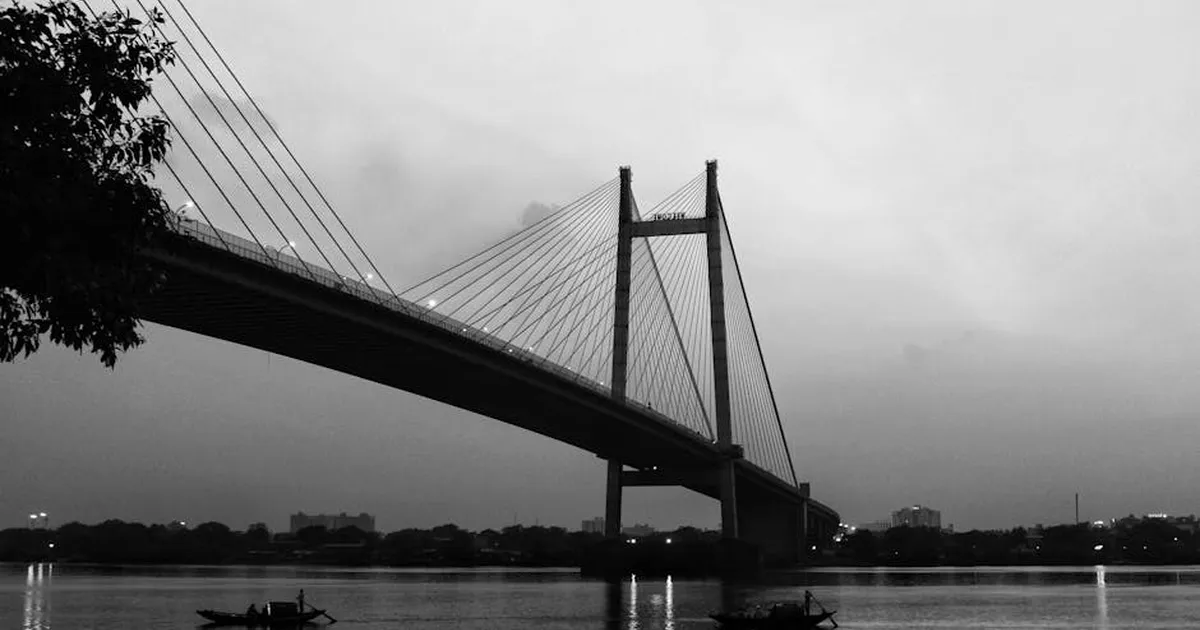
Kolkata
About Kolkata Real Estate
Kolkata — the City of Joy — is India's third-largest city and a market that has quietly rewritten its own narrative over the past five years. Once labelled a "slow-burn" market by analysts, the city has steadily evolved into one of the country's most compelling mid-tier property destinations. The demand engine here is genuinely diverse: a deep-rooted government and public-sector workforce, a growing IT and ITeS sector anchored in Salt Lake Sector V and New Town, an active port-and-logistics corridor along the Hooghly, and strong manufacturing activity spreading outward into the Kalyani and Dankuni belts. NRI investments — particularly from diaspora in the US, UK, and Gulf — picked up meaningfully in 2024, with buyers gravitating toward mid-segment and semi-luxury flats in the ₹70–90 lakh range.
The current phase is best described as stable-with-pockets-of-acceleration. Broad residential volumes have moderated in line with the national trend, but premium and metro-linked zones continue to attract both end-users and investors. Kolkata remains the most affordable among India's eight top metros — a distinction confirmed by a Magicbricks affordability study — and that gap with Mumbai and Delhi is actually fuelling inbound migration and property demand from younger professionals priced out of other cities.
Why Invest in Kolkata
Price Appreciation Story
Kolkata posted an impressive 11% price appreciation in 2024, matching Chennai and well ahead of the broader national average for that year. Over a five-year lens, Salt Lake City has delivered nearly 74% appreciation in listed flat prices, while New Town has returned roughly 50% in five years. Locality-specific data is even more striking: Kadapara recorded 114% appreciation in three years, Durganagar climbed 70%, and Golf Green surged 63%. These are not speculative micromarkets — they're well-established residential corridors being turbocharged by metro access. Properties within a 1 km radius of new metro stations have logged price increases of 15% to 40%, depending on the stage of construction and surrounding infrastructure.
Compared to other asset classes, Kolkata real estate in growth corridors has comfortably outpaced fixed deposits (currently 6.5–7.5% p.a.) and tracked alongside equity markets, but with far lower volatility. The city's market is predominantly end-user-driven rather than speculative — which means fewer boom-bust cycles and more predictable appreciation over a 5–7 year horizon.
Key Infrastructure Catalysts
- Orange Line Metro (New Garia – Airport): The 29-km corridor will directly link the southern suburbs to Netaji Subhas Chandra Bose International Airport via EM Bypass, New Town, and Salt Lake Sector V. The full corridor is targeted for commissioning by December 2026. Completion will cut the Kavi Subhash-to-Airport journey to approximately 56 minutes.
- Purple Line Metro (Joka – Esplanade): Full completion expected by 2028. Tunnel boring machines are currently working through the Kidderpore-Victoria-Park Street stretch. The Joka-Majerhat section is already operational.
- Yellow Line Airport Metro: The Noapara–Jai Hind phase opened in August 2025, giving the city its first metro link to the airport terminal.
- Kalyani Expressway: Already a major arterial road unlocking the North Kolkata and Kalyani corridor for residential development.
- Second Hooghly Bridge Expansion: Work ongoing to decongest the Vidyasagar Setu approach, improving inter-district mobility.
- West Bengal Industrial Corridor: Planned industrial hubs near Dankuni and along NH-12 are expected to generate employment and housing demand in Serampore, Uttarpara, and Konnagar.
Price Trends
The table below compiles current average residential flat prices across Kolkata's major localities, along with appreciation data drawn from public property portals. These figures reflect listed prices on the primary and secondary market as of early 2026.
| Locality | Avg. Price (₹/sq ft) | 1-Year Change (%) | 3-Year Change (%) | Budget Segment |
|---|---|---|---|---|
| Ballygunge | ₹14,500 | ~8–10% | ~28% | Premium / Luxury |
| Alipore | ₹13,850 | ~8% | ~25% | Premium / Luxury |
| Salt Lake City | ₹11,650 | ~49%* | ~50% | Premium |
| EM Bypass | ₹11,500 | ~10% | ~30% | Premium / Luxury |
| Tollygunge | ₹10,750 | ~9% | ~27% | Mid-Premium |
| New Town (Rajarhat) | ₹7,350 | ~-1% (flats); +19% (builder floors) | ~29–37% | Mid-Segment |
| Rajarhat | ₹5,200 | ~7% | ~36%+ | Mid-Segment |
| Behala | ₹4,800 | ~8% | ~25% | Mid-Segment |
| Joka | ₹4,200 | ~10% | ~40%+ | Affordable / Mid |
| Barasat / Madhyamgram | ₹3,000–₹4,000 | ~6% | ~20% | Affordable |
*Salt Lake's 49% 1-year figure in listed data reflects a shift in the sample mix toward luxury projects; actual transacted price change is more moderate at 10–15% annually.
The fastest-appreciating areas are clustered around two themes: legacy scarcity (Ballygunge and Alipore, where land is finite and new supply nearly zero) and infrastructure-led emergence (Joka, Rajarhat, and Behala, where metro connectivity is rewiring commute patterns). New Town's flat prices have actually softened marginally (-1.3% in one year) due to substantial new supply entering the market — a healthy correction, not a crash. Investors who bought in Rajarhat between 2020 and 2022 during metro construction are sitting on 40–50% gains. The next such opportunity window is arguably Joka and Behala, where the Purple Line's full southern extension is still incomplete.
Top Localities for Homebuyers
1. Salt Lake City (Bidhannagar)
Salt Lake is Kolkata's most meticulously planned residential township — wide tree-lined roads, sector-wise organisation, excellent schools like Birla High School and South Point, and proximity to Sector V IT hub. The Green Line (East-West Metro) runs right through it, offering direct connectivity to Howrah Maidan via the Hooghly river tunnel. Flat prices range from ₹6,200 to ₹14,750 per sq ft depending on sector and project. It is best for senior professionals, families with school-going children, and buyers who want walkability without noise. The flip side: older housing stock dominates many sectors, and quality new launches are limited and expensive.
2. New Town, Rajarhat
New Town is the city's most ambitious planned township, and it shows. You have Eco Park, Biswa Bangla Gate, City Centre II mall, Amity University, and Techno India campus — all within a self-contained urban zone. IT professionals working at TCS Gitanjali Park, DLF, and New Town IT cluster are the primary buyer base. Flat prices run ₹6,950 to ₹11,100 per sq ft. The Orange Line metro, once fully operational through New Town to the airport, will make this area even more connected. Downside: traffic congestion on VIP Road and HAL Road during peak hours is genuinely painful right now.
3. Ballygunge
One of Kolkata's most coveted south-central addresses, Ballygunge blends old money with contemporary lifestyle. Restaurants like 6 Ballygunge Place, South Point School, and Ballygunge Government High School are neighbourhood institutions. The area is served by Rabindra Sarobar metro station on the Blue Line. Premium projects command ₹14,500–₹17,000 per sq ft — these are not starter-home prices. Best for established professionals, business families, and anyone who wants a prestigious south Kolkata address with genuine cultural soul.
4. Alipore
Alipore is Kolkata's most exclusive enclave — home to The National Library of India, the Alipore Zoo, and an address associated with top bureaucrats and industrialists. Old bungalows coexist with newer luxury towers from developers like Godrej and PS Group. Loyola High School and Woodland Multispeciality Hospital serve the locality. Average prices hover around ₹13,850 per sq ft. New supply is extremely limited, which is both a feature (for investors) and a frustration (for buyers wanting choice).
5. Tollygunge
The nerve centre of Tollywood (Bengali cinema) and one of south Kolkata's most connected localities. Tollygunge metro station on the Blue Line connects directly to the CBD, and the suburban rail network provides additional reach. Notable projects like Belani Sanctuary and Merlin Avana have elevated the locality's residential profile. Prices sit around ₹10,750 per sq ft. Best for mid-senior professionals and families who want south Kolkata's culture and connectivity without paying Ballygunge prices.
6. EM Bypass Corridor (Kasba–Mukundapur)
The Eastern Metropolitan Bypass has transformed from a transit road into a luxury living corridor. Hospitals like Peerless, Fortis, and Medica Superspeciality line the route. Forum Atmosphere — a twin-luxury-tower project with sky lounges and private cinemas — is a signature development here. Prices average ₹11,500 per sq ft with luxury projects touching ₹18,000+. It's Kolkata's closest equivalent to a mixed-use high-end corridor. Traffic at peak hours is chaotic — the Chingrighata–Nicco Park stretch remains a bottleneck until the Orange Line metro opens through it.
7. Behala
Historically a middle-class stronghold in south-west Kolkata, Behala is now in transition. The Purple Line metro has stations at Behala Chowrasta and Behala Bazar (Joka-Majerhat section operational), dramatically cutting commute times to central Kolkata. Prices range from ₹4,500 to ₹6,500 per sq ft. The buyer profile is shifting from local families to young IT professionals seeking affordability with metro access. Infrastructure is still developing — some micro-pockets have drainage and road quality issues.
8. Lake Town
A peaceful, well-established north Kolkata neighbourhood with genuine community character. Surrounded by water bodies, it offers a calm residential environment with good road connectivity to Dum Dum and Ultadanga. Mid-segment apartments from developers like PS Group and Merlin are available in the ₹5,000–₹7,500 per sq ft range. Best for families who value quiet living and don't need to be near Salt Lake or New Town's IT cluster every day.
9. Garia–Narendrapur
Affordable yet increasingly well-connected, Garia sits at the southern terminus of the Blue Line metro (Kavi Subhash station). The Orange Line extension will bring even more connectivity southward. Narendrapur has a village-meets-suburb character with good educational institutions. Prices run from ₹3,500 to ₹5,500 per sq ft. Ideal for budget-conscious first-time buyers, teachers, and families who don't mind a longer commute to the city centre in exchange for more space per rupee.
10. New Alipore
Sandwiched between the premium addresses of Alipore and the functional middle-class zone of Behala, New Alipore offers a genuine mix. Merlin Elements and Srijan Natura are notable projects here. Connectivity via BL Saha Road and proximity to Majerhat rail station helps. Prices run around ₹7,500 per sq ft for quality gated projects. Average 2BHK rents range from ₹20,000 to ₹25,000 per month — reasonable rental demand for buyers who plan to lease out.
Top Localities for Investors
1. Joka – Highest Upside, Longest Runway
Joka has transformed from a distant southern suburb into one of Kolkata's most watched investment corridors. The Purple Line metro (Joka-Majerhat operational; full extension to Esplanade/BBD Bagh targeted by 2028) is the primary catalyst. IIM Calcutta and the broader educational ecosystem create stable rental demand. Current prices range from ₹3,500 to ₹5,000 per sq ft. Properties in this locality have appreciated over 50% since 2019, and Godrej Properties' land acquisitions here signal institutional confidence. Early investors should target under-construction projects from reputable developers before the full metro extension drives another re-rating. Rental yields in newer gated societies can cross 5% gross.
2. Rajarhat – Established Growth, Still Room to Run
Rajarhat has already delivered, and buyers who entered in 2020–2022 have seen gains of 40%+. But the investment case is not over. The Orange Line metro (currently under construction through the Rajarhat-New Town corridor to the airport; targeting completion by December 2026) will be a second-wave catalyst. NRI investments in Rajarhat surged 36% recently. Current rates of ₹5,000–₹8,500 per sq ft compare favourably with similar planned townships in Pune or Navi Mumbai. Rental yields of 5–7% are supported by IT park demand.
3. EM Bypass – Luxury with Liquid Market
For investors in the luxury segment (₹1.5 crore+), the EM Bypass corridor offers the best liquidity in Kolkata. Over 90% of the luxury segment demand in the city concentrates in EM Bypass, Ballygunge, and Salt Lake. Annual returns on luxury properties here can reach 10% in good years. The Orange Line metro running through this corridor (targeting December 2026 completion) will be a significant uplift. Current prices at ₹11,500 per sq ft are below comparable corridors in Pune or Chennai.
4. Behala Chowrasta–Majerhat – Best Metro Play Right Now
With Purple Line stations at Behala Chowrasta and Behala Bazar already operational, this micro-market is at the classic "metro just opened, prices still have room" phase. Current prices in the ₹4,500–₹6,500 range offer a meaningful discount versus the eventual post-metro-maturity pricing. Rental yields in newer gated communities here exceed 5% gross, and the commute to central Kolkata (Majerhat to Park Street is ~20 minutes by metro) is now genuinely competitive.
5. Madhyamgram–Barasat – Airport Proximity Play
Located 15–20 km north of the city centre, this corridor benefits from proximity to Netaji Subhas Chandra Bose International Airport (roughly 8–12 km from the airport perimeter) and the expanding Kalyani Expressway. Affordable entry at ₹3,000–₹4,500 per sq ft, with rental yields of 4–6% for well-located properties. The Yellow Line airport metro terminus at Jai Hind (opened August 2025) has given this corridor a fresh connectivity narrative. Best for investors with a 5–8 year horizon and a smaller ticket size.
6. Sector 4, Salt Lake – Rental Yield Champion
Salt Lake Sector 4 has consistently ranked among Kolkata's top rental yield zones, with yields touching 8.1% — among the highest in the city. The proximity to the Sector V IT hub, metro connectivity via the Green Line, and scarcity of quality rental stock drive this. Prices are higher (₹9,000–₹12,000 per sq ft) but the rental math works, especially for investors targeting IT professionals on short-to-medium term leases.
Infrastructure & Connectivity
Metro Network – Five Lines, Multiple Phases
Kolkata Metro is India's oldest metro system (opened 1984) and now India's fourth-largest network with 5 colour-coded lines and 58 operational stations spanning 73.42 km.
- Blue Line (Line 1) – Dakshineswar to New Garia: The original north-south spine running through Park Street, Maidan, Rabindra Sarobar, Tollygunge, and New Garia. Fully operational. Key stations: Dum Dum, Esplanade, Park Street, Kalighat, Tollygunge, Kavi Subhash (New Garia). Dakshineswar–Barrackpore extension (Pink Line / northward extension) is planned.
- Green Line (Line 2) – Howrah Maidan to Salt Lake Sector V (East-West Metro): Includes India's first underwater metro tunnel beneath the Hooghly River. Currently running Howrah Maidan to Sealdah and Salt Lake Sector V to Phoolbagan. The Esplanade–Sealdah section (2.5 km) is the remaining gap, delayed by land subsidence in Bowbazar — expected to close by late 2026. Key stations: Howrah Maidan, Howrah, Esplanade, Sealdah, Salt Lake Stadium, City Centre, Karunamoyee, Salt Lake Sector V.
- Purple Line (Line 3) – Joka to Esplanade (planned): Currently operational from Joka to Majerhat (via Thakurpukur, Sakherbazar, Behala Chowrasta, Behala Bazar, Taratala). Underground tunnelling towards Park Street and Esplanade ongoing; full completion targeted 2028. A game-changer for south-western Kolkata.
- Orange Line (Line 6) – New Garia to Airport: Operational from Kavi Subhash (New Garia) to Beleghata (via Ruby, EM Bypass). The remaining stretch through New Town, Salt Lake Sector V, and to the airport is under construction, with full 29.87-km corridor targeted for December 2026. Will provide a 56-minute south Kolkata–Airport journey through 24 stations.
- Yellow Line – Noapara to Barasat (Airport Phase): Phase 1 from Noapara to Jai Hind (airport) opened August 2025, giving Kolkata its first-ever metro link to the terminal. Jai Hind station is one of Asia's largest underground facilities. Extension to Barasat is planned.
Road & Expressway Connectivity
- Eastern Metropolitan Bypass (EM Bypass): 20-km arterial road connecting NH-12 in the south to VIP Road in the north, passing through Kasba, Mukundapur, Ruby, Chingrighata, and the New Town approach.
- Kalyani Expressway: Key arterial route connecting Kolkata to Kalyani, Barrackpore, and the North 24 Parganas belt.
- NH-12 (Old NH-6): Connects Kolkata westward toward Howrah, Uluberia, and eventually Kharagpur.
- Vidyasagar Setu (Second Hooghly Bridge): 16-lane cable-stayed bridge connecting Kolkata with Howrah via Kona Expressway.
Airport
Netaji Subhas Chandra Bose International Airport (CCU) is located in Dum Dum, approximately 16 km from central Kolkata (Park Street area). Drive time from Salt Lake: 25–40 minutes depending on traffic. From New Town: 15–20 minutes. The Yellow Line metro now provides a direct rail connection, with the airport being the terminal station of the Noapara–Jai Hind section.
Railway Stations
Kolkata has two major railway terminals — Howrah Junction (one of India's busiest, on the west bank of the Hooghly) and Sealdah Station (serving the north and east of the city). Chitpur (Kolkata) station serves as a third terminal for some long-distance trains. Both Howrah and Sealdah are now connected to the Green Line metro.
Government Policies & Regulations
West Bengal RERA
The state RERA authority is the West Bengal Real Estate Regulatory Authority (WBRERA). Buyers can verify project registrations and track complaint status at the official portal. All new residential projects must be RERA-registered — always cross-check the WBRERA registration number (format: WBRERA/P/[zone]/[year]/[number]) before booking any under-construction flat.
Stamp Duty & Registration Charges (2025–26)
| Property Value | Location | Stamp Duty | Registration Fee |
|---|---|---|---|
| Up to ₹25 lakh | KMC / Corporation Area | 4% | 1% |
| ₹25 lakh – ₹40 lakh | KMC / Corporation Area | 5% | 1% |
| ₹40 lakh – ₹1 crore | KMC / Corporation Area | 6% | 1% |
| Above ₹1 crore | KMC / Corporation Area | 7% | 1% |
| Up to ₹40 lakh | Outside KMC / Panchayat areas | 4–5% | 1% |
| Above ₹1 crore | Outside KMC | 6% | 1% |
Example: If you buy a ₹60 lakh flat in a KMC area, your stamp duty will be ₹3.6 lakh (6%) and registration fee ₹60,000 (1%) plus applicable surcharges — total acquisition cost approximately ₹4.3–4.5 lakh over the purchase price.
Recent Policy Changes Buyers Must Know
- Circle Rate Revision (September 2025): The West Bengal government revised circle rates (ready reckoner rates) after a gap of seven years, with increases ranging from 15% to 90% across localities. This means higher stamp duty and registration costs. Prime areas like Salt Lake, Alipore, and Tollygunge saw the steepest revisions. Buyers should recalculate their acquisition cost budgets accordingly.
- Stamp Duty on Carpet Area (effective January 2024): Stamp duty in Kolkata is now computed based on a home's carpet area rather than built-up area — a buyer-friendly change that reduces the effective stamp duty burden on most flat purchases.
- 2% Rebate Withdrawn (July 2024): The pandemic-era 2% stamp duty rebate, which had been extended multiple times, was finally withdrawn in July 2024. Buyers who purchased between 2021–2024 enjoyed this benefit; it is no longer available.
- Online Registration: Property registration in Kolkata is largely digital via the e-Nathikaran portal (wbregistration.gov.in). Buyers generate an e-assessment slip online, pay stamp duty digitally, and then complete in-person registration at the sub-registrar's office — a significant improvement in process efficiency.
Living in Kolkata
Climate
Kolkata has a tropical wet-and-dry climate. Winters (November to February) are pleasant — temperatures drop to 12–15°C, making it one of the most liveable seasons in the city. Summers (March to May) are brutal, with temperatures touching 40–42°C and high humidity. The monsoon (June to September) is intense — the city receives over 1,600 mm of annual rainfall, and flooding in low-lying areas (parts of East Kolkata and certain pockets of north Kolkata) remains a recurring problem. New residential developments in raised areas like New Town and elevated parts of Rajarhat have better drainage design.
Air Quality
This is where honest disclosure matters. Kolkata's air quality is a genuine concern. The average annual PM2.5 concentration in 2024 was approximately 45.6 µg/m³ — around 9 times the WHO guideline of 5 µg/m³. Winter months are significantly worse, with January averages touching 100–170 µg/m³ due to temperature inversions. The key sources are vehicular emissions, road dust, construction activity, and industrial zones in the western hinterland. The city is investing in public transport (metro expansion is part of this solution) and EV adoption, but results will take years to materialise. If you or family members have respiratory conditions, factor this in carefully. Air purifiers in homes and cars are common and advisable.
Water & Power Supply
The Kolkata Municipal Corporation (KMC) provides piped water supply that is generally reliable in organised residential zones. New Town and Salt Lake have relatively stable supply infrastructure. Power outages are less frequent in the city proper than in peripheral areas, though summer demand spikes (May-June) can cause load-shedding in outlying municipalities. Gated community projects typically have backup DG power for common areas.
Safety
Kolkata is widely considered one of India's safer major cities, particularly for women and solo travellers. The city has a lower perception of violent crime compared to Delhi or Mumbai. Petty theft and pickpocketing exist in crowded markets and old city areas, as with any metro. Areas like Salt Lake, New Town, Ballygunge, and Alipore are consistently rated as safe by residents. Nightlife is relatively subdued compared to Bengaluru or Mumbai, but improving in New Town and Park Street areas.
Cultural Scene & Food
This is where Kolkata genuinely outcompetes every other Indian city. The Durga Puja celebrations (October) transform the city into an open-air arts festival — widely called the world's largest street festival. Victoria Memorial, Indian Museum, Rabindra Sarani, and the maze of the Kumartuli artisan quarter give the city a cultural depth that no planned township can manufacture. The food scene is extraordinary: from mishti doi and kathi rolls to sophisticated Bengali cuisine at Oh! Calcutta and 6 Ballygunge Place, through to the global spread at Park Street and the vibrant street food of College Street. The cost of living — food, transport, domestic help, dining out — is meaningfully lower than Bengaluru, Pune, or Mumbai for a comparable lifestyle.
Weekend Getaways
Kolkata sits within striking distance of some exceptional escapes. Sundarbans mangrove delta (3–4 hours by road and boat) is a UNESCO World Heritage Site. Shantiniketan — Tagore's cultural town — is 2.5 hours away. Digha and Mandarmani beaches are 4–5 hours for a weekend. And Darjeeling and Sikkim are accessible by overnight train (NJP) plus onward drive. This geographic advantage is meaningful for families deciding where to put down roots.
FAQ
Is Kolkata good for property investment in 2025?
Yes, with some nuance. Kolkata offers a rare combination: meaningful price appreciation (11% YoY, 40–74% in key corridors over five years), significantly lower entry prices than comparable metros, and a robust infrastructure build-out in metro rail. The market is end-user dominated, making it less volatile than speculative markets like parts of Hyderabad or Pune. Best suited for investors with a 5–8 year horizon, not those seeking quick flips. Rental yields are moderate (3–8% depending on location), with IT-adjacent zones like Salt Lake Sector 4 and New Town performing at the higher end.
What is the best area to buy a flat in Kolkata?
It depends on your goal. For livability and prestige: Ballygunge or Alipore. For value with modern infrastructure: New Town or Salt Lake. For investment with appreciation upside: Joka, Rajarhat, or Behala (near Purple Line stations). For budget buyers: Garia, Barasat, or Narendrapur. There is no single "best" — each locality serves a distinct buyer profile.
How does Kolkata compare to Hyderabad or Pune for investment?
Hyderabad and Pune have seen more aggressive appreciation (15–25% annually in peak corridors) driven by deep IT employment bases, but their prices have also risen sharply — many Hyderabad micro-markets have doubled in three years, leaving less headroom. Kolkata's appreciation is steadier (7–12% in growth corridors), and entry prices remain significantly lower. For investors who missed the Hyderabad and Pune boom, Kolkata's infrastructure story is at an earlier stage, offering a similar setup with metro-linked corridors at more accessible prices. The risk: Kolkata's job market is shallower, so rental demand is less intense.
What is the property price forecast for Kolkata in 2025–2027?
Experts broadly project 5–10% annual appreciation across mainstream localities, with metro-adjacent areas in Joka, Behala, and the Orange Line corridor potentially outperforming at 10–15% annually as construction nears completion. The luxury segment (above ₹1.5 crore) is expected to continue outperforming, driven by NRI demand and limited new supply. The key risk to this forecast is a broader macroeconomic slowdown or a delay in the Orange Line and Purple Line metro completions.
What is the stamp duty in Kolkata?
For properties within KMC limits, stamp duty ranges from 4% to 7% depending on value (4% below ₹25 lakh, 5% for ₹25–40 lakh, 6% for ₹40 lakh–₹1 crore, and 7% above ₹1 crore). Registration fee is flat at 1% regardless of value, plus applicable surcharges. Note that stamp duty is now calculated on carpet area (not built-up area) since January 2024, which provides some relief to buyers. The pandemic-era 2% rebate was withdrawn in July 2024 and is no longer available.
Are there good hospitals and schools in Kolkata?
Kolkata has some of India's finest medical institutions: AMRI Hospital (Dhakuria), Apollo Gleneagles (Canal Circular Road), Fortis Hospital (Anandapur, near EM Bypass), Peerless Hospital (Panchasayar), and the iconic SSKM Government Hospital. For schooling, South Point School (consistently ranked top in the state), La Martiniere for Boys and Girls, Don Bosco, Loreto House, and Birla High School are among the most sought-after. New Town has added Amity University and Delhi Public School as educational anchors. Quality education and healthcare are genuine strengths of living in Kolkata.
Is traffic and commuting a problem in Kolkata?
Honestly, yes — in certain corridors. The EM Bypass around Chingrighata, VIP Road near Haldirams, and the Rashbehari–Gariahat junction are consistently congested. Kolkata also has some of India's narrowest city roads in older neighbourhoods, which limits road widening options. The metro network is significantly improving this picture — commutes that took 60+ minutes by road are now under 15–20 minutes on metro. The ongoing metro expansion (particularly the Orange Line through EM Bypass and the Purple Line south) is the most important infrastructure development for daily commuters over the next two years.
Projects in Kolkata

Godrej Blue Kolkata
₹2.61 Cr - ₹4.96 Cr