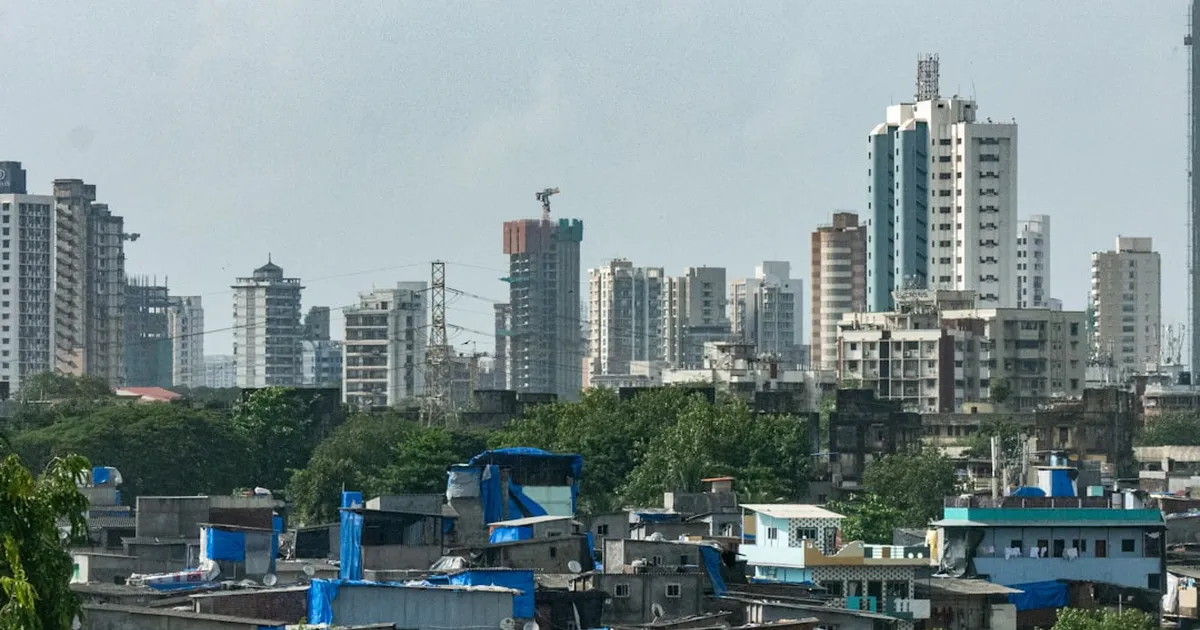
Best New Launch Cities For Luxury Real Estate In India In 2026

Why 2026 Is a Defining Year for Luxury Real Estate in India
This guide is written for one type of buyer: someone with serious money on the table and the discipline to spend it wisely. Whether you are an HNI looking for your next primary residence, an NRI wanting a premium asset back home, or a savvy investor aiming for double-digit appreciation, the question in 2026 is not whether to invest in Indian luxury real estate — it is where.
India's luxury residential market crossed USD 45 billion in 2024 and is on a trajectory to reach USD 105 billion by 2030, growing at a CAGR of approximately 15%. In the first quarter of 2026 alone, India's top eight cities launched 75,283 new residential units. The shift is structural, not speculative: homes priced above ₹1 crore have gone from 11% of total sales in 2021 to nearly 27% by 2025, and that number is still climbing. New launches from trusted developers are being absorbed within weeks. NRIs now contribute close to one-third of total sales in several large projects.
But here is the honest part: not all cities will reward you equally. Some micro-markets have overshot on pricing. Delhi-NCR saw a 9% year-on-year decline in residential sales in 2025. Gurugram's luxury segment still has strong appreciation, but entry prices have become aggressive. The best cities for new luxury launches in 2026 are those where infrastructure investment is running ahead of pricing — where you get real value before the crowd catches up. This guide ranks eight cities on that basis, backed by hard numbers, real projects, and a frank look at the risks.
The Big Picture: India's Luxury Market in 2026
A Reuters poll of property analysts conducted in early 2026 projects home prices in major cities will rise 5–7% annually over the next three years. That is steady, not spectacular — and that is exactly what disciplined luxury buyers want. The era of 30–40% speculative jumps is over. What has replaced it is a market driven by genuine end-user demand, rising HNI incomes, and infrastructure-backed micro-market appreciation.
Average home prices across India's top seven cities rose 13–15% in FY25. For FY26, ICRA expects a further 3–5% rise, with new launches across the top seven cities reaching 620–640 million square feet. Home loan rates have dropped to 7.10–7.50% — the lowest since 2022 — following the RBI's 100+ bps cumulative rate cut cycle. This directly improves affordability for the ₹3–10 crore bracket, which is the hottest zone in the market right now.
Luxury housing's share has nearly tripled since 2019. In Q1 2026, 1,930 luxury homes were sold across India's top seven cities — a 28% jump year-on-year. Branded residences are commanding 30–40% price premiums, and global names like Elie Saab, Lamborghini, Four Seasons, and Taj have all entered the Indian residential space in 2025–26. India now ranks sixth globally in live branded residential projects. That tells you everything about where the market is headed.
The 8 Best Cities for Luxury New Launches in 2026: Ranked
#1 — Mumbai: The Undisputed Anchor Market
Why it ranks #1: Mumbai is simply the deepest luxury real estate market in India. It has the highest average ticket sizes, the most global buyer interest, and the most disciplined supply environment in the country. Property registrations rose 8% year-on-year in early 2026, and stamp duty collections jumped over 20% — which signals rising ticket sizes, not just transaction volumes. In Q1 2026 alone, Mumbai recorded a record 19,775 residential unit launches, a 25% quarterly surge that hit a 14-quarter high. Capital values surged 32% year-on-year driven by premium launches.
Price ranges: South Mumbai (Malabar Hill, Napean Sea Road, Worli, Altamount Road) commands ₹80,000–₹1.25 lakh per sq ft. The ultra-prime end — Kalpataru Azuro in Mumbai South — is listed at ₹1.41 lakh per sq ft, while Lodha Malabar is at ₹1.30 lakh per sq ft. Worli, the most active luxury belt, sits at ₹65,000–₹1,00,000 per sq ft. Bandra West ranges ₹40,000–₹60,000 per sq ft. Developers like Lodha, Oberoi Realty, and Godrej Properties have shifted focus toward ultra-premium 4 BHK and 5 BHK branded residences. About 24% of luxury buyers in Mumbai now come from outside the city — including Delhi, Bengaluru, and Dubai.
Active new launches to know: Prestige Ocean Towers in SOBO (4 BHK with panoramic sea views), Birla Niyaara, Godrej Avenue Eleven, and Raheja Artesia in Worli and Prabhadevi. Redevelopment projects in Western Suburbs are unlocking fresh premium inventory.
Best for: Ultra-HNIs and global NRIs who want a generational asset, financial sector professionals, and buyers for whom "address value" matters as much as appreciation.
Honest concern: Entry prices in South Mumbai are among the highest in Asia. At ₹1 lakh+ per sq ft, the upside is limited to capital preservation and rental yield (typically 2–3%), not aggressive appreciation. For wealth creation, the right play in Mumbai is mid-premium corridors — Mulund, Thane, Kharghar — which offer 15–25% price appreciation following MTHL and the Navi Mumbai International Airport opening.
#2 — Delhi-NCR / Gurugram: The Ultra-Luxury Surge
Why it ranks #2: Gurugram's luxury real estate market has recorded an 84% price jump over the past five years and is seeing extraordinary branded residence momentum in 2026. Delhi NCR recorded 9,677 residential unit launches in Q1 2026, up 26% year-on-year, with Gurugram leading at 73% share. High-end launches are concentrated on Golf Course Extension (Sectors 61–66), Dwarka Expressway, and the SPR corridor. The Delhi NCR luxury market in H1 2025 saw prices appreciate approximately 9% year-on-year, with branded residences dominating.
Price ranges: Golf Course Road / Sector 54: DLF ultra-luxury residences start from ₹80 crore. Elan The Statement (Sector 49, Sohna Road) offers ultra-luxury 4 BHK and penthouses at ₹9 crore–₹17 crore+. Sobha Aranya in Sector 80 starts from ₹7 crore. DLF Privana South (Sector 77) is one of the most awaited DLF launches near the NH-8 and SPR corridor. Weighted average launch prices in NCR stand at ₹14,400 per sq ft, with Noida recording 10% annual appreciation and Gurugram at 7%.
Standout 2026 launch: Tonino Lamborghini Residences Gurugram (Sector 71, Signature Global) — 812 luxury apartments across 12.40 acres with a GDV of ₹4,000 crore, making it one of the most high-profile branded residence launches of the year. M3M India is also investing ₹3,500 crore in Elie Saab branded residences across Gurugram and Noida.
Best for: HNIs seeking branded residences with international design pedigree, NRIs from the US/UK/UAE who want a global-standard address, and investors with a 5–7 year horizon in the ₹4 crore–₹20 crore bracket.
Honest concern: NCR posted a 9% year-on-year decline in overall residential sales in 2025. Knight Frank points to sharp price escalation and speculative activity as drivers. The mid-income and affordable segments are largely squeezed out — which can constrain resale market depth if end-user demand softens. Buy in established corridors with proven absorption, not peripheral land plays.
#3 — Bengaluru: The IT Wealth Machine
Why it ranks #3: Bengaluru is India's most liquid luxury market for the ₹2–₹8 crore range. The city adds over 1.5 lakh IT jobs annually, generating a constant flow of affluent buyers. It contributed 12,664 new residential units in Q1 2026, making it the second-largest launch market nationally. Property prices typically range ₹6,000–₹19,000 per sq ft depending on micro-market, with luxury addresses in Whitefield at ₹12,000–₹15,150 per sq ft for villas.
Hot micro-markets: Whitefield is the established luxury hub with Purple Line metro now fully operational. Sarjapur Road offers the best growth potential — it connects to the Outer Ring Road, Bellandur, Marathahalli, and multiple IT parks including Wipro SEZ, Embassy Tech Village, and RGA Tech Park. North Bengaluru (Hebbal, Devanahalli) is the airport corridor play. Central Bengaluru (Lavelle Road, Cunningham Road, UB City area) commands the highest per-sq-ft prices in boutique low-density developments targeting expatriates and senior professionals.
Active new launches to know: Prestige Eaton Park (Sarjapur Road, launched March 2026) — 3 and 4 BHK flats within the 180-acre Prestige City township, seamlessly connected to Electronic City and ORR. Prestige Evergreen (Varthur Road, near Whitefield) — 2,000 luxury homes across 14 towers, pre-launch price at ₹15,800 per sq ft, possession June 2030, RERA number available. Mahindra Blossom (Whitefield, RERA PRM/KA/RERA/1251/446/PR/171225/008348) — 750 premium homes starting ₹1.9 crore, possession December 2026. Brigade Avalon in Whitefield is another premium benchmark launch.
Best for: IT sector professionals (both Indian and expat), NRIs from the US and Canada, and investors who want rental income (yields 3–4.2% in Whitefield) alongside 12% annual appreciation in select corridors.
Honest concern: Bengaluru's traffic and infrastructure remain genuine quality-of-life issues despite metro expansion. Water scarcity episodes in 2024 damaged buyer confidence temporarily. Projects on Sarjapur Road still face last-mile connectivity challenges. Buy projects with a minimum 2028 possession date to account for infrastructure catch-up.
#4 — Hyderabad: The 80% Price Jump City
Why it ranks #4: Hyderabad has recorded the steepest residential price rise among Indian cities over the past four years — an 80% jump. Banjara Hills recorded a 12% price rise in 2025 alone, reaching ₹50,000 per sq ft. Chennai and Hyderabad recorded the strongest annual sales growth among the eight major cities tracked. The Financial District, Gachibowli, HITEC City, Kokapet, and Narsingi now form one of India's most active luxury belts, driven by GCC (Global Capability Centre) expansion and a booming IT economy.
Price ranges: Kokapet/Neopolis: ₹3,500–₹17,000 per sq ft and expected to grow 10–20% over 3–5 years. Banjara Hills: up to ₹50,000 per sq ft for premium residences. Pre-launch villa projects across Kompally, Narsingi, and Tukkuguda cater to buyers seeking gated community living at ₹2–₹11 crore.
Active new launches to know: Prestige Golden Grove (Tellapur, launched April 2026) — 28.7 acres, 52-story Sky-Villaments, 2–4 BHK priced ₹1.05–₹3 crore, RERA P01100010708 — targeting professionals from Neopolis and Financial District with a GDV of ₹9,500+ crore. Godrej Madison Avenue (Kokapet, RERA P02400009227) — 352 luxury 3 and 4 BHK apartments in a 50-floor tower, starting ₹2.34 crore for 3 BHK. The Prestige City Hyderabad (Budvel belt, RERA P02400007209 and P02400006711) — apartments from ₹1.4 crore, villas from ₹11 crore.
Best for: Investors seeking the strongest appreciation trajectory among Tier-1 cities, IT professionals in the Financial District/Gachibowli corridor, and villa buyers wanting resort-style gated community living.
Honest concern: Hyderabad's market is sensitive to Telangana government policy and political changes. The massive scale of new supply — particularly in the Budvel and Narsingi belts — could create inventory pressure if IT hiring slows. Pre-launch projects with 2028–2029 possession dates carry execution risk; always verify RERA registration before booking.
#5 — Pune: The Steady Compounder
Why it ranks #5: Pune is the most under-rated luxury market in India right now. Luxury sales in H1 2026 surged 85% year-on-year — the highest growth rate among all metros. The segment is growing at approximately 15% annually, driven by Hinjewadi IT Park (Asia's largest, with 400,000+ professionals), EON IT Park in Kharadi, and a rapidly expanding manufacturing base. Prices are still meaningfully below Mumbai and Gurugram, making Pune the best value-for-luxury proposition among Tier-1 cities.
Price ranges: Koregaon Park (Pune's most prestigious residential address): ~₹19,000 per sq ft. Baner/Balewadi: ₹10,000–₹14,000 per sq ft. Kharadi: ₹8,000–₹12,000 per sq ft. Hinjewadi fringe: highest rental yield zone at 4.5–5.5%. West Pune (Baner, Aundh, Kothrud) is forecast at 8–12% annualized price growth in Q2 2026. The PCMC belt (Punawale, Marunji) is the highest near-term momentum micro-market in Pune.
Active new launches to know: Kolte Patil's 24K series defines ultra-luxury in Pune. Lodha Giardino and Lodha Balewadi from Lodha Group. Godrej River Royale by Godrej Properties. Kalpataru Limited offers premium low-density luxury housing. MahaRERA compliance is strict in Pune, which has strengthened buyer trust and made the market genuinely transparent.
Best for: End-users under 40 wanting a premium lifestyle home in the ₹1.5–₹5 crore range, NRIs from Gulf countries, families relocating from Mumbai seeking more space for less money, and investors targeting rental yield alongside appreciation.
Honest concern: Pune's overall residential sales dipped 3% in 2025, signaling that even in a strong market, buyers have become price-selective. The IT sector's dependence on export demand makes Hinjewadi-belt properties sensitive to global economic uncertainty. Infrastructure — particularly traffic management and water supply — lags behind the rate of development in some fast-growing corridors.
#6 — Ahmedabad: The Emerging Premium Play
Why it ranks #6: Ahmedabad recorded 6,745 new residential units in Q1 2026, making it the fourth-largest launch market nationally. The high-end and luxury segment doubled in momentum in 2025, reaching a 22% share of total launches. Navi Mumbai saw a 17.4% price increase in a single year; Ahmedabad's trajectory, while more measured, offers entry-level luxury at prices that still make financial sense — and without the affordability ceiling pressure seen in Mumbai or Gurugram.
Price ranges: SG Highway and Prahlad Nagar command ₹8,000–₹15,000 per sq ft for luxury apartments. Rentals grew 6% year-on-year in North and East submarkets. Capital values remain stable with a slight upward tick. The city benefits from strong industrial, pharmaceutical, and diamond trade wealth, creating a deep, homegrown HNI buyer base.
Best for: Investors who want Tier-1 fundamentals at Tier-2 pricing, NRIs from the Gujarati diaspora in the UK and USA, and buyers in the ₹1–₹4 crore bracket seeking modern gated community living with strong community infrastructure.
Honest concern: Ahmedabad's luxury real estate is improving but still lacks the depth of branded residence offerings and global-standard amenities that Mumbai, Bengaluru, and Gurugram provide. Resale market liquidity for ultra-premium properties is thinner. It is a long-term compounding play, not a short-term luxury lifestyle statement.
#7 — Goa & Alibaug: The Lifestyle and Second-Home Segment
Why it ranks #7: The coastal luxury segment is structurally different from the city markets, and it deserves a separate ranking. Alibaug and Goa are now serious luxury real estate destinations, not just vacation spots. Remote work trends have permanently expanded the time affluent buyers are willing to spend in coastal properties. Villa projects in Assagao, Parra, Anjuna (Goa) and the Alibaug "billionaire belt" are seeing the fastest capital appreciation among all luxury segments, driven by limited land supply and strong tourist demand. In 2025, high-value transactions in Goa and Alibaug surged as record IPO wealth found its way into lifestyle assets.
Price ranges: Goa villas in North Goa's luxury belt (Assagao, Parra) start at ₹3.5–₹6 crore for 3 BHK standalone villas. Prime beachside land plots have appreciated aggressively. Alibaug gated villa communities start at ₹4 crore and go north of ₹15 crore for branded development plots. Short-term rental yields from platforms like AirBnB provide income potential that purely residential markets cannot match.
Best for: Senior executives, startup founders, and next-gen HNIs seeking a second home that doubles as a lifestyle asset; NRIs wanting a "return base" with rental income; investors targeting vacation rental yield + long-term capital appreciation.
Honest concern: Goa's property laws are complex, and title due diligence is critical — conversion land (CRZ zones, forest land) has caused serious legal problems for uninformed buyers. Monsoon management, municipal infrastructure quality, and seasonal rental volatility are real concerns. Always engage a Goa-based legal expert before any transaction.
#8 — Chennai: The Quiet Overperformer
Why it ranks #8: Chennai is the surprise performer of 2025–26. Sales rose 12% year-on-year in 2025 — the strongest growth among all major cities. Chennai's office stock is set to exceed 100 million square feet by end-2026, making it India's fifth-largest office market. The OMR (Old Mahabalipuram Road) corridor, Guindy, Boat Club Road, and Porur are key luxury investment zones. The city's conservative market culture means prices are grounded and the risk of speculative excess is lower than in Gurugram or Hyderabad.
Price ranges: Boat Club Road (the city's most prestigious address): ₹35,000–₹55,000 per sq ft. OMR corridor: ₹8,000–₹14,000 per sq ft. Rentals in Bengaluru grew 10.2% quarter-on-quarter in late 2025 — Chennai followed at 8.7% — both signals of strong organic demand from actual tenants.
Best for: Conservative investors who want steady appreciation without speculative risk, manufacturing and auto industry professionals, and NRIs from Tamil Nadu who prefer familiar markets.
Honest concern: Chennai's luxury product quality has historically lagged Mumbai and Bengaluru. The branded residence trend has been slower to arrive. Buyers seeking ultra-premium amenity-led developments will find fewer options here than in markets ranked higher. Infrastructure in OMR's southern stretches still has gaps.
City-by-City Comparison Table: Luxury New Launch 2026
| City | Entry Price (Luxury) | Ultra-Premium Rate (per sq ft) | 2025 Sales Growth (YoY) | Projected Annual Appreciation | Rental Yield | Best Micro-Market | Top Buyer Profile |
|---|---|---|---|---|---|---|---|
| Mumbai | ₹5 Cr+ | ₹65,000–₹1.25L/sqft | +8% (registrations) | 5–8% | 2–3% | Worli, Bandra West | Finance sector HNIs, Global NRIs |
| Delhi-NCR (Gurugram) | ₹4 Cr+ | ₹14,400–₹80,000+/sqft | –9% (volumes), strong in luxury | 7–10% | 2–4% | Golf Course Ext, DXP, SPR | Tech/corporate HNIs, US/UK NRIs |
| Bengaluru | ₹2 Cr+ | ₹12,000–₹25,000/sqft | Broadly stable | 8–12% | 3–4.2% | Whitefield, Sarjapur, Hebbal | IT professionals, US/Canada NRIs |
| Hyderabad | ₹1.5 Cr+ | ₹3,500–₹50,000/sqft | +4% to +12% | 10–15% | 3–4% | Kokapet, Banjara Hills, Narsingi | GCC/IT HNIs, Gulf NRIs |
| Pune | ₹1.5 Cr+ | ₹8,000–₹19,000/sqft | Luxury +85% (H1 2026) | 8–12% | 3.5–5.5% | Kharadi, Baner, KP | Young HNIs, Gulf NRIs, Mumbai upgraders |
| Ahmedabad | ₹1 Cr+ | ₹8,000–₹15,000/sqft | +7% (launches) | 6–9% | 3–4% | SG Highway, Prahlad Nagar | Gujarati HNIs, UK NRIs |
| Goa / Alibaug | ₹3.5 Cr+ | Varies widely | Strong (villa segment) | 10–18% (coastal villas) | 4–7% (vacation rental) | North Goa, Alibaug belt | Startup founders, senior execs |
| Chennai | ₹1.5 Cr+ | ₹8,000–₹55,000/sqft | +12% | 6–9% | 3–4% | OMR, Boat Club, Guindy | Auto/mfg. executives, TN NRIs |
What Defines True Luxury in 2026 — And What Doesn't
The word "luxury" is overused to the point of meaninglessness in Indian real estate marketing. Before evaluating any project, here is what genuine luxury actually means in 2026.
Real luxury is about low-density living — not 400 units squeezed into five acres but 150–250 units on the same land with 70–80% open space. It includes wellness infrastructure: not just a gym and a pool but air purification systems, spa-inspired bathrooms, biophilic landscaping, hospital-grade HVAC, and dedicated meditation or rejuvenation zones. Smart home integration — AI-based security, touchless systems, automated climate control — is now a baseline expectation, not a selling point. IGBC-certified green construction is increasingly demanded, both for lifestyle value and future resale. And increasingly, for the top 5% of buyers, it means a branded residence — a property associated with a Four Seasons, Taj, Elie Saab, or Lamborghini that commands a 20–35% premium over conventional luxury in the same micro-market.
What it does not mean: carpet tiles that say "Italian marble," a rendering with a fake infinity pool on the 40th floor, or a corridor in Sector 150 Noida with four towers packed together and 800 units. If a developer calls a ₹90 lakh 2 BHK in the periphery "luxury," walk away.
Critical Risks Every Buyer Must Know in 2026
Prices are rising faster than incomes in India's major cities, which is compressing real affordability and gradually thinning the buyer pool below the ₹2 crore mark. The honest worry is that some micro-markets — particularly in Gurugram's Golf Course Road and certain Hyderabad corridors — may be approaching price overshooting territory. Analysts identify key risks as price overshooting in select micro-markets, over-extension of ultra-luxury supply, and sensitivity to global economic conditions. These risks are localized, not systemic — but they are real in specific geographies.
Delivery risk remains the single biggest practical concern for buyers of under-construction luxury. Despite RERA, delays happen. Always check the developer's past delivery track record on the actual RERA portal for that state — not on their own website. Projects with 2028–2030 possession dates should have at least 30–40% physical construction visible on site visit before booking.
Legal title issues in coastal markets (Goa, Alibaug, Chennai's ECR) and peripheral plotted developments in Hyderabad and Bengaluru require independent legal verification. Never rely solely on the developer's in-house legal team.
Finally: the branded residence premium. While 20–35% above conventional luxury is justified by service quality and resale liquidity, some new launches are trying to extract a 40–50% premium on the strength of the brand name alone, with product quality not matching the pricing. Insist on visiting the developer's completed projects before committing.
Who Is Buying Luxury Real Estate in India Right Now?
The buyer profile has shifted dramatically. The India Sotheby's International Realty Luxury Residential Outlook Survey 2026 found that 67% of HNIs and UHNWIs remain bullish on India's growth story, with nearly three-quarters expecting GDP growth to stay in the 6–7% range. These are patient, sophisticated buyers who are prioritising quality, location, and long-term value over quick appreciation. Approximately 55% of luxury homebuyers in Pune are under 40. Startup founders, next-generation entrepreneurs, and senior professionals buoyed by equity market gains (India saw ₹1.76 lakh crore raised through IPOs in 2025 alone) have entered the luxury housing market as first-time buyers at the ₹5–₹15 crore level.
NRIs now contribute close to one-third of total sales in several large projects. Their buying is driven by favorable currency dynamics (a strengthening USD boosts purchasing power), emotional connection to India, and the recognition that Indian luxury properties are still meaningfully cheaper than comparable properties in London, Singapore, or Dubai. NRI investment share in Indian property purchases is projected to reach 18–20% by 2026.
Practical Checklist: Before You Book a Luxury New Launch in 2026
- RERA verification first. Check the project's RERA registration on the state portal — not the developer's website. Confirm escrow compliance and that the registration is current.
- Developer track record. Visit at least one completed project by the same developer in the same price range. Check possession dates on their past projects vs. promised dates.
- Micro-market fundamentals. Is there a primary employment hub within 20 minutes? Is metro or infrastructure connectivity confirmed (not just promised)? What is the current rental occupancy rate in the area?
- Construction progress. For under-construction projects, insist on a physical site visit. A concrete structure 30–40% complete is a meaningful signal of delivery seriousness.
- Title diligence. Engage an independent property lawyer — not one recommended by the developer. For coastal properties or plotted developments, title issues can be non-trivial.
- Payment plan math. Construction-linked plans are safer than time-linked plans. Avoid "10:90" or "20:80" subvention schemes unless the developer is blue-chip and the project is substantially complete.
- Amenity reality-check. Ask to see the clubhouse and green spaces as they exist on the ground today, not in the CGI render. What is the maintenance corpus? Is it ring-fenced?
- Exit strategy clarity.
How this page was written
This guide was written by Ankur Tiwari, Principal Real Estate Writer with research support from artificial intelligence. AI assisted in compiling information from regulatory sources, industry references, and expert commentary. The final content was reviewed by our editor before publishing. We update guides when regulations change or when newer best-practice information emerges.
Sources consulted: State RERA portals · Developer official websites · Housing.com / 99acres guides · Industry publications · Expert commentary (quoted in the guide body).
Last reviewed: 21 April 2026 · Spot an error? Let us know
Related Guides
 Best Of
Sector 150 Noida Property Buyer's Guide 2026: Golf-view Homes, Prices, Best Projects & Investment Risks
Sector 150 Noida buyer’s guide 2026 covering golf-view homes, prices, best projects, and investment risks with expert analysis.
 Best Of
Senior Living In India 2026: Luxury Retirement Homes In Gurugram, Bengaluru & Pune
Senior living in India 2026 explained with luxury retirement homes in Gurugram, Bengaluru and Pune, pricing, comparisons and expert analysis
 Best Of
Ahmedabad Luxury Real Estate Buyer's Guide 2026: Sg Highway, Thaltej & Shantigram
Ahmedabad luxury real estate guide for SG Highway, Thaltej and Shantigram with prices, project picks, risks and expert analysis.
 Best Of
Branded Residences In India 2026: Complete Buyer's Guide To Trump, Elie Saab, Lamborghini & Taj-branded Luxury Homes
Branded Residences in India 2026: The Definitive Buyer's Guide Something remarkable is happening in Indian real estate right now. All 298 units of Trump...