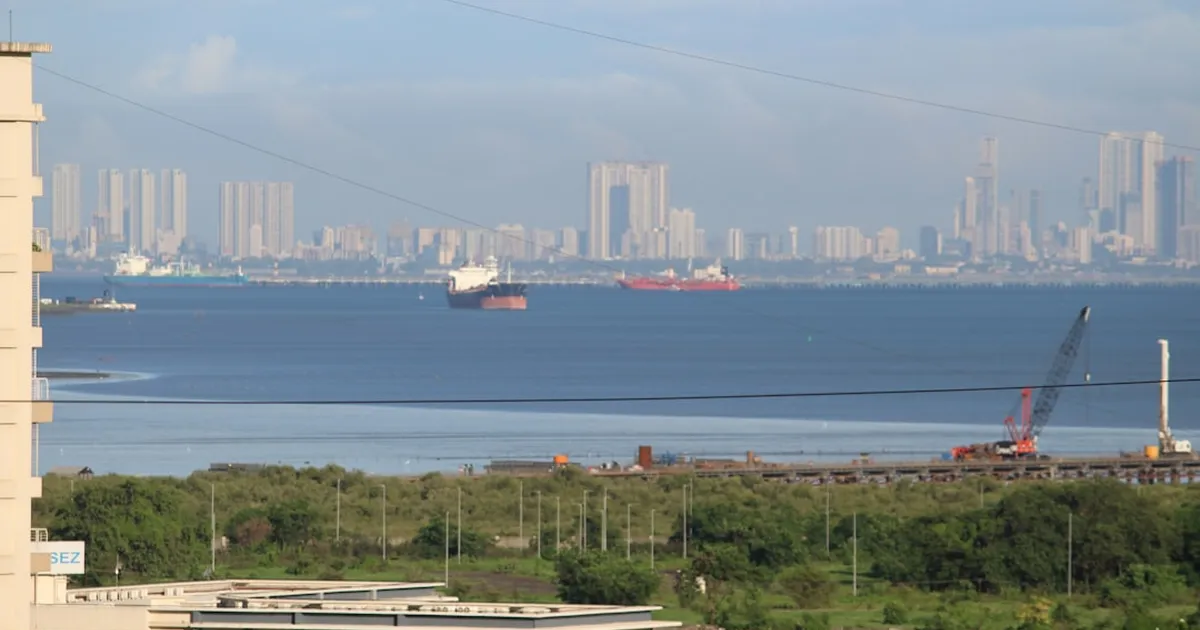
Thane Vs Navi Mumbai For Luxury Homebuyers In 2026
Thane vs Navi Mumbai for Luxury Homebuyers in 2026: The Definitive Guide
This is the question every serious MMR homebuyer is wrestling with right now. You have a budget of ₹2 crore and above, you want a luxury apartment with world-class amenities, and you've narrowed it down to two suburban powerhouses — Thane and Navi Mumbai. Both are compelling. Both are transforming. But they are transforming in fundamentally different ways, and your choice will shape the next decade of your life and your investment returns.
This guide is built for buyers who have already moved past the basics. We won't tell you that both cities have malls. We will tell you which specific micro-markets are outperforming, what buyers who've already purchased are actually saying, where prices are heading in 2026, and — critically — when one option is clearly better than the other. Read every section before you make your call.
Head-to-Head: Thane vs Navi Mumbai at a Glance (2026)
| Parameter | Thane | Navi Mumbai |
|---|---|---|
| Luxury Price Range (per sq ft) | ₹19,000 – ₹25,000 (premium pockets) | ₹14,500 – ₹29,610 (varies by node) |
| 3-Year Price Appreciation | ~46% (overall); up to 81.6% in Kalher | 17.4% YoY (Q1 2025); Panvel up 74% since 2021 |
| Rental Yield (luxury segment) | 3.5% – 6% (Majiwada, Pokhran Road) | 3% – 7.1% (Ghansoli, Nerul, Seawoods) |
| Best Luxury Micro-Markets | Hiranandani Estate, Pokhran Road, Kolshet, Ghodbunder Road | Palm Beach Road, Nerul, Seawoods, Kharghar |
| Airport Access | 45–60 min drive to CSMIA (T1/T2) | 15–25 min to NMIA (now operational from Dec 2025) |
| South Mumbai Commute | 45–60 min via Eastern Express Highway | 20–25 min via MTHL (Atal Setu) |
| Metro Status | Ring Metro under construction; target 2029 | Metro Line 1 operational; Phase 2 & 3 under construction |
| Infrastructure Planning | Organic growth, well-developed social infra | Master-planned by CIDCO, wider roads, greener |
| Top Luxury Developers | Lodha, Hiranandani, Piramal, Oberoi, Godrej, Kalpataru | Adani, L&T, Gami Group, Adhiraj, Godrej (Panvel) |
| Congestion Risk | Moderate to High (Ghodbunder, Eastern Express bottlenecks) | Low to Moderate (planned roads, lesser density) |
| Who Should Buy Here | Central/Eastern Mumbai professionals, family end-users, NRIs | South Mumbai commuters, investors, airport-linked professionals |
The Price Story: Where Luxury Actually Starts in 2026
Let's be precise. In Thane, the luxury story is concentrated in a handful of corridors. Hiranandani Estate and Pokhran Road are the undisputed premium addresses, with prices routinely crossing ₹19,000 per sq ft. Kolshet Road, which has transformed dramatically from an industrial stretch into a high-end residential belt, is also now firmly in the ₹16,500–₹19,000 per sq ft bracket. At the peak, premium pockets like Pokhran Road and Kolshet are seeing rates of ₹19,800 to ₹25,000 per sq ft — and Thane as a whole has seen prices appreciate by nearly 46% over just three years.
In Navi Mumbai, the luxury price story is more fragmented — but that fragmentation works in buyers' favour. Vashi, the most established node, commands ₹28,000+ per sq ft, comparable to mid-Mumbai. Nerul on Palm Beach Road is touching ₹29,610 per sq ft in truly premium projects. But Kharghar, which offers a mature lifestyle environment with airport proximity, still offers luxury entry at ₹15,000–₹18,000 per sq ft. The airport-adjacent areas of Ulwe and Panvel, which are fast-maturing, have current rates of ₹10,500–₹16,600 per sq ft — still affordable for luxury ticket sizes but appreciating at 20–25% year-on-year.
One number worth burning into memory: property prices in the Panvel region have jumped 74% since 2021, entirely driven by the Navi Mumbai International Airport effect. That appreciation rate exceeds Thane's 46% three-year run. If you're buying today in the airport corridor, you're buying into a market that is still in its second innings of growth.
Deep Dive: Thane as a Luxury Destination in 2026
The Lifestyle Case for Thane
Thane has earned its status through two decades of relentless, organic development. It is not a planned city — it evolved. And that evolution has created something that planned cities often lack: genuine urban energy. You get vibrant local markets alongside 5-star clubhouses. Viviana Mall and Korum Mall both operate at full capacity within the city. Schools like CP Goenka International, Hiranandani Foundation School, Sulochanadevi Singhania School, and Billabong High International are genuinely excellent — not just on paper. Jupiter Hospital, Bethany Hospital, and Currae Specialty Hospital provide solid healthcare infrastructure without driving 30 minutes to find a specialist.
The walk-to-work culture in Thane is real and growing. Wagle Estate, Kapurbawadi, and Manpada now host TCS, Infosys, Syntel, and a growing roster of MNCs. For a professional working in Thane's own commercial ecosystem, daily life is genuinely convenient in a way that Navi Mumbai's newer nodes can't yet match.
Top Luxury Micro-Markets in Thane
- Hiranandani Estate, Ghodbunder Road: The flagship luxury address in Thane. A 250-acre township with neoclassical architecture, manicured gardens, and a genuine walk-to-work campus. Premium units routinely exceed ₹20,000 per sq ft. The brand value is unmatched within Thane — and the resale market is consistently liquid.
- Pokhran Road 1 & 2: Known for proximity to Yeoor Hills and elite residential towers. Premium projects here offer hill-view apartments with strong builder names. Prices range from ₹19,000–₹25,000 per sq ft. Limited supply keeps appreciation steady.
- Kolshet Road: The fast-rising star. Once industrial, now home to projects by Lodha, Kalpataru, Piramal, and Oberoi Realty (Forestville). Prices in the ₹16,500–₹22,000 range offer a relative value window that is closing quickly. Note: existing residents flag patchy road conditions and distance from Thane station (~7 km) as genuine negatives worth factoring in.
- Teen Hath Naka / Majiwada: The connectivity sweet spot. Sitting at the intersection of Eastern Express Highway and Ghodbunder Road, Majiwada delivers strong rental demand from working professionals. Projects like Adani Codename LIT at Teen Hath Naka offer premium 2 & 3 BHK residences starting from ₹2 crore.
- Manpada / Balkum: Proximity to Sanjay Gandhi National Park gives these pockets a genuine green premium. Piramal Vaikunth at Balkum — a 32-acre integrated township with India's first ISKCON temple within the premises and views of Yeoor Hills — is among the most aspirational addresses in Thane West.
Notable Luxury Projects in Thane (2026)
- Lodha Sterling – Kolshet Road. 2, 3 & 4 BHK. 10 minutes to Viviana Mall, Thane station, and Jupiter Hospital.
- Lodha Stella – Ghodbunder Road, Kapurbawdi. 3 & 4 BHK. Less than 1 minute from TCS IT Park & Lodha iThink. Viviana Mall 10 minutes away.
- Piramal Vaikunth – Balkum Road. Spread across 32 acres with 15 towers. Direct access to Balkum Metro station. 2 & 3 BHK priced at approximately ₹11,000–₹13,000 per sq ft.
- Oberoi Forestville – Kolshet Road. Premium biophilic design development by Oberoi Realty with 3 BHK layouts of 1,090–1,367 sq ft carpet area.
- Jardin – Oberoi Garden City, Thane – 3 BHK starting ₹3.23 crore, near Little Flower High School and Bethany Hospital. Completion June 2026.
- Hiranandani Estate Belicia – Ghodbunder Road. 2, 3, and 4 BHK with 4 BHK at ₹4.64 crore. Adjacent to Korum Mall. Completion expected December 2026.
What Thane Buyers Are Actually Saying
Real reviews across property platforms reveal a consistent pattern: buyers love the urban energy, social infrastructure, and access to Mumbai corridors. But frustrations surface around Ghodbunder Road congestion during peak hours — the 16-lane road still gets severely jammed. Kolshet Road residents specifically call out poor road quality, dust pollution from ongoing construction, and distance from Thane station. Even enthusiastic Hiranandani Estate residents note that while the township itself is immaculate, exiting during rush hour can cost 30–40 minutes.
The honest assessment: Thane works brilliantly if you either work within Thane itself or can commute on a flexible schedule. If you're an 8am-6pm CBD commuter, road congestion is a daily reality that no premium clubhouse can offset.
Thane Infrastructure Watch: What's Coming
- Thane Ring Metro (Circular Metro): India's first intra-city ring metro. 29 km loop with 22 stations covering Wagle Estate, Kolshet, Balkum, Ghodbunder Road, Kasarvadavali. Civil construction has begun in the Ghodbunder area as of April 2026. Target completion: 2029. When operational, areas like LBS Road, Wagle Estate, and Kolshet will see a significant spike in residential and commercial property demand.
- Metro Line 4 (Wadala to Kasarvadavali): A 32 km corridor now in its final construction phase. This will connect Thane directly to South Mumbai via Wadala and to Western suburbs via Ghatkopar.
- Thane-Borivali Twin Tunnel: India's largest Tunnel Boring Machine was launched in December 2025. This tunnel will dramatically reduce east-west commute time and unlock seamless access between Thane and Western MMR suburbs.
- Thane Coastal Road: A 13.5 km, 6-lane road costing ₹3,364 crore, targeting May 2028 completion. Will divert heavy truck traffic off Ghodbunder Road, directly benefiting residential quality in Balkum, Kolshet, and Kasarvadavali.
Deep Dive: Navi Mumbai as a Luxury Destination in 2026
The Game-Changer: Navi Mumbai International Airport Is Now Open
Everything changed on December 25, 2025. The Navi Mumbai International Airport (NMIA) commenced commercial operations with its first IndiGo flight arriving from Bengaluru. By February 2026, it had moved to round-the-clock operations, with major carriers including IndiGo, Air India Express, and Akasa Air scaling up to approximately 60 daily departures. Phase 1 capacity is 20 million passengers annually, with the full build-out targeting 90 million passengers — putting it in the same league as Delhi's IGI.
This is not a future promise anymore. It is operational infrastructure. The airport is directly linked to the Atal Setu, the Sion-Panvel Highway, and the Navi Mumbai Metro network. Properties within the airport influence zone are expected to see sustained capital appreciation of 8–12% per year over the next five to seven years. Every aviation sector job created typically generates 3–4 additional jobs in hospitality, logistics, and retail — meaning the demand multiplier for residential real estate near NMIA is very real.
The Atal Setu Advantage
The Mumbai Trans Harbour Link (MTHL), completed in 2024–25, has fundamentally repositioned Navi Mumbai relative to South Mumbai. A commute that used to take 60+ minutes now takes 20–25 minutes. This is not a marginal improvement — it effectively means that a professional working in Nariman Point, Fort, or BKC can now live in Navi Mumbai without sacrificing a meaningful chunk of their day. This single infrastructure change has already driven significant appreciation in Ulwe and Panvel, and it continues to expand the buyer base in ways that are still feeding through into prices.
Top Luxury Micro-Markets in Navi Mumbai
- Palm Beach Road (Nerul / Seawoods): Navi Mumbai's own Marine Drive. Wide roads, sea-facing towers, green patches, and direct MTHL access to South Mumbai in 20 minutes. In prime areas like Nerul, luxury apartments average around ₹29,610 per sq ft. Seawoods 2 BHKs start around ₹2.22 crore. Key luxury projects include Adani 9 PBR (MahaRERA: P51700032812), Gami NMS Palm Beach (starting ₹2.55 crore), and the established NRI Complex. Rental yields in Sector 44 Seawoods reach 6.4%, among the highest in the MMR region.
- Kharghar: The planning masterpiece within Navi Mumbai. Proximity to CBD Belapur (5-minute drive), NIFT, multiple engineering colleges, Kharghar Hills, and excellent social infrastructure. Luxury residences start at approximately ₹90 lakh for mid-luxury and go up to ₹3.5 crore+ for premium towers. Rental yields here hit 5–7%. Kharghar is also now Maharashtra's most preferred hub for luxury lifestyle homes according to analyst consensus.
- Vashi: The most established and premium node. Commands ₹28,000+ per sq ft — still 20–30% cheaper than comparable Mumbai localities like Bandra or Worli. Strong commercial base, Inorbit Mall, Vashi railway station, and the most liquid resale market in Navi Mumbai. Best for buyers who want a proven, stable address without speculative risk.
- Ulwe & Panvel (Airport Corridor): The highest-growth zone. New launches in Ulwe start at ₹85 lakh for 1 BHK and go up to ₹1.8 crore+ for premium 2–3 BHK builds. Ulwe property rates have climbed from ₹12,300 per sq ft in 2021 to ₹14,500–₹16,600 in 2026. This is where the 20–25% year-on-year appreciation is happening. The tradeoff: social infrastructure is still maturing, possession timelines can stretch, and the "early investor" window is narrowing fast.
- Airoli / Ghansoli: The emerging tech-and-rental play. Dhirubhai Ambani Knowledge City is here. Companies like Reliance, L&T, and Accenture have offices nearby. Sector 23 Ghansoli delivers the highest rental yield in Navi Mumbai at 7.1%, while Sector 7 Airoli has seen 120.9% price appreciation over three years — the second-highest in the entire city.
Notable Luxury Projects in Navi Mumbai (2026)
- Adani 9 PBR – Sector 60, Nerul, Palm Beach Road. 2.5 & 3 BHK luxury residences. MahaRERA registered (P51700032812, P51700033690). Nexus Seawoods Mall 8 minutes, Delhi Public School 5 minutes, Inorbit Mall Vashi 15 minutes.
- Gami NMS Palm Beach (Seawoods) – Starting ₹2.55 crore for 2, 3, 4, 5 BHK. RERA: P51700052377. Palm Beach Road frontage. Possession December 2028.
- L&T Seawoods West Square – Starting ₹2.17 crore. RERA approved. Premium amenities and railway station proximity.
- Godrej Green Terraces (Panvel) – Part of Godrej City township. 1, 2, 3 BHK at ₹7,500–₹9,000 per sq ft. RERA: P52000077918. Sustainable architecture with rainwater harvesting and solar energy.
- Sai Proviso Atlantis (Kharghar) – 2 & 3 BHK luxury apartments. RERA: P52000051330. Rooftop infinity pool, clubhouse, landscaped gardens. Possession 2028.
What Navi Mumbai Luxury Buyers Are Actually Saying
Buyers in established nodes like Vashi, Nerul, and Kharghar consistently praise the planned infrastructure — wide roads, well-maintained civic zones, and significantly lower pollution compared to Thane. The coastal breeze, proximity to Kharghar Hills, Pandavkada Falls, and Karnala Bird Sanctuary give Navi Mumbai a lifestyle quality that surprises many first-time visitors. Seawoods Grand Central Mall, with its direct railway station integration, is a genuine lifestyle upgrade over anything Thane currently offers in terms of transit-retail convenience.
But the honest negatives are also consistent: buyers in newer nodes like Ulwe and Panvel flag ongoing construction noise, incomplete last-mile connectivity, and a retail/dining ecosystem that is still several years from maturity. Getting to Andheri or Bandra for work still takes time despite MTHL. And Navi Mumbai's newer areas specifically can feel "quiet to the point of isolated" for buyers used to the energy of Mumbai's western suburbs or central Thane.
Navi Mumbai Infrastructure Watch: What's Coming
- Navi Mumbai Metro Line 1 (Phase 2 & 3): 11 km extension connecting Belapur, Kharghar, Taloja, and Pendhar. Already operational ridership reached 1 crore riders within 2 years of launch — reflecting genuine commuter adoption.
- Metro Line 8 (Gold Line): Officially approved under PPP model in late 2025. A 35 km corridor linking CSMIA (old airport) to NMIA (new airport), passing through Vashi, Nerul, and Seawoods. Properties near these future stations are expected to appreciate 10–12% upon completion.
- Reliance SEZ (4,000 Acres): Reliance Industries has secured a lease from Navi Mumbai SEZ to develop a global economic hub. This will generate massive employment demand in the city.
- India's First Data Park (600 Acres): Adjacent to Taloja Industrial Estate. Navi Mumbai is rapidly becoming a hub for large-scale data centre projects — creating white-collar employment that drives residential demand.
- Thane to NMIA Elevated Road: A 25 km, 6-lane elevated road currently under construction, which will directly connect Thane to the new international airport and significantly reduce travel time between the two cities.
Investment Returns: Where the Real Numbers Point
For buyers prioritising immediate and stable rental income, Thane is the stronger performer right now. Average rental yields in Majiwada and Pokhran Road range between 3.5% to 5%, backed by deep demand from working professionals and established families. Some corridors — particularly Lokmanya Nagar at 7.5% and Patlipada at 5.6% — outperform the broader market. Thane's property market has appreciated significantly over the last 5–7 years, and prices are now in a more stable phase — better for consistent, low-risk growth rather than explosive near-term returns.
For capital appreciation potential over a 5–10 year horizon, Navi Mumbai — particularly the airport corridor — tells a more compelling story. Sector 6 Nerul has seen 156.4% price appreciation over three years. Sector 7 Airoli clocked 120.9%. The airport is expected to directly create around 4 lakh jobs, with the employment multiplier effect adding hospitality, logistics, cargo, and retail jobs on top. Historical data from global twin-airport cities like London and Dubai shows that the steepest price increases often come 2–5 years after the airport opens, as the surrounding ecosystem matures. That window is now.
Rental yields in top Navi Mumbai sectors are notable: Sector 23 Ghansoli delivers 7.1%, Sector 4 Nerul hits 6.9%, and Sector 44 Seawoods offers 6.4% — all significantly above the MMR average. For HNI investors prioritising rental yield alongside appreciation, the Nerul-Seawoods corridor on Palm Beach Road currently offers the best risk-adjusted profile in the region.
Lifestyle Quality: The Real-World Differences That Matter
This section matters more than most guides acknowledge. You'll spend more time living in your home than watching its value appreciate.
Thane wins on: Urban energy, local market culture, Viviana and Korum Mall access, established school ecosystem (Singhania, Goenka, Hiranandani Foundation), shorter drive to Central Mumbai, and the lived-in community feel of a mature city. Thane has hospitals like Jupiter (rated consistently well) and Bhakti Vedanta. If you're a foodie, Thane's street food and dining culture is alive and varied in ways that planned cities take time to develop.
Navi Mumbai wins on: Road quality and width, air quality, civic planning discipline (CIDCO's management generally delivers more uniform services), proximity to nature (Kharghar Hills, Pandavkada Falls, Karnala Bird Sanctuary), coastal breeze, and — crucially in 2026 — access to the new international airport. Families who value calm residential ambiance, planned parks, and lower pollution levels consistently prefer Navi Mumbai after experiencing both.
One underappreciated point: Navi Mumbai has received a coveted "5-Star" rating in India's Garbage Free Cities Rating. This reflects real governance quality, not just marketing. Thane, while well-managed relative to Mumbai proper, sees more variability in civic services across its many wards.
Who Should Buy Where: Clear Personas
- Buy in Thane if: You work in Central or Eastern Mumbai and need a sub-30-minute commute. You want a ready-to-live-in luxury ecosystem with established schools, hospitals, and malls. You value a vibrant urban lifestyle with local markets and street energy. You prefer stable, consistent appreciation over speculative high-return plays. Your budget is ₹2–₹5 crore for a 3 BHK in a branded township.
- Buy in Navi Mumbai if: You commute to South Mumbai, BKC, or the Western suburbs and need MTHL access. You're a long-horizon investor (5–10 years) betting on airport-led job growth and infrastructure maturation. You prioritise planned infrastructure, cleaner air, and quieter residential living. You want a larger apartment for the same or less money. Your budget is ₹2–₹6 crore and you want future-facing capital appreciation.
- Buy Palm Beach Road (Nerul/Seawoods) if: You want the premium luxury address in Navi Mumbai right now, comparable to Thane's Hiranandani Estate in terms of lifestyle quality, with the added bonus of NMIA proximity and one of the highest rental yields in the MMR.
- Buy Kolshet / Ghodbunder if: You want Thane luxury at a slight entry discount compared to Pokhran Road, with the Ring Metro as a structural tailwind for appreciation once it opens in 2029.
- NRI Buyers: Both cities have strong NRI appeal. Thane's established developer brands (Lodha, Hiranandani, Piramal) offer the familiarity and after-sales support that NRIs value. Navi Mumbai, particularly the airport zone, offers the narrative of a city being built from scratch around one of India's most significant aviation hubs — a theme that resonates strongly with global-city-minded NRI investors.
Honest Risks: What Neither Brochure Will Tell You
Thane Risks: Traffic congestion on Ghodbunder Road and the Eastern Express Highway is a genuine daily friction that residents consistently flag. The Ring Metro, which would solve this, is still three years away (target 2029), and metro projects in India routinely run behind schedule. Premium prices in established pockets like Hiranandani Estate already reflect significant maturation — the "early investor" window for explosive appreciation here has passed in many micro-markets. Land availability is constrained, which limits greenfield township development.
Navi Mumbai Risks: In high-growth zones like Ulwe and Panvel, social infrastructure — schools, hospitals, quality restaurants — is still catching up to the housing supply. Some areas in the airport corridor still have incomplete last-mile road connectivity. The sheer volume of new project launches (up roughly 15–20% year-on-year in 2026) means oversupply risk is real in certain nodes. Buyers in under-construction projects face the usual delays risk — always verify developer possession history on MahaRERA before booking. And Navi Mumbai's rental market, outside established nodes like Vashi and Nerul, is still forming — income-seeking investors may wait longer for occupancy than projected.
Buyer's Checklist Before Signing
- ✅ Verify MahaRERA registration — Search the developer and project on maharera.mahaonline.gov.in before any payment
- ✅ Check developer's possession track record — Look up their previous 3–4 projects; ask buyers in those projects, not just sales staff
- ✅ Visit during peak hour — Drive from the project to your workplace at 8:30 AM on a weekday. There is no substitute for this
- ✅ Calculate carpet area, not super built-up — Luxury projects in both cities can have loading factors of 25–35%. Your actual livable area matters
- ✅ Check micro-location, not just city — "Thane" and "Navi Mumbai" are large; Kolshet and Ulwe behave very differently from Hiranandani Estate and Vashi
- ✅ Stamp duty awareness: In Maharashtra, male buyers pay 7% (5% stamp duty + 1% metro cess + 1% local body tax); female buyers pay 6% — factor this into your total outgo
- ✅ Assess maintenance costs — Luxury projects with 60+ amenities can carry maintenance charges of ₹8–₹15 per sq ft per month. On a 1,500 sq ft flat, that's ₹12,000–₹22,500 per month
- ✅ Future resale liquidity — Thane's resale market is deeper and more liquid today. Navi Mumbai's liquidity is growing but unevenly distributed by node
- ✅ Airport & Metro timeline realism — NMIA is operational. Ring Metro target is 2029 but subject to typical Indian infra delays. Price your expectation accordingly
- ✅ Rental yield for investment buyers — Only commit to a rental yield projection if you've spoken to local brokers about actual vacancy rates in that specific building type
Frequently Asked Questions
Q: Is Thane or Navi Mumbai better for a luxury 3 BHK in 2026?
Both offer excellent luxury options, but the answer depends on where you work. Thane is superior if you work in Central or Eastern Mumbai. Navi Mumbai — specifically Palm Beach Road and Kharghar — is better for South Mumbai commuters or those working near the new airport. In both cities, luxury 3 BHKs in branded projects typically range between ₹2.5 crore and ₹5 crore depending on the micro-market and developer.
Q: Which city has better price appreciation potential in 2026?
For near-term stable appreciation, Thane's track record (46% in 3 years) is proven and driven by well-established demand. For higher long-term potential, Navi Mumbai's airport corridor — particularly Ulwe, Panvel, and Kharghar — is on a structural growth curve with 20–25% YoY appreciation in top nodes. The NMIA effect is expected to sustain 8–12
This guide was written by Virendra Tanwar, Senior Real Estate Analyst with research support from artificial intelligence. AI assisted in compiling information from regulatory sources, industry references, and expert commentary. The final content was reviewed by our editor before publishing. We update guides when regulations change or when newer best-practice information emerges.
Sources consulted: State RERA portals · Developer official websites · Housing.com / 99acres guides · Industry publications · Expert commentary (quoted in the guide body).
Last reviewed: 21 April 2026 · Spot an error? Let us know
Related Guides
 Best Of
Best Luxury Projects In Gurugram Under ₹5 Crore In 2026
Best Luxury Projects In Gurugram Under ₹5 Crore In 2026: The Ultimate Buyer's Guide Finding a genuinely luxurious home in Gurugram under ₹5 crore is harder...
 Best Of
Best New Launch Cities For Luxury Real Estate In India In 2026
Why 2026 Is a Defining Year for Luxury Real Estate in India This guide is written for one type of buyer: someone with serious money on the table and the...
 Best Of
Sector 150 Noida Property Buyer's Guide 2026: Golf-view Homes, Prices, Best Projects & Investment Risks
Sector 150 Noida buyer’s guide 2026 covering golf-view homes, prices, best projects, and investment risks with expert analysis.
 Best Of
Senior Living In India 2026: Luxury Retirement Homes In Gurugram, Bengaluru & Pune
Senior living in India 2026 explained with luxury retirement homes in Gurugram, Bengaluru and Pune, pricing, comparisons and expert analysis