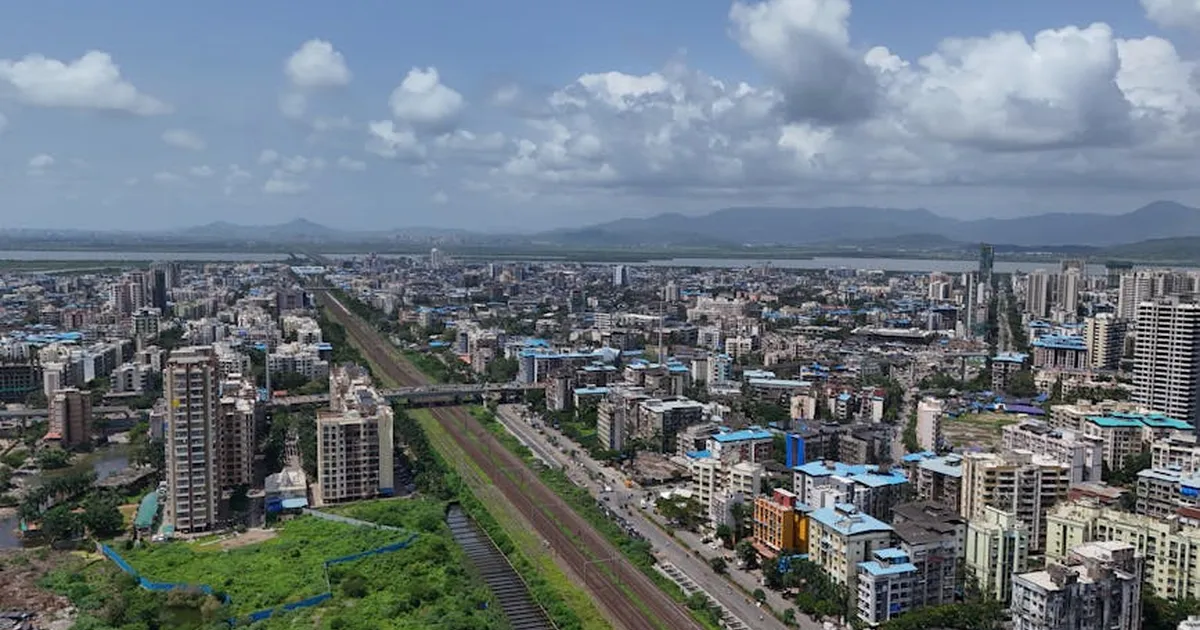
Pune Municipal Corporation Approves 54 Km Underground Road Network And Riverfront Development In 2026-27 Budget

PMC Approves 54 km Underground Road Network and Riverfront Development in ₹13,995 Crore 2026-27 Budget
The Pune Municipal Corporation has unveiled an ambitious infrastructure roadmap for 2026-27, with a total budget allocation of ₹13,995 crore—₹1,377 crore higher than the previous fiscal year. The budget, presented by PMC Commissioner Naval Kishore Ram to the standing committee, marks a transformative shift in how Pune will tackle its severe traffic congestion and urban livability challenges. The centerpiece of this push is a 54 km underground road network combined with a 17.8 km Mula-Mutha riverfront development project, alongside 4,725 new homes under the Pradhan Mantri Awas Yojana 2.0, comprehensive sewage infrastructure upgrades, and a "zero-waste" initiative.
The underground corridor network, formally called the "Paatal Lok" project, represents a ₹32,000 crore infrastructure investment at the state and national level. It includes the Yerawada-Katraj twin tunnel serving as a north-south spine, supplemented by planned routes connecting Shaniwarwada-Swargate, Bajirao Road, and Shivaji Road. These tunnels will run approximately 30 meters below the surface to avoid interference with the expanding Pune Metro network. The project aims to separate long-distance through-traffic from surface city traffic, reducing commute times along the critical north-south axis and easing pressure on feeder roads across the metropolitan region.
Real Estate Impact: Which Neighborhoods Will Benefit Most
The riverfront development will directly influence residential demand in Sangamvadi, Bund Garden, and Mundhwa—areas already tracking as premium micro-markets. Market analysts project that proximity to the rejuvenated 17.8 km riverfront, featuring walkways, cycling tracks, parks, and recreational infrastructure, will drive premium housing demand similar to waterfront developments in other major Indian cities. Koregaon Park and Kalyani Nagar, already among Pune's most expensive residential zones, are positioned to see significant value appreciation given their immediate adjacency to the developed riverfront corridor.
The eastern corridor—particularly Kharadi, Mundhwa, and Hadapsar—is expected to remain the most active real estate zone. This belt already benefits from strong IT and commercial activity, and the proposed Mundhwa-Kharadi road link, new flyover developments, and metro expansion will further strengthen connectivity. The addition of organized housing under PMAY 2.0 in Hadapsar and Wadgaon is likely to shift these pockets from investor-driven speculation to end-user residential zones, potentially stabilizing prices after years of volatility. Western Pune areas such as Kothrud, Pashan, and Bhugaon are expected to see gradual price appreciation driven by the proposed Kothrud-Pashan underground tunnel and improved Chandni Chowk-Bhugaon connectivity.
Why This Budget Matters: The Traffic Crisis Driving Change
Pune's traffic crisis is not hypothetical. Roads currently occupy only 9% of the city's total land area, yet vehicular load exceeds capacity by more than two times. With the city's population projected to reach 65 lakh by the next census and the rapid expansion driven by Global Capability Centers, conventional road-widening strategies have proven insufficient. The underground road network represents a paradigm shift—utilizing subterranean space to dramatically increase throughput without consuming valuable surface land needed for housing, commerce, and green space.
The Mula-Mutha riverfront rejuvenation, spanning 44.4 km across 11 phases, is nearing critical completion milestones. As of March 2025, Phase 1 (Sangamwadi to Bund Garden, 3.7 km) was 80-85% complete, with a 2 km stretch already opened to the public in June 2025. Phase 2 (Bund Garden to Mundhwa, 5.3 km) is progressing more slowly at under 33% completion. The project has faced sustained citizen opposition and environmental scrutiny, with protests highlighting concerns about ecological impact and river channelization. However, municipal authorities have positioned the riverfront as essential for flood resilience, public green space, and tourism-driven economic development.
Budget Allocation Breakdown: Where the Money Goes
Of the ₹13,995 crore total, the road department received the largest allocation: ₹1,866.39 crore. Of this, ₹1,505 crore is earmarked for capital works including new road construction, asphalt resurfacing, and infrastructure improvement—with particular emphasis on roads in newly merged villages. Heritage streets like Laxmi Road, Bajirao Road, and Shivaji Road will be redeveloped while preserving historic character. The plan covers 32 major roads, corridor improvement designs for 9 key routes, and junction upgrades at 30 traffic intersections.
Sewerage and water infrastructure received ₹842.85 crore under the AMRUT 2.0 scheme, with plans to lay approximately 100 km of new sewer lines and undertake major maintenance of drainage systems. Additional water infrastructure projects include five water tanks and a 35 km pipeline network in Bavdhan, six tanks with a 77 km pipeline network in Sus-Mhalunge, and new systems for Lohegaon, Wagholi, Shewalwadi, and Mundhwa-Keshavnagar. These investments address the severe water scarcity that has constrained residential development in suburban zones.
Challenges and Revenue Reality: Can PMC Deliver?
A critical concern shadows this ambitious agenda: PMC's revenue collection shortfall. For fiscal 2025-26, the corporation expected ₹12,618 crore in revenue but collected only ₹7,701 crore by end-January 2026—a gap of approximately ₹4,917 crore even before accounting for March collections. Despite introducing a property tax amnesty scheme, the civic body has struggled to increase income substantially. This revenue crisis raises legitimate questions about PMC's ability to fund the ₹13,995 crore budget without significant delays or scope reductions.
Municipal Commissioner Ram has indicated that the underground road project will receive financial support from state and central government budgets, with PMC proposing the initiative in both government funding cycles. However, execution timelines remain uncertain. The pre-feasibility report for the Yerawada-Katraj tunnel was completed and awaited presentation to the Pune Unified Metropolitan Transport Authority (PUMTA) after local body elections concluded. Officials have also flagged that detailed traffic studies are necessary before finalizing route alignments, suggesting the project may not break ground until late 2026 or 2027.
Metro Expansion and Complementary Connectivity
The underground road network does not exist in isolation. Pune's Metro expansion is advancing in parallel. Currently, 33.28 km of metro routes are operational, carrying approximately 200,000 daily passengers. Line 3 (Hinjawadi-Shivajinagar, 23.2 km) is 94% complete and scheduled to open in May 2026, slashing commute times from the city center to the IT hub from over an hour to minutes. Phase 2 extensions include the PCMC-Nigdi line (50% complete, targeted for 2027) and the underground Swargate-Katraj extension (tunnel boring slated to begin before monsoon 2026, projected cost ₹2,954 crore).
These layered infrastructure investments—metro, underground roads, ring roads, and riverfront development—are designed to work synergistically. The 173 km Pune Ring Road (West Section on track for 2026 completion, East Section for 2028) and 83 km Inner Ring Road (₹14,200 crore) will divert through-traffic from the city center. Combined, these projects are expected to reduce inner-city traffic congestion by up to 40% and unlock redevelopment potential in densely built-up central areas currently strangled by congestion.
Homebuyer Takeaway: What to Watch
For buyers evaluating Pune real estate in 2026-27, the infrastructure trajectory is decidedly positive, but execution risk is real. Neighborhoods immediately adjacent to planned metro extensions, riverfront stretches, and underground road access points are likely to see sustained price appreciation—particularly Kharadi, Hadapsar, Mundhwa, Koregaon Park, and Kalyani Nagar. However, project delays are common in Indian municipal infrastructure, and buyers should not assume timelines will be met as announced.
The PMAY 2.0 housing allocation (4,725 units in Hadapsar and Wadgaon) could add supply pressure in these micro-markets, potentially moderating prices for budget and mid-market segments. Conversely, premium residential projects in riverfront-adjacent zones may command sustained premiums as development progresses. Buyers should monitor PMC's revenue collection trends and state government funding disbursement announcements as proxies for project execution momentum.
Questions & Answers (0)
Ask a Question
Get answer immediately here.
Terms & Conditions — Q&A
By submitting a question on RealtyPromoo, you agree to these terms:
1. Content Policy
- Your question must be a genuine real estate query.
- No abusive, defamatory, or promotional content.
- No personal contact info, broker referrals, or spam.
- Questions are reviewed by AI and may be edited for clarity, grammar, or politeness before publication.
2. Publication
- Your first name + last initial (e.g., "Rahul S.") will be displayed publicly with the answer.
- Your full name, phone number, and email are never displayed publicly.
- Once published, your question and answer become part of RealtyPromoo's content.
3. Phone & Email Verification
- OTP verification is mandatory to prevent spam.
- Your phone number and email are stored securely and may be used by RealtyPromoo or its sales team to contact you regarding your query or related properties.
4. Answer Accuracy
- Answers are generated by AI based on publicly available information and the page context.
- Answers are informational only — not financial, legal, or investment advice.
- Always verify pricing, RERA status, and possession dates with the developer before any transaction.
- RealtyPromoo is not liable for decisions made based on AI-generated answers.
5. Pre-RERA / Pre-Launch Projects
- Some listed projects are pre-RERA / pre-launch. These listings are informational only.
- No booking, sale, or agreement is permitted before RERA registration.
- "Express Your Interest" forms collect contact details for future communication, not advance bookings.
6. Moderation
- RealtyPromoo reserves the right to delete, edit, or refuse to publish any question or answer.
7. Privacy
- Your data is handled per our Privacy Policy.
8. Jurisdiction
- These terms are governed by the laws of India.
- Disputes are subject to the courts of Noida, Uttar Pradesh.
Be the first to ask a question. Get an answer immediately.
Questions & Answers
This article was drafted by Kunal Shah, Senior Property Analyst (Freelancer) with research support from artificial intelligence. AI assisted in gathering and summarizing information from primary news sources and official statements, and the final content was reviewed by our editor before publishing. News pages are timestamped at the time of writing and are not updated after publication.
Sources consulted: Primary press releases & company statements · Tier-1 business news (Economic Times, Livemint, Moneycontrol, Business Standard) · BSE / NSE corporate disclosures · Government notifications · State RERA filings (where relevant).
Published: 4 May 2026 · Spot an error? Let us know
Projects mentioned in this article
 Under Construction
Whiteland The Aspen
by Whiteland Corporation
Sector 76, Southern Peripheral Road (spr), Gurugram
₹3.90 Cr - ₹9 Cr+
3 BHK, 4 BHK, 5 BHK, Duplex Penthouses
Related News
 News
News
Lodha Developers Expects Rs 2 Trillion Revenue From Monetisation Of Existing Land Bank And Plans To Reduce Land Acquisition Spend Over Next 24 Months
Lodha Developers announces ₹2 trillion GDV land bank monetisation, reduces land acquisition spend over 24 months. FY26 pre-sales up 16% to ₹20,530 crore...
 News
News
Bhartiya City Announces New Residential Township Project On Kanakapura Road South Bengaluru
Bhartiya City announces pre-launch residential township on Kanakapura Road, South Bangalore. 2 & 3 BHK apartments, gated community, expected completion Dec...
 News
News
Brigade Group Acquires 8 Land Parcels Across 81 Acres In Fy26 To Emerge As Second-largest Land Acquirer Among Listed Developers
Brigade Group acquires 81 acres across 8 deals in FY26, emerging as India's second-largest land acquirer. Bengaluru, Chennai, Hyderabad launches expected FY27.
 News
News
Brigade Group Closes 8 Land Deals Across 81 Acres In Fy26, Emerges As Second-largest Land Acquirer Among Listed Developers
Brigade Enterprises acquires 8 land parcels across 81 acres in FY26, emerging as India's second-largest listed developer acquirer. Analysis of strategy...