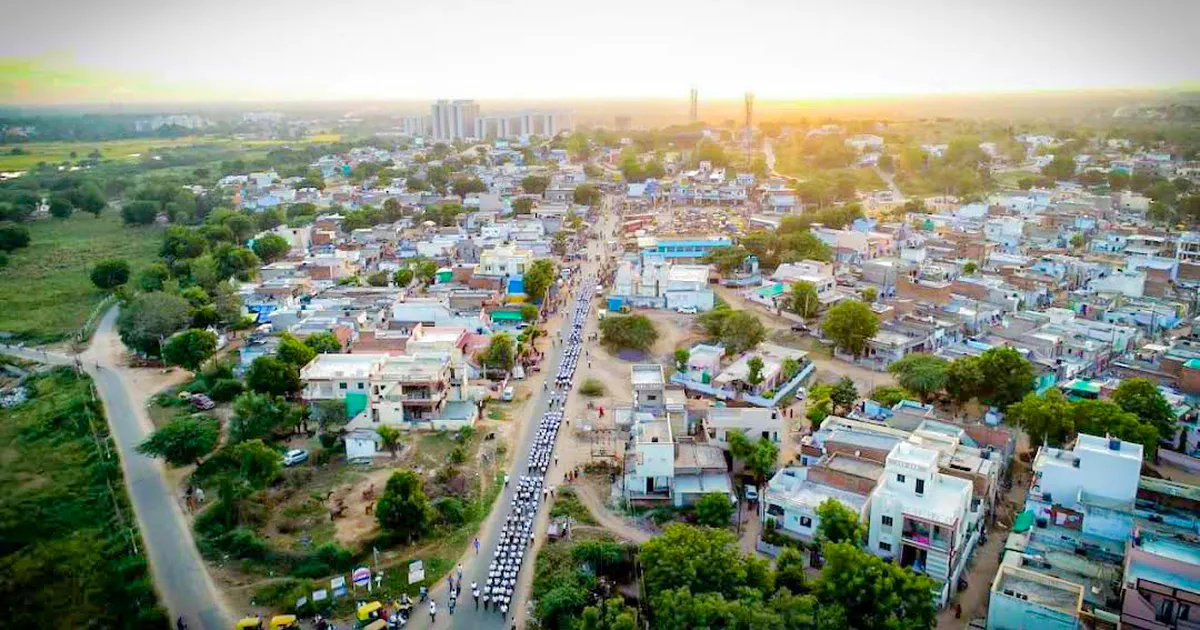
Ahmedabad

About Ahmedabad Real Estate
Ahmedabad has historically been celebrated as the "Manchester of India" for its booming textile industry, but the city's real estate landscape has evolved dramatically over the last decade. Today, it stands as a major economic powerhouse driven by pharmaceuticals, chemical manufacturing, automobile hubs (like Sanand), and a rapidly expanding IT/ITeS sector fueled by the proximity to GIFT City (Gujarat International Finance Tec-City).
Over the last five years, Ahmedabad's real estate market has transitioned from a primarily affordable, end-user-driven market to a dynamic, high-growth metropolis attracting serious institutional and NRI investments. The city is currently experiencing a sustained boom phase. Unlike the volatile spikes seen in NCR or Mumbai, Ahmedabad's growth is heavily backed by tangible infrastructure development rather than mere speculation. The expansion of the city limits by the Ahmedabad Urban Development Authority (AUDA), the widening of the Sarkhej-Gandhinagar (SG) Highway, and the completion of the Sardar Patel (SP) Ring Road have decentralized the city, creating massive self-sustained micro-markets in the west and north.
However, the market is not without its challenges. The recent doubling of Jantri rates (circle rates) has increased the overall acquisition cost for buyers, pushing some budget-conscious buyers further into the peripheries. Yet, compared to other Tier-1 cities like Pune, Bengaluru, or Hyderabad, Ahmedabad remains incredibly competitively priced, offering spacious luxury homes at rates where you would only get compact apartments in competing metros.
Why Invest in Ahmedabad
If you are looking for a market that balances stable rental yields with aggressive capital appreciation, Ahmedabad is currently hitting the sweet spot. Over the past three to five years, premium localities in the western corridor have seen property price appreciations ranging from 18% to 28%. This comfortably outpaces traditional fixed deposits and offers a tangible, lower-volatility alternative to the stock market, especially when factoring in the tax benefits of home loans.
The primary catalyst for this growth is an unprecedented pipeline of mega-infrastructure projects:
- Mumbai-Ahmedabad High-Speed Rail (Bullet Train): Expected to be operational by 2026-2027, this project will reduce travel time between India's financial capital and Ahmedabad to just over two hours. The Sabarmati terminal is already triggering massive real estate interest in the surrounding northern corridors.
- Ahmedabad Metro Phase 2: Connecting Motera to Mahatma Mandir in Gandhinagar and branching out to GIFT City. Expected to be fully operational by late 2024 or early 2025, this line is turning the Ahmedabad-Gandhinagar twin city region into a single, cohesive real estate market.
- Dholera SIR (Special Investment Region): Located south of Ahmedabad, this Greenfield industrial city is drawing massive global manufacturing investments (including semiconductor plants). While Dholera is a long-term play, it significantly boosts the economic gravity of the entire Ahmedabad district.
- SG Highway Upgrades: The conversion of the SG Highway into a six-lane, signal-free corridor with multiple flyovers has drastically cut commute times, making peripheral areas like Vaishnodevi Circle highly accessible.
Price Trends
The table below provides a snapshot of current property prices across major micro-markets in Ahmedabad. The western and north-western corridors continue to command the highest premiums due to superior civic infrastructure and commercial hubs.
| Locality | Current Avg Price (₹/sqft) | 1-Year Change (%) | 3-Year Change (%) | Budget Segment |
|---|---|---|---|---|
| Bodakdev | ₹8,200 - ₹11,500 | + 8.5% | + 24% | Luxury |
| Prahlad Nagar | ₹6,800 - ₹9,000 | + 6.2% | + 18% | Premium |
| Science City | ₹7,000 - ₹9,500 | + 10.1% | + 28% | Premium |
| Bopal (South/Center) | ₹4,800 - ₹6,500 | + 7.4% | + 21% | Mid-Segment |
| Shela | ₹4,500 - ₹5,800 | + 11.5% | + 32% | Mid-Segment |
| Gota | ₹4,200 - ₹5,500 | + 5.8% | + 16% | Affordable/Mid |
| Chandkheda | ₹3,800 - ₹5,000 | + 6.0% | + 15% | Affordable |
| Vaishnodevi Circle | ₹5,000 - ₹6,800 | + 12.2% | + 35% | Mid to Premium |
| Vastrapur | ₹7,500 - ₹10,000 | + 5.5% | + 14% | Luxury |
Analyzing the data, Vaishnodevi Circle and Shela are the clear winners for rapid appreciation. Vaishnodevi Circle is benefiting directly from its strategic position bridging Ahmedabad and Gandhinagar, making it a favorite for professionals working in GIFT City but wanting the lifestyle of Ahmedabad. Shela, heavily promoted by AUDA with excellent town planning, has transformed from a dusty outskirt to a premium residential hub, absorbing the spillover demand from the saturated Bopal market. Conversely, established areas like Vastrapur and Prahlad Nagar show slower, steadier percentage growth due to their already high base prices.
Top Localities for Homebuyers
Choosing where to live in Ahmedabad depends heavily on your lifestyle preferences, workplace location, and budget. Here are the standout residential neighborhoods:
- Bodakdev & Satellite: These are the quintessential luxury addresses of Ahmedabad. Home to top-tier schools like Nirma Vidyavihar, premium shopping destinations like Palladium Mall, and high-end dining. It is best suited for HNI families and senior corporate executives. The vibe is cosmopolitan but peaceful. Prices range from ₹8,000 to over ₹12,000 per sqft.
- Science City Road: This area has emerged as the new favorite for luxury buyers. It features wide, well-planned roads, low traffic congestion compared to SG Highway, and proximity to the Gujarat Science City park. It is ideal for large families looking for spacious 4BHK and 5BHK apartments or lavish bungalows. Prices typically range from ₹7,000 to ₹9,500 per sqft.
- Bopal & South Bopal (SoBo): The ultimate family-friendly suburb. It offers a fantastic mix of affordability and lifestyle, with established infrastructure like DPS Bopal, TRP Mall, and numerous hospitals. It is highly favored by young professionals and mid-income families. Expect to pay between ₹4,800 and ₹6,500 per sqft.
- Prahlad Nagar: If you want to walk to work, cafes, and parks, Prahlad Nagar is perfect. It is a major corporate hub lined with IT parks and commercial buildings, balanced by beautiful AUDA gardens. Best for young working professionals and DINK (Double Income No Kids) couples. Prices hover around ₹6,800 to ₹9,000 per sqft.
- Gota: A highly practical choice for budget-conscious buyers. Situated right on the SG Highway, it offers excellent connectivity to the northern industrial hubs and the city center. While it lacks the premium polish of Science City, it provides excellent value for money for first-time homebuyers. Prices range from ₹4,200 to ₹5,500 per sqft.
Top Localities for Investors
If your primary goal is capital appreciation and rental yield, you need to look at areas where the infrastructure is currently being built, not where it is already finished.
- Vaishnodevi Circle to SG Highway Corridor: This is arguably the hottest investment zone in Gujarat right now. Acting as the gateway between Ahmedabad and Gandhinagar/GIFT City, this area is seeing massive luxury township developments. As GIFT City brings in a global workforce, executives are choosing to rent and buy around Vaishnodevi due to its superior connectivity. Expect strong capital gains and rental yields around 3.5% to 4.5%.
- Shela & Ghuma: Located just beyond Bopal, Shela is currently in its aggressive growth phase. AUDA's strict town planning ensures wide roads and ample green spaces. Investors who bought here three years ago have already seen 30%+ returns. As commercial complexes finish construction in the area, property values will see another upward spike.
- Chandkheda & Motera: Anchored by the Narendra Modi Stadium, TCS Garima Park, and ONGC, this northern corridor offers steady, reliable returns. The upcoming Metro Phase 2 connectivity makes it a highly secure investment for budget investors looking for consistent rental income from IT professionals and students.
- Sanand-Nalsarovar Road: For long-term land investors, the corridor heading towards the Sanand industrial hub (home to Tata Motors, Ford/Tata, and numerous ancillary units) offers cheap entry points. It is strictly a 5-to-10-year play, but the land appreciation potential here is massive as industrial expansion continues.
Infrastructure & Connectivity
Ahmedabad's infrastructure is its biggest selling point. The city is designed on a ring-and-radial road pattern, which handles traffic far better than the linear layouts of cities like Mumbai or Bengaluru. However, rapid vehicle growth has led to peak-hour bottlenecks, particularly at SG Highway intersections like Pakwan and Iskcon crossroads.
- Metro Rail: Phase 1 is fully operational, covering 32 km. It features an East-West corridor (Vastral Gam to Thaltej) and a North-South corridor (APMC to Motera Stadium), intersecting at the old city center (Ashram Road). Phase 2 (28.2 km) is under advanced construction, extending the North-South line from Motera to Mahatma Mandir in Gandhinagar, with a crucial spur line branching off to GIFT City. This is expected to be operational by late 2024/early 2025.
- Roadways: The city is defined by two major concentric circles: the 132-ft Ring Road (inner) and the Sardar Patel (SP) Ring Road (outer). The Sarkhej-Gandhinagar (SG) Highway acts as the primary commercial spine. The Ahmedabad-Vadodara Expressway (National Expressway 1) is one of India's best, cutting travel time to Vadodara to just an hour.
- Airport: Sardar Vallabhbhai Patel International Airport (SVPI) is conveniently located just 10-12 km from the city center (Navrangpura/Ashram Road) and about 15-18 km from the western suburbs (Satellite/Bodakdev). It is currently undergoing massive expansion under private management to handle increased international traffic.
- Railways: Kalupur Railway Station is the main junction, but Sabarmati Station is being aggressively developed as a multi-modal transport hub that will integrate the traditional railway, the Metro, and the upcoming High-Speed Bullet Train.
Government Policies & Regulations
The real estate sector in Ahmedabad is tightly regulated by Gujarat RERA (GujRERA). The authority's official portal is robust and transparent, allowing buyers to check project approvals, track construction progress, and verify developer credentials before investing. Always ask for the GujRERA registration number before making a token payment.
Property Registration Costs: The total cost of registering a property in Ahmedabad is roughly 5.95% to 6% of the property's agreement value or the Jantri value (whichever is higher). This breaks down into a base stamp duty of 4.9%, a 1% registration fee, and a slight surcharge.
The Jantri Rate Impact: In April 2023, the Gujarat State Government doubled the Jantri rates (the state-mandated minimum circle rates for property registration) across the state. While this move brought official rates closer to actual market values, it effectively increased the stamp duty burden on buyers and the FSI (Floor Space Index) purchasing costs for developers. Consequently, property prices saw a noticeable hike in mid-to-late 2023 as developers passed these costs onto consumers.
Living in Ahmedabad
Deciding to move to Ahmedabad requires understanding its unique cultural and environmental fabric. It is vastly different from Delhi, Mumbai, or Bengaluru.
The Positives: Ahmedabad is exceptionally safe. It consistently ranks as one of the safest cities in India for women, with a vibrant night culture where people are out safely at 2 AM enjoying street food. The city's infrastructure means that your daily commute will likely be much less stressful than in other IT hubs. The cultural scene is vibrant, peaking during the nine nights of Navratri, which transforms the entire city into a massive, joyous festival. The food scene is legendary—from the bustling midnight stalls of Manek Chowk to high-end cafes on Sindhu Bhavan Road (SBR).
The Negatives: You must be prepared for the climate. Summers (April to June) are brutal, with daytime temperatures frequently crossing 43°C (110°F). Outdoor activity during summer days is practically impossible. Secondly, Gujarat is a dry state. Alcohol is strictly prohibited for residents. While outsiders and tourists can obtain temporary liquor permits, the lack of an open pub and bar culture can be a major culture shock for young professionals moving from cities like Pune or Gurugram. Finally, the air quality, while generally better than Delhi's, still dips into "Poor" categories during winter due to surrounding industrial zones and construction dust.
For weekend getaways, residents frequently drive down to Udaipur (Rajasthan) or Mount Abu, both about 4 to 5 hours away. The Statue of Unity and the Gir National Park also make for excellent short trips.
FAQ
Is Ahmedabad good for real estate investment?
Yes, highly. With the rapid development of GIFT City, the upcoming Bullet Train, and extensive Metro expansion, Ahmedabad offers a rare combination of affordable entry prices and high appreciation potential. Western and northern corridors are seeing 8% to 12% annual capital appreciation.
Which is the best area to buy a flat in Ahmedabad?
For end-users seeking a premium lifestyle, Science City, Bodakdev, and Satellite are the best choices. For budget-conscious families, Bopal and Gota offer excellent value. For investors, Vaishnodevi Circle and Shela currently offer the highest growth potential.
How does Ahmedabad compare to Pune for IT professionals?
Pune has a much larger, established IT ecosystem and a vibrant cosmopolitan nightlife. However, Ahmedabad offers significantly better civic infrastructure, lower traffic congestion, and much larger homes for the same budget. As GIFT City grows, Ahmedabad is rapidly catching up in IT job opportunities, though the dry state status remains a lifestyle difference.
What is the property price forecast for Ahmedabad?
Prices are expected to rise steadily by 6% to 10% annually over the next three years. The operationalization of Metro Phase 2 and the continuous influx of corporate offices into SBR and GIFT City will keep demand high, particularly for premium 3BHK and 4BHK segments.
What is the stamp duty in Ahmedabad?
The effective stamp duty and registration charge in Ahmedabad is approximately 5.95% to 6% of the property value. This includes a 4.9% base stamp duty and a 1% registration fee.
This page was compiled by Manoj Singh, Founder & Editor-in-Chief using artificial intelligence to research the city's real-estate market, infrastructure, and growth trends. AI assisted in gathering data from public portals and industry reports, and the final content was reviewed by our editor before publishing. We update city profiles as market data and infrastructure announcements evolve.
Sources consulted: 99acres city data · MagicBricks city data · Housing.com · Public news archives · Industry reports (Knight Frank, ANAROCK, JLL where cited) · Government infrastructure announcements.
Last reviewed: 26 April 2026 · Spot an error? Let us know