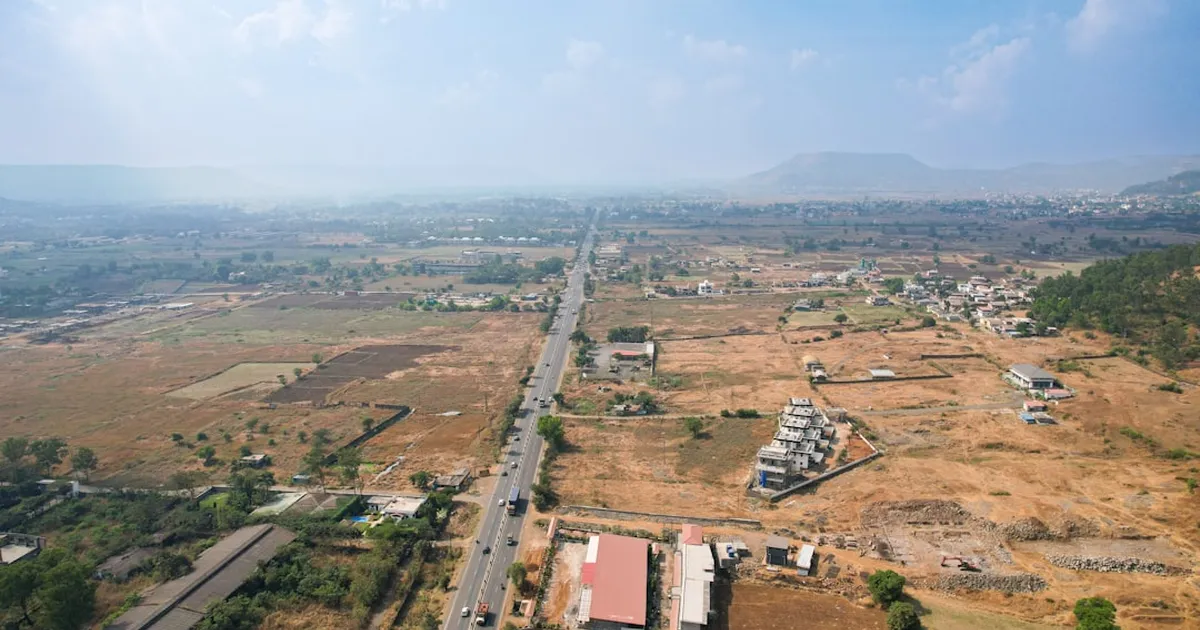
Plotted Developments Gain Ground Across India As Buyers Prioritize Land Ownership And Flexibility In 2026

Plotted Developments Surge Across India as Buyers Shift to Land Ownership and Flexibility in 2026
India's real estate market is experiencing a fundamental shift away from the dominance of high-rise apartments toward plotted developments, particularly across Tier 2 and Tier 3 cities. As of April 28, 2026, this transition has moved from the periphery of market discussions into mainstream investment and end-user demand. The trend reflects a deeper change in how Indian families and investors view property ownership—no longer as a speculative play, but as structured financial planning that balances flexibility with long-term value creation.
This movement is not a cyclical spike but a durable structural change. Industry leaders including Preksha Singh (CEO, Agrasheel Infra), Umang Jindal (CEO, Homeland Group), and Udit Jain (Director, ONE Group) have publicly noted that plotted developments are shedding their "fringe" label. With improved regulatory oversight through RERA and stronger developer participation, these assets are now entering mainstream portfolios of both end-users and institutional investors. The quiet expansion of plotted developments suggests that for many Indian families, the dream of owning a piece of land remains as potent as ever.
Why Buyers Are Choosing Plotted Developments Over Apartments
Land Ownership and Tangible Assets: Unlike apartments that depreciate over time due to structural wear and aging, land is a finite resource with intrinsic value. Land prices generally increase as cities expand and infrastructure improves. This fundamental difference in asset appreciation makes land attractive for long-term wealth building, particularly for HNIs and NRIs seeking stability in Indian assets during global economic volatility.
Affordability and Financial Flexibility: Plotted developments are significantly more affordable than high-rise apartments, especially in Tier-II cities and peripheral areas. Buyers can invest in land first and construct later, spreading expenses over time rather than committing to hefty EMIs for a completed apartment. This phased financial approach appeals to first-time homebuyers and investors with limited immediate capital.
Complete Customization and Personalization: Modern buyers increasingly seek control over their living spaces. Plotted developments enable homeowners to design and construct homes according to their lifestyle requirements, whether that's a home office for remote work, a wellness corner for yoga, or a backyard for children to play. This freedom stands in sharp contrast to the fixed layouts of apartments. Recent surveys show that 58% of first-time homebuyers prefer plots over built-up homes.
Privacy and Low-Density Living: Post-pandemic, the appeal of spacious, low-density environments has intensified. Plotted developments encourage broader internal roads, private gardens, and green buffers that nurture health and harmony. These layouts support open spaces and walkable neighborhoods—qualities that have become pre-eminent for health-conscious buyers seeking quieter, greener environments.
Market Data and Geographic Expansion
The growth of plotted developments is particularly pronounced in emerging micro-markets backed by infrastructure improvements. Tier-II cities like Sonipat, Rohtak, Panipat, Karnal, and Panchkula are witnessing rapid growth in plotted developments, driven by connectivity improvements and employment opportunities. The Dwarka Expressway corridor has emerged as a key real estate hub for plotted developments in the NCR area. The completion of the Dwarka Expressway in 2025, along with the 3.6-kilometer tunnel to IGI Airport, has significantly reduced travel times and made plotted development projects more accessible to homebuyers, particularly HNIs and affluent corporate professionals.
In East Bangalore, swift infrastructural upgrades including the Satellite Town Ring Road (STRR), Peripheral Ring Road, and the upcoming Bangalore-Chennai Expressway have made locations like KR Puram, Whitefield Extension, and Budigere increasingly desirable. These areas merge affordability with connectivity to IT corridors, educational institutions, hospitals, and shopping hubs. Buyers can enjoy a twofold advantage: future-ready locations and suburban tranquility.
Pune has also benefited significantly, with developers launching large-scale plotted developments. Krisala's launch of "Land of Dreams," a 63-acre plotted development in the Vadgaon–Lonavala growth corridor, exemplifies the scale and lifestyle focus of contemporary plotted projects. These developments are no longer simple land parcels but curated communities with integrated amenities.
The "Hybrid" Asset Class: Integrated Gated Townships
The most significant evolution in plotted developments is the rise of integrated gated townships that combine the independence of plot ownership with world-class infrastructure. Modern plotted developments now come with gated layouts, 24/7 security, parks, jogging tracks, amphitheatres, and community centers. This hybrid model effectively democratizes the luxury of an independent home while bridging the gap between individual ownership and managed community living.
Developers like Ram Rattan Group have pioneered "sanctuaries without ceilings" across 1,000-acre ecosystems. Their projects include Ananda Farms, Green Step Farms, and Sage Crest, conceptualized with low-density planning, open vistas, and deep integration with natural landscapes. Amenities extend well beyond conventional offerings—Miyawaki forests, meditation decks, mini golf greens, organic farming zones, and curated green walkways reflect deliberate attempts to create environments rooted in wellness and stillness.
Similarly, Shapoorji Pallonji Real Estate's Treetopia project along the Pune Growth Corridor exemplifies this evolution. With thoughtfully planned plots set amid lush green landscapes, the development offers what developers describe as a "personal sanctuary"—a space that blends tranquility with proximity to urban conveniences. Buyers receive complete customization, enabling them to design bespoke homes while retaining full ownership and privacy.
Investment Appeal and Long-Term Value
Plotted developments function as compelling investment assets beyond lifestyle appeal. With clear land titles, freehold ownership, and opportunities for passive income through rentals and curated experiences, they combine lifestyle aspiration with financial returns. Land is considered one of the safest assets in Indian real estate, avoiding issues like structural damage, aging buildings, or redevelopment disputes that plague apartment buildings.
Industry reports note that land prices in emerging corridors like Hosur and Mohali outpace apartments, driven by infrastructure expansion and flexible ownership models. The long-term appreciation potential is particularly attractive for second-home buyers and early retirees seeking quieter, greener environments without sacrificing access to urban convenience. With hybrid and remote work becoming the norm, weekend homes on the city's edge appear to be practical retreats for affluent households.
Regulatory Maturity and Buyer Confidence
A critical factor enabling this shift is improved regulatory oversight. RERA-led transparency and consistent policy support have restored consumer faith in plotted developments. Developers with strong balance sheets and delivery track records are enjoying maximum traction, pushing the industry toward consolidation and professionalization. Buyers are now informed about the long-term benefits of land ownership, understanding both the financial and lifestyle advantages.
The shift in buyer priorities is clear: flexibility, lower-density living, and a stronger connection to nature are now primary filters for modern homebuyers. What stands out is the gradual, steady nature of this transition. Demand is building steadily rather than in spikes, suggesting a more durable shift rather than a cyclical trend.
Challenges and Risks Buyers Should Consider
Despite the positive momentum, buyers should approach plotted developments with caution. Several risks warrant attention: Title and legal clarity remain critical—not all plotted projects have clear, verified ownership documents. Always verify RERA registration and legal approvals before committing capital. Infrastructure promises often lag reality—developers frequently announce connectivity improvements that take years to materialize or never happen. Verify infrastructure timelines independently through government sources, not developer claims. Maintenance and governance in gated townships can become contentious if community management structures are weak or poorly defined. Resale liquidity can be limited for plots in emerging areas, especially if infrastructure development stalls. Unlike apartments in established neighborhoods, plotted projects in peripheral areas may take years to find buyers if market sentiment shifts.
Additionally, the affordability advantage of plotted developments can be misleading. While the initial plot price may be lower than an apartment, total ownership cost including construction, property taxes, and ongoing maintenance can exceed apartment living. Buyers must factor in realistic construction timelines and costs before assuming financial advantage.
Expert Analysis: Why This Shift Is Happening Now
This transition reflects multiple converging forces. First, apartment affordability has reached critical limits. Home prices in major cities are rising faster than incomes, forcing a larger proportion of the population to remain in rental pools for extended periods. Plotted developments in emerging areas offer an accessible entry point to ownership. Second, infrastructure expansion has redefined geographic feasibility. New expressways, metro corridors, and connectivity improvements have made peripheral areas viable for residential living. By opening up peripheral business districts, these projects have made plotted developments more accessible and naturally aligned with price discovery. Third, buyer preferences have fundamentally evolved. The pandemic accelerated demand for space, privacy, and work-from-home flexibility. Apartments cannot deliver these qualities as effectively as plots. Fourth, institutional investor participation has legitimized the segment. With RERA oversight and professional developers entering the space, plotted developments have shed their speculative image and are now viewed as institutional-grade assets.
What to Expect Next
In 2026 and beyond, expect continued expansion of plotted developments across Tier-II and Tier-III cities. Large, reputed developers are launching increasingly sophisticated plotted communities with integrated amenities, sustainability features, and wellness-focused planning. The segment will see further professionalization as smaller, unorganized developers lose market share to credible, listed entities. Infrastructure announcements—metro expansions, new expressways, airport connectivity—will continue to trigger demand spikes in peripheral areas. Pricing will likely remain stable in established micro-markets but appreciate sharply in newly connected areas. Buyer awareness will increase, leading to more informed decision-making and reduced tolerance for poor project execution or unmet infrastructure promises.
Key Takeaway for Buyers
Plotted developments represent a genuine structural shift in India's real estate market, not a temporary trend. For buyers seeking ownership, customization, long-term appreciation, and lower-density living, plotted developments in well-connected micro-markets offer compelling value. However, success requires careful site selection, verification of infrastructure timelines, and due diligence on developer credibility and legal compliance. The future of Indian housing is not exclusively vertical or horizontal—it is bifurcated, with both high-rise efficiency and plotted independence coexisting and thriving in different contexts and for different buyer segments.
Questions & Answers (0)
Ask a Question
Get answer immediately here.
Terms & Conditions — Q&A
By submitting a question on RealtyPromoo, you agree to these terms:
1. Content Policy
- Your question must be a genuine real estate query.
- No abusive, defamatory, or promotional content.
- No personal contact info, broker referrals, or spam.
- Questions are reviewed by AI and may be edited for clarity, grammar, or politeness before publication.
2. Publication
- Your first name + last initial (e.g., "Rahul S.") will be displayed publicly with the answer.
- Your full name, phone number, and email are never displayed publicly.
- Once published, your question and answer become part of RealtyPromoo's content.
3. Phone & Email Verification
- OTP verification is mandatory to prevent spam.
- Your phone number and email are stored securely and may be used by RealtyPromoo or its sales team to contact you regarding your query or related properties.
4. Answer Accuracy
- Answers are generated by AI based on publicly available information and the page context.
- Answers are informational only — not financial, legal, or investment advice.
- Always verify pricing, RERA status, and possession dates with the developer before any transaction.
- RealtyPromoo is not liable for decisions made based on AI-generated answers.
5. Pre-RERA / Pre-Launch Projects
- Some listed projects are pre-RERA / pre-launch. These listings are informational only.
- No booking, sale, or agreement is permitted before RERA registration.
- "Express Your Interest" forms collect contact details for future communication, not advance bookings.
6. Moderation
- RealtyPromoo reserves the right to delete, edit, or refuse to publish any question or answer.
7. Privacy
- Your data is handled per our Privacy Policy.
8. Jurisdiction
- These terms are governed by the laws of India.
- Disputes are subject to the courts of Noida, Uttar Pradesh.
Be the first to ask a question. Get an answer immediately.
Questions & Answers
This article was drafted by Tejinder Paul Singh, Real Estate Content Writer (Freelancer) with research support from artificial intelligence. AI assisted in gathering and summarizing information from primary news sources and official statements, and the final content was reviewed by our editor before publishing. News pages are timestamped at the time of writing and are not updated after publication.
Sources consulted: Primary press releases & company statements · Tier-1 business news (Economic Times, Livemint, Moneycontrol, Business Standard) · BSE / NSE corporate disclosures · Government notifications · State RERA filings (where relevant).
Published: 30 April 2026 · Spot an error? Let us know
Related News
 News
News
Sattva Group Launches Sattva Forest Ridge Pre-launch Residential Project In Anjanapura South Bengaluru
Sattva Forest Ridge launches in Anjanapura, JP Nagar 9th Phase: 407 apartments across 4 acres, 95% sold in 9 months. Prices ₹67L–₹1.99Cr. Possession Dec...
 News
News
Puravankara Launches Purva Weaves Premium Residential Project In Bellandur South Bengaluru
Purva Weaves Bellandur: 150+ luxury 3 & 4 BHK apartments, ₹1.86-3.75 Cr, 80% open space, Dec 2028 possession. RERA pending. Prime ORR location near IT hubs.
 News
News
Sattva Group Launches Pre-launch Sales For Sattva Ozone Residential Project In Kannamangala Devanahalli Bengaluru
Sattva Ozone in Devanahalli: 16-acre luxury residential project with 2, 3, 4 BHK apartments. Pre-launch phase, possession December 2029. Premium North...
 News
News
Mumbai Metro Line 3 Full Rollout Reshapes Residential Demand Across Worli Lower Parel And Western Suburbs In 2026
Metro Line 3 fully operational Oct 2025. Worli, Lower Parel, Dadar properties see 8–20% appreciation. Rental yields 2.8–5.5%. Investment guide for 2026...