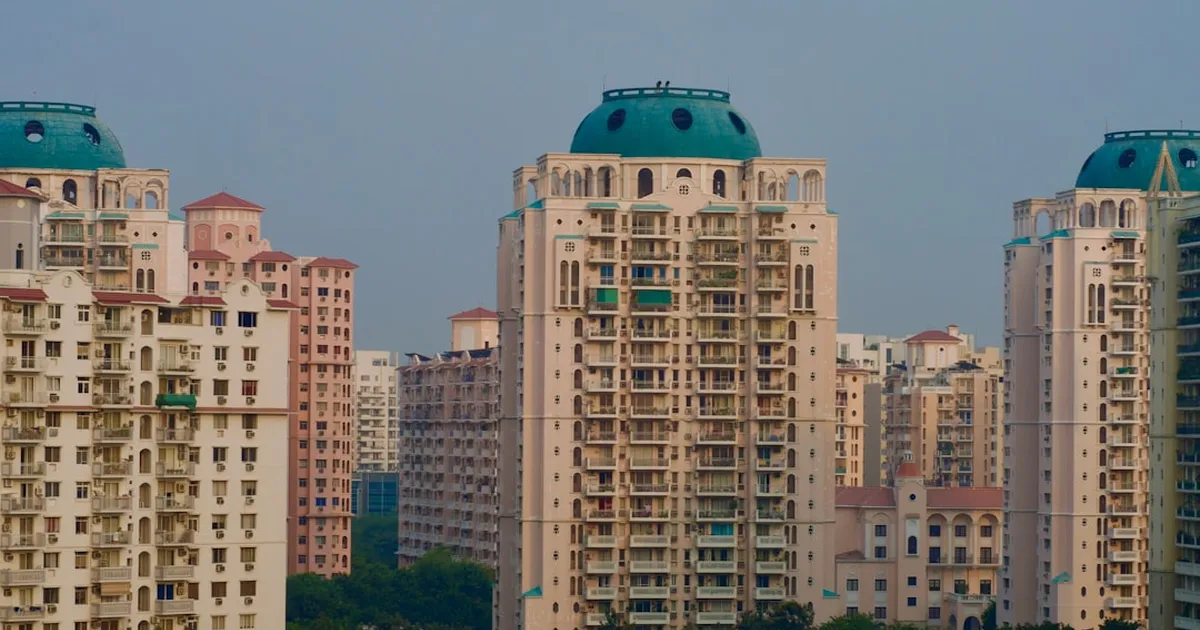
Why Should You Buy Properties With Branded Developers Despite Of There High Prices

Why Buying From a Branded Developer Is Worth Every Extra Rupee — A Buyer's Complete Guide for 2026
You've shortlisted two apartments. One from a well-known branded developer — DLF, Godrej Properties, Prestige Group, Sobha, or Lodha — priced at ₹1.8 crore. The other from a local builder in the same neighbourhood, priced at ₹1.35 crore. That ₹45 lakh gap feels enormous. And the sales pitch from the local builder sounds convincing enough. So why do lakhs of informed buyers — NRIs, HNIs, seasoned investors, and careful first-time homebuyers — still choose the branded developer every single time?
This guide is written for exactly that buyer — the one who isn't blindly brand-loyal but wants to understand, with real numbers and honest analysis, whether the premium is justified. Spoiler: in most cases, it is. But not always, and not for every buyer. We'll tell you both sides.
The Scale of the Premium — What Are You Actually Paying More For?
Let's put a number to it first. Based on current market data, the price premium attached to a branded developer's project typically ranges between 10% and 30% over a comparable non-branded project in the same location. In certain ultra-luxury segments — think DLF's The Dahlias in Gurugram or Lodha's Malabar Hill projects — that premium can stretch to 50% or beyond.
But here's the critical point most buyers miss: the premium isn't just for the name on the hoarding. It is a bundled payment for reduced uncertainty, legal protection, construction quality, post-handover maintenance, and — most importantly — resale liquidity. You're not just buying a flat. You're buying the entire ecosystem that surrounds it.
Reason #1: Delivery Track Record — Your Money Is Actually Safer
India's real estate history is littered with horror stories of stalled projects. Buyers who paid in 2015 and are still waiting in 2026. The national average delay across all delayed projects in India's residential sector has been estimated at over 26 months. That's more than two years of paying rent while also servicing a home loan on a flat you don't yet possess — a financial double-burden that has destroyed families' savings.
Branded developers have a structurally different incentive. Their stock is publicly listed. Their reputation is their market cap. DLF, with a valuation of over ₹2,07,400 crore, and Godrej Properties, valued at over ₹70,600 crore, cannot afford to default on delivery without catastrophic consequences to their share price, banking relationships, and future project launches. A local builder with a ₹50 crore balance sheet has no such skin in the game.
Leading developers such as DLF, Godrej Properties, Lodha Group, Prestige Group, Sobha, and Tata Realty have established themselves as trusted names whose projects are typically well-documented, legally compliant, and delivered with a focus on quality and timelines. They not only meet RERA requirements but often exceed them by adopting best practices in construction, customer service, and sustainability.
Reason #2: RERA Compliance — The Legal Safety Net Is Stronger
RERA, enacted in 2016, was a game-changer. But here's what most buyers don't realise: RERA compliance quality varies dramatically between developers. Branded developers have dedicated legal and compliance teams that maintain meticulous RERA documentation — quarterly construction updates, escrow account compliance, and transparent carpet area calculations. Smaller builders often treat RERA as a box-ticking exercise.
Under RERA, developers are required to deposit 70% of buyer payments into a dedicated escrow account, usable only for that specific project's construction and land costs. This prevents the notorious fund diversion that caused thousands of project collapses in the pre-RERA era. Branded developers, being publicly listed and audited by Big Four firms, are far more rigorously monitored on this front.
RERA also provides a five-year defect liability period from the date of possession — meaning the builder must fix any structural defects or workmanship issues within 30 days of being notified, failing which buyers are entitled to compensation. In practice, getting a small local builder to honour this clause is an uphill legal battle. With a branded developer, it's a process.
As of 2025, RERA 2.0 updates have made pre-launch clearances mandatory — builders cannot advertise, launch, or take bookings without a RERA compliance certificate confirming land ownership, proper approvals, and environmental clearances. Branded developers were already operating at this standard before it became law.
Reason #3: Construction Quality — The Difference You Live With Every Day
This is where the premium becomes most tangible. Sobha Limited, for instance, operates a backward-integrated construction model — controlling everything from design to execution in-house. The result is meticulous attention to detail that is genuinely visible: tighter tolerances on tiling, better concrete mix specifications, superior waterproofing, and more durable fixtures. Sobha generally sees robust appreciation due to its premium positioning and quality reputation, and buyers who have moved into Sobha projects consistently report higher satisfaction with construction finish compared to mid-tier builders.
Godrej Properties follows IGBC green building guidelines across most of its projects and received a rating of 98/100 from the Global Real Estate Sustainability Benchmark (GRESB), ranked number one globally for three consecutive years. This isn't just a green badge — it translates to lower electricity bills, better air quality, and longer structural life for the building you're living in.
India ranks third globally for LEED certifications, with 370 projects covering 8.5 million gross square metres certified in 2024. Branded residences incorporate sustainability features as baseline specifications — energy-efficient HVAC systems, LED lighting, rainwater harvesting, water recycling systems, and solar panels. These features reduce long-term operational costs for residents, partially offsetting the higher acquisition price.
Reason #4: Resale Value and Appreciation — The Numbers Tell the Story
In Bengaluru's competitive real estate market, choosing the right developer can mean the difference between 60% and 100% appreciation over five years. The builder's reputation directly impacts resale liquidity, rental demand, and long-term maintenance quality. This is not a soft claim — it's what buyers and investors observe consistently across micro-markets.
India's premium residential prices climbed up to 36% year-on-year in under-construction segments in 2025, supported by strong end-user demand, improving urban connectivity, and constrained supply across key cities. The segment that drove this appreciation? Branded, amenity-rich homes with credible developers. The affordable and mid-segment, where local builders dominate, saw far more muted growth.
When you try to sell a flat five years later, the buyer's first question isn't about the floor plan. It's "which builder?" A DLF flat in Gurugram or a Prestige flat in Bengaluru commands a ready pool of serious buyers, faster transaction closure, and a price that doesn't require heavy negotiation. A flat from an unknown local builder — even in the same society — can sit on the market for six to twelve months, often requiring a 10–15% discount to close.
For investors, branded developers offer better liquidity and long-term appreciation potential. For homebuyers, choosing a reputed builder reduces execution risk and improves resale value.
Reason #5: Home Loan Sanction — Banks Trust Branded Developers More
This is a practical advantage that rarely gets discussed but matters enormously. Banks and housing finance companies — HDFC Bank, SBI, ICICI Bank, Axis Bank — have pre-approved lists of developers. Projects by branded developers typically get faster loan sanctions, higher loan-to-value ratios (up to 80–85% of property value), and fewer technical queries. The bank's technical team has already vetted the developer's track record, legal title, and construction quality.
For a project by an unknown local builder, banks often conduct extensive independent technical and legal due diligence, which can delay sanction by weeks or months. In some cases, banks refuse to fund projects by developers with prior RERA complaints or legal encumbrances — something that is far more common with smaller builders than branded ones.
For NRIs especially, branded developer trust is non-negotiable. Renowned developers guarantee legal clarity, timely possession, and transparent communication. NRIs prioritise security, brand reliability, and minimal maintenance — because they cannot physically monitor construction from abroad. Many branded developers also have pre-approved home loan tie-ups with major lenders, simplifying processing significantly.
Reason #6: Post-Handover Management — The Experience Doesn't End at Possession
One of the most overlooked benefits is long-term maintenance quality. Branded projects typically have structured facility management, which helps preserve asset value over time. Amenities are curated to match the brand's identity, resulting in more thoughtful spaces rather than generic amenity lists.
Walk into a Prestige or Godrej society five years after possession. The lobby is maintained. The landscaping is alive. The gymnasium has functioning equipment. The security system works. Compare this to the average local builder project five years in — peeling paint in common areas, a broken lift that takes three months to fix, a maintenance team that's unreachable. The difference in daily living experience is stark, and it directly impacts rental income and resale value.
Price Comparison: Branded vs Local Builder — A City-Wise Reality Check
| City / Micro-Market | Branded Developer Project | Price (₹/sq ft) | Comparable Local Builder | Price (₹/sq ft) | Premium % |
|---|---|---|---|---|---|
| Gurugram (Golf Course Ext. Rd) | DLF / Godrej | ₹13,500–₹18,000 | Regional NCR Builder | ₹9,500–₹12,000 | ~30–40% |
| Bengaluru (Sarjapur Road) | Sobha / Prestige | ₹10,500–₹14,000 | Local Bengaluru Builder | ₹7,500–₹10,000 | ~25–35% |
| Mumbai (Thane / Navi Mumbai) | Lodha / Godrej | ₹11,000–₹16,000 | Local MMR Builder | ₹8,000–₹11,500 | ~20–30% |
| Hyderabad (Gachibowli) | Prestige / Godrej | ₹9,000–₹12,500 | Local Hyderabad Builder | ₹6,500–₹9,000 | ~20–28% |
| Pune (Hinjewadi) | Godrej / Mahindra | ₹9,500–₹13,000 | Local Pune Builder | ₹7,000–₹9,500 | ~18–25% |
Based on RealtyPromoo research using current market data, Q1 2026. Prices are indicative ranges for 2–3 BHK apartments and will vary by specific project, floor, and configuration.
Reason #7: NRI and Institutional Buyer Confidence — The Market Signal Effect
When DLF or Prestige launches a project in a new micro-market, it sends a powerful signal to the entire ecosystem — banks, retailers, schools, hospitals, and other developers. Infrastructure follows branded developers. The presence of a Godrej or Lodha township in a location is often a leading indicator that metro connectivity, commercial development, and civic amenities will follow within three to five years.
This is why branded developer projects in emerging corridors — Godrej's launches in North Bengaluru, Prestige's expansion into Hyderabad's outer ring road zone, DLF's entry into new Gurugram sectors — tend to appreciate faster than the micro-market average. The developer's brand is a proxy for confidence in the location's future.
India's branded residences sector has grown over 160% in the past decade, with the market projected to reach $5 billion. Delhi NCR leads the market with approximately 2,500 branded units, followed by Mumbai and Bengaluru each with six schemes. This institutional and HNI capital flowing into branded projects creates a price floor that protects buyers from sharp corrections.
The Honest Side: When Branded Developers Disappoint
Fairness demands this section. Branded developers are not infallible, and buyers must go in with eyes open.
- Customer service gaps: Prestige Group, despite its construction quality, has faced complaints about refund processes and communication gaps during the buying process. Brigade Group has received mixed reviews on pricing transparency, with some buyers reporting sudden changes in launch prices.
- Godrej's recent challenges: Morgan Stanley downgraded Godrej Properties citing regulatory challenges, project delays, and operational inefficiencies in certain markets — a reminder that even top-tier developers go through difficult execution phases.
- Premium pricing narrows resale pool: High acquisition prices can narrow the resale buyer pool, affecting liquidity in slower markets. If your primary goal is maximising square footage per rupee, a well-chosen non-branded project may offer better value.
- Branding cannot compensate for poor location: A branded project in a poorly connected or oversupplied micro-market will still underperform. Brand cannot override fundamentals of location and supply-demand balance.
- Post-handover standards can slip: Not all branded projects maintain standards after handover. Verify who controls facility management operations long-term — is it the developer's own arm or a third-party FM company with accountability?
- Delivery timelines still vary: Even branded developers are not immune to delays, especially in markets like Noida/Greater Noida, which scores significantly lower on developer accountability metrics compared to Hyderabad and Bengaluru.
Who Should Definitely Buy From a Branded Developer?
- NRIs and overseas buyers who cannot physically monitor construction and need the assurance of a developer with institutional accountability and professional property management.
- First-time homebuyers investing their life savings and cannot afford the risk of a stalled project or substandard construction.
- Investors with a 5–7 year horizon who need strong resale liquidity and consistent appreciation, particularly in competitive markets like Bengaluru, Mumbai, and Gurugram.
- HNIs and premium buyers for whom lifestyle quality, curated amenities, and community prestige are genuine priorities, not just aspirational marketing.
- Buyers seeking home loans who want faster sanction, higher LTV ratios, and minimal legal complications at the time of purchase and resale.
Buyer's Pre-Purchase Checklist for Branded Developer Projects
- ✅ Verify RERA registration number on the official state RERA portal (MahaRERA for Maharashtra, RERA Karnataka, UP-RERA, RERA Haryana, etc.)
- ✅ Check the developer's complaint history on the RERA portal — not just the project's registration status
- ✅ Review the developer's past 3–5 delivered projects in the same city — visit physically if possible
- ✅ Confirm the escrow account details and 70% fund protection mechanism
- ✅ Verify who manages facility management post-handover — developer arm or independent FM company
- ✅ Check the builder-buyer agreement for penalty clauses on delayed possession (RERA mandates compensation at ~10–11% annually)
- ✅ Confirm the carpet area calculation is RERA-compliant — branded developers cannot inflate pricing through super built-up area manipulation
- ✅ Research resale transactions of the developer's previously delivered projects in the same micro-market
- ✅ For NRIs: confirm pre-approved home loan tie-ups with HDFC, SBI, ICICI, or Axis Bank for faster processing
- ✅ Do not rely solely on branding — independently verify title deeds, land use approval, environmental clearances, and commencement certificate
Frequently Asked Questions
Is the 20–30% premium charged by branded developers always justified?
Not always — and not in every location. The premium is most justified when you're buying under-construction property in a market with a history of project delays, or when you're an NRI/investor who needs resale liquidity. In ready-to-move projects where construction risk is already eliminated, the premium narrows. Evaluate the specific project, not just the brand name. A branded developer's project in an oversupplied micro-market may not appreciate faster than a well-located local builder project.
Do branded developer projects appreciate faster than local builder projects?
Historically, yes — especially over 5–7 year holding periods. In Bengaluru's premium corridors, the difference between a branded and non-branded developer's appreciation can be 60% vs 100% over five years, according to current market data. This is driven by better resale demand, higher rental yields, and the ecosystem effect of branded developers attracting complementary infrastructure. However, location quality remains the primary driver — no brand can override poor connectivity or excessive supply.
Are branded developers better at RERA compliance than local builders?
In practice, yes — significantly so. Publicly listed branded developers face stock market consequences for RERA violations and have dedicated compliance teams. RERA mandates 70% fund escrow, five-year defect liability, and quarterly construction updates. Branded developers typically exceed these minimums. Smaller local builders are more likely to treat RERA as a compliance formality. Always verify on the official state RERA portal regardless of developer reputation.
What about the resale pool being smaller for premium branded properties?
This is a real concern. Premium pricing does narrow the universe of potential resale buyers, which can affect transaction speed in a slow market. However, the quality of buyers is higher — they're more financially qualified, less likely to back out, and transact faster. In strong markets like Mumbai, Bengaluru, and Gurugram, branded developer projects in good locations consistently show faster resale closure times than comparable non-branded properties, despite the higher price point.
Can a local builder match branded developer quality if they're RERA-registered?
RERA registration is a legal floor, not a quality guarantee. Many local builders are RERA-registered but deliver significantly inferior construction quality, use cheaper materials, and provide minimal post-handover support. Branded developers differentiate on backward-integrated construction (like Sobha), green certifications (like Godrej's IGBC compliance), and institutional facility management. RERA protects you legally — but it doesn't build your home better. For construction quality assurance, the developer's track record across delivered projects is the only reliable indicator.
Conclusion: The Premium Is a Risk Discount, Not Just a Brand Tax
Think of the branded developer premium not as paying extra for a logo, but as purchasing an insurance policy against India's most common real estate risks — project delays, construction defects, legal complications, and poor resale liquidity. For most buyers, especially those investing their primary savings or buying from abroad, that insurance is worth every rupee. Go in informed, verify independently, and choose the developer whose delivered track record — not just marketing — earns your trust.
Questions & Answers (0)
Ask a Question
Get answer immediately here.
Terms & Conditions — Q&A
By submitting a question on RealtyPromoo, you agree to these terms:
1. Content Policy
- Your question must be a genuine real estate query.
- No abusive, defamatory, or promotional content.
- No personal contact info, broker referrals, or spam.
- Questions are reviewed by AI and may be edited for clarity, grammar, or politeness before publication.
2. Publication
- Your first name + last initial (e.g., "Rahul S.") will be displayed publicly with the answer.
- Your full name, phone number, and email are never displayed publicly.
- Once published, your question and answer become part of RealtyPromoo's content.
3. Phone & Email Verification
- OTP verification is mandatory to prevent spam.
- Your phone number and email are stored securely and may be used by RealtyPromoo or its sales team to contact you regarding your query or related properties.
4. Answer Accuracy
- Answers are generated by AI based on publicly available information and the page context.
- Answers are informational only — not financial, legal, or investment advice.
- Always verify pricing, RERA status, and possession dates with the developer before any transaction.
- RealtyPromoo is not liable for decisions made based on AI-generated answers.
5. Pre-RERA / Pre-Launch Projects
- Some listed projects are pre-RERA / pre-launch. These listings are informational only.
- No booking, sale, or agreement is permitted before RERA registration.
- "Express Your Interest" forms collect contact details for future communication, not advance bookings.
6. Moderation
- RealtyPromoo reserves the right to delete, edit, or refuse to publish any question or answer.
7. Privacy
- Your data is handled per our Privacy Policy.
8. Jurisdiction
- These terms are governed by the laws of India.
- Disputes are subject to the courts of Noida, Uttar Pradesh.
Be the first to ask a question. Get an answer immediately.
Questions & Answers
This guide was written by Shreya Tiwari, Real Estate Content Writer (Freelancer) with research support from artificial intelligence. AI assisted in compiling information from regulatory sources, industry references, and expert commentary. The final content was reviewed by our editor before publishing. We update guides when regulations change or when newer best-practice information emerges.
Sources consulted: State RERA portals · Developer official websites · Industry research reports (Anarock, JLL, Knight Frank, CBRE, Colliers) · RBI announcements & central government publications · Expert commentary (quoted in the guide body).
Last reviewed: 2 May 2026 · Spot an error? Let us know
Related Guides
Best Time To Buy Property In India In 2026: Quarter-by-quarter Market Analysis
Quarter-by-quarter analysis of India's 2026 property market. Real price data, RBI rate insights & city-wise timing guide. Expert analysis by RealtyPromoo.

Gurugram Vs Noida For Luxury Homebuyers In 2026: Price, Metro, Infrastructure Comparison
Gurugram vs Noida for luxury homes in 2026: prices, metro, Jewar Airport, rental yields & micro-markets compared. Expert analysis to help you decide.

Best Luxury Apartments In Bengaluru's North Corridor Under ₹3 Crore In 2026: Devanahalli, Yelahanka, Hebbal & Thanisandra
Top 10 luxury apartments in Devanahalli, Yelahanka, Hebbal & Thanisandra under ₹3 Cr — real prices, RERA details & expert analysis for 2026 buyers.

Sarjapur Road Vs Whitefield Vs Kanakapura Road Bengaluru: Which Corridor Offers Best Value In 2026
Compare Sarjapur Road, Whitefield & Kanakapura Road on prices, rental yields, metro access & appreciation. Expert analysis to find your best buy in 2026.