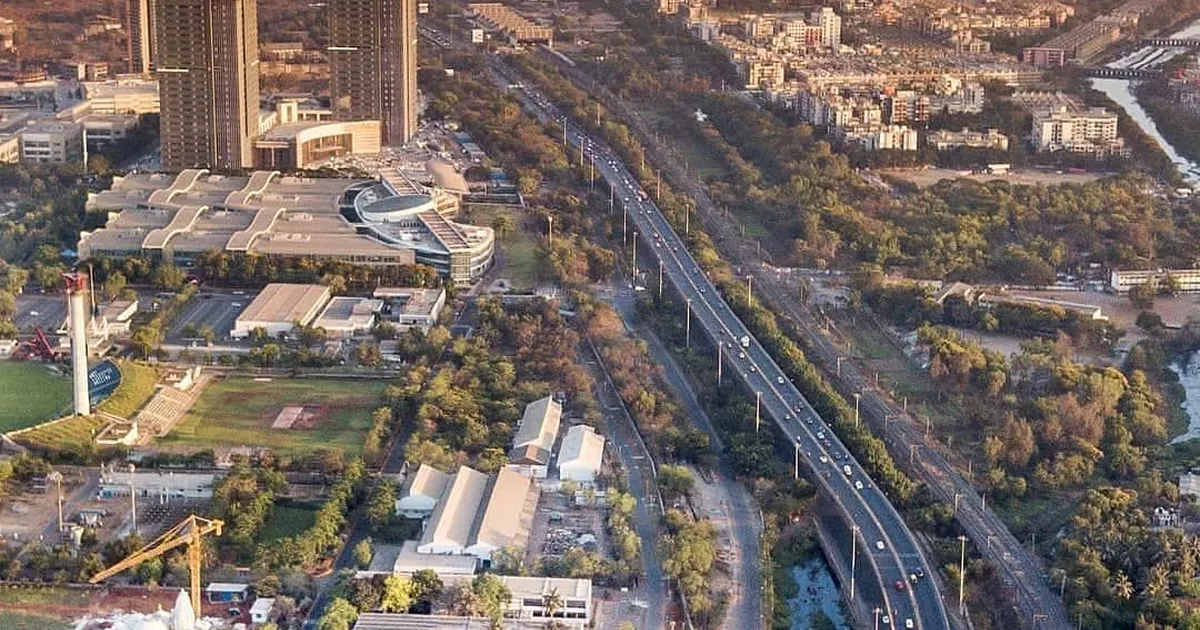
Photo by RSK BABA via Google Places
Navi Mumbai

About Navi Mumbai Real Estate
Navi Mumbai has officially transitioned from being a mere affordable alternative to Mumbai into one of India’s most dynamic and premium real estate micro-markets. Originally master-planned by CIDCO to decongest the island city, it is now a powerhouse economy driven by massive IT/ITeS parks in Airoli and Mahape, the sprawling Jawaharlal Nehru Port Trust (JNPT), and robust manufacturing corridors in Taloja. Over the last five years, the narrative has completely shifted. Developers are no longer just building budget housing; the market is currently flooded with premium, amenity-rich gated communities targeting high-net-worth individuals and upper-middle-class professionals.
As of early 2026, the Navi Mumbai real estate market is in a sustained boom phase. The successful launch of the Mumbai Trans Harbour Link (Atal Setu) and the commencement of commercial flights at the Navi Mumbai International Airport have fundamentally altered property valuations across the city. While the core nodes like Vashi and Nerul are seeing record-breaking luxury transactions, peripheral areas are experiencing massive volume growth. However, this rapid expansion isn't without its growing pains. Buyers today must navigate localized infrastructure bottlenecks, construction-related pollution, and the unique legal complexities of CIDCO leasehold properties.
Why Invest in Navi Mumbai
The investment thesis for Navi Mumbai is built on a foundation of unprecedented infrastructure execution and stellar capital appreciation. If you look at the data over the last 3 to 5 years, property values in prime nodes like Vashi and Seawoods have surged by 40% to 58%. Even mid-segment and affordable corridors like Kharghar and Panvel have delivered solid 24% to 28% absolute returns. When you factor in rental yields of 2.5% to 4%, real estate here has consistently outperformed the post-tax returns of traditional fixed deposits (which hover around 6-7%) and physical gold.
Unlike the stock market, which has seen high volatility, Navi Mumbai real estate offers tangible stability backed by actual government spending. The growth is not speculative; it is tied to hard deadlines. The Navi Mumbai International Airport (NMI) inaugurated its first phase in October 2025 and began commercial flight operations in December 2025, instantly creating thousands of jobs and driving housing demand. The Mumbai Trans Harbour Link (MTHL) is now fully operational, cutting the drive time to South Mumbai down to just 20-30 minutes. Furthermore, the upcoming Ulwe and Kharghar coastal roads, slated for completion in early 2026, will permanently solve last-mile connectivity issues, ensuring that property prices continue their upward trajectory over the next half-decade.
Price Trends
| Locality | Current Avg Price (₹/sqft) | 1-Year Change (%) | 3-Year Change (%) | Budget Segment |
|---|---|---|---|---|
| Vashi | ₹31,450 | 13.9% | 43.9% | Premium |
| Seawoods | ₹30,800 | -1.6% | 26.5% | Premium |
| Nerul | ₹24,500 | 8.5% | 22.0% | Premium |
| Kharghar | ₹17,500 | 2.3% | 16.7% | Mid-Segment |
| Panvel | ₹13,800 | 9.1% | 22.7% | Affordable/Mid |
| Ulwe | ₹11,500 | 12.4% | 31.0% | Affordable |
| Kamothe | ₹10,200 | 4.5% | 15.0% | Affordable |
| Taloja | ₹8,500 | 6.2% | 18.5% | Affordable |
A deep dive into the numbers reveals that Vashi and Ulwe are currently the fastest-appreciating markets, albeit for entirely different reasons. Vashi's 13.9% annual jump is fueled by luxury redevelopment and its status as the immediate landing point of the MTHL for those traveling from Mumbai. Ulwe, on the other hand, is experiencing a massive upward price correction (12.4% in one year) directly tied to the operationalization of the new airport right next door. Panvel continues to show steady 9.1% growth, solidifying its position as the ultimate transport hub connecting the railways, highways, and upcoming metro lines. Interestingly, Seawoods has seen a slight 1.6% dip over the last year, which indicates a healthy, temporary market stabilization after a massive five-year bull run where prices peaked rapidly.
Top Localities for Homebuyers
- Vashi: As the oldest and most affluent node, Vashi is perfect for high-budget families who want immediate access to top-tier schools like Father Agnel, premium healthcare, and Inorbit Mall. Prices here range from ₹28,000 to ₹35,000 per sqft, offering a lifestyle that rivals Mumbai's western suburbs.
- Seawoods: Famous for the sprawling NRI Complex and the Seawoods Grand Central Mall, this area is the top choice for luxury buyers and returning NRIs. It features wide, clean roads and a serene residential vibe, with property rates sitting between ₹25,000 and ₹32,000 per sqft.
- Kharghar: Known as the educational capital of Navi Mumbai, Kharghar hosts NIFT and several prominent engineering colleges. With its massive 200-acre Central Park, a golf course, and the ISKCON temple, it is the ultimate destination for middle-class families. Prices hover around ₹16,000 to ₹19,000 per sqft.
- Panvel: A massive junction that offers everything from budget-friendly standalone buildings to sprawling luxury townships. It is highly recommended for professionals working in the nearby industrial belts or those who commute to Pune. Prices range broadly from ₹11,000 to ₹16,000 per sqft.
- Airoli: The undisputed IT capital of Navi Mumbai, home to Mindspace and Patni Knowledge Park. If you are an IT professional looking for a zero-commute lifestyle with excellent social infrastructure, Airoli is your best bet at ₹18,000 to ₹22,000 per sqft.
- Nerul: Offering a beautifully balanced lifestyle, Nerul is famous for the DY Patil Stadium and its excellent green cover. It attracts upper-middle-class buyers who want established infrastructure without the extreme premium of Vashi. Expect to pay ₹20,000 to ₹26,000 per sqft.
- Kamothe: A highly dense, budget-friendly node located right on the Sion-Panvel Highway. It is best suited for first-time homebuyers with a strict budget who still need fast highway access. Prices are very accessible, ranging from ₹9,000 to ₹11,500 per sqft.
- Sanpada: Strategically wedged between Vashi and Nerul, Sanpada offers excellent connectivity via the scenic Palm Beach Road. It is great for professionals seeking premium living at a slight discount compared to Vashi, with rates between ₹20,000 and ₹24,000 per sqft.
Top Localities for Investors
- Ulwe: Ulwe is the most direct beneficiary of the Navi Mumbai International Airport and the Atal Setu. While early investors suffered through years of dust and lack of basic amenities, the infrastructure is finally catching up. Rental yields are currently around 3%, but the capital appreciation potential over the next 3 years remains massive as airport operations scale up to handle 90 million passengers.
- Taloja: Located at the terminal end of Metro Line 1, Taloja offers incredibly low entry prices (around ₹8,500 per sqft). With the metro now fully operational, tenant demand is rising sharply, pushing rental yields to a very healthy 3.5-4%. It is the perfect spot for long-term budget investors.
- Dronagiri: Positioned near the JNPT port and the upcoming coastal road networks, Dronagiri is a speculative investor's haven. It currently lacks robust social infrastructure, but buying in at ₹6,500 to ₹8,000 per sqft offers high future upside as the port expands and logistics hubs grow.
- Khandeshwar: Set to become a major interchange hub for future metro lines connecting directly to the airport. Investing here captures the massive spillover demand from Panvel and Kamothe, offering a great mix of steady rental income and strong future valuation bumps.
- New Panvel: With its proximity to the airport and the proposed NAINA (Navi Mumbai Airport Influence Notified Area) development, large land parcels and township projects here are prime targets for investors looking at a 5-7 year horizon.
Infrastructure & Connectivity
Navi Mumbai's infrastructure is its biggest selling point, though buyers should be prepared for the reality that constant, massive construction does cause localized traffic snarls and dust issues.
- Navi Mumbai Metro: Line 1, spanning 11.1 km from CBD Belapur to Pendhar with 11 stations, has been fully operational since November 2023. The critical Line 1A (a 3.02 km extension from Pendhar directly to the Navi Mumbai International Airport) is currently under active development and is expected to be completed by 2027-2028. Future phases, including Line 2 (Taloja MIDC to Khandeshwar) and Line 3 (Pendhar to MIDC Taloja), are in the advanced planning stages.
- Airports: The Navi Mumbai International Airport (NMI) officially started commercial flight operations on December 25, 2025. Located in Ulwe, it currently handles 20 million passengers annually in its first phase. It sits about 35 km from South Mumbai but is a mere 10-15 minute drive from CBD Belapur.
- Expressways & Roads: The 21.8 km Mumbai Trans Harbour Link (Atal Setu) is a game-changer, connecting Sewri to Nhava Sheva and reducing travel time to South Mumbai to under 30 minutes. The Sion-Panvel Highway remains the city's main arterial spine, though it is notorious for severe waterlogging and heavy traffic during the monsoon season. The Kharghar and Ulwe coastal roads are slated for completion by early 2026, which will bypass major highway traffic.
- Railways: The suburban railway network is excellent. The Harbour Line connects Panvel directly to CSMT in Mumbai, while the Trans-Harbour line seamlessly connects Thane to Vashi and Panvel. Panvel Railway Station has also been upgraded to a major terminus for outstation trains across India.
Government Policies & Regulations
Real estate in Maharashtra is strictly governed by the MahaRERA authority. As a buyer, you must verify all project details, completion dates, and developer credentials on the official portal (maharera.maharashtra.gov.in) before handing over any booking amount.
Stamp Duty & Registration: As of 2026, the stamp duty in Navi Mumbai is 7% for male buyers. This breaks down into a 5% base rate, a 1% Local Body Tax (LBT), and a 1% Metro Cess. To encourage female property ownership, the state offers women buyers a 1% concession, bringing their total rate to 6%. If a property is bought jointly by a male and female, the applicable rate is 6.5%. The registration fee is a flat ₹30,000 for properties valued above ₹30 Lakh, and exactly 1% of the property value for anything priced below ₹30 Lakh.
CIDCO Leasehold Complexities: Unlike Mumbai where freehold land is common, most land in Navi Mumbai is owned by CIDCO and leased to housing societies for 60 or 99 years. Buyers must rigorously ensure that the developer has cleared all CIDCO transfer charges and obtained the necessary No Objection Certificates (NOCs). Failure to do so can severely delay the handover of the project and the legal formation of the housing society. Additionally, CIDCO recently updated its redevelopment policy, now requiring only 51% consent from society members rather than 100%, which is rapidly accelerating the redevelopment of older buildings in Vashi and Nerul.
Living in Navi Mumbai
Deciding to move to Navi Mumbai means embracing a master-planned lifestyle that contrasts sharply with the chaotic congestion of Mumbai, but it requires some minor adjustments.
The Positives: The city is famous for its wide, grid-iron road layouts, massive green spaces like Central Park, and the incredibly scenic Palm Beach Road which is perfect for morning runs. Power supply is highly reliable via MSEDCL, and water supply from the Morbe Dam ensures that NMMC-administered areas (like Vashi, Nerul, and Belapur) rarely face shortages. The food and cultural scene is booming; areas like Vashi Sector 17 and Belapur CBD are packed with upscale cafes, microbreweries, and global fine dining. For weekend getaways, you are perfectly positioned. Lonavala and Khandala are just a 50 km drive away via the expressway, and Alibaug is easily accessible via road or the Ro-Ro ferry.
The Negatives: The air quality index (AQI) has taken a significant hit recently, frequently hovering between 150 and 250 due to the massive, ongoing construction for the airport, metro, and private high-rises. While NMMC areas enjoy great water supply, CIDCO-administered nodes like Ulwe and Taloja still face frustrating water cuts during the peak summer months. Public bus transport (NMMT) is decent but lacks the high frequency of Mumbai's BEST buses. Finally, while the nightlife is definitely improving, it still shuts down much earlier than in mainland Mumbai.
FAQ
- Is Navi Mumbai good for investment? Absolutely. With the operational Navi Mumbai International Airport and the Atal Setu bridge, property prices in strategic nodes like Ulwe, Panvel, and Vashi are seeing strong double-digit annual appreciation. The infrastructure gap is closing, driving up valuations.
- Which is the best area to buy a flat in Navi Mumbai? If you have the budget and want a premium lifestyle, Vashi and Seawoods are unmatched. For middle-class buyers and families prioritizing space and greenery, Kharghar and Panvel offer the best mix of amenities, schools, and affordability.
- Navi Mumbai vs Thane: Which is better? Navi Mumbai offers significantly better-planned infrastructure, wider roads, and far less traffic congestion. Thane has a slight edge in its proximity to Mumbai's central suburbs and boasts a more established premium residential market. However, Navi Mumbai wins hands-down on future infrastructure upside.
- What is the property price forecast for Navi Mumbai? Market experts project a steady 6-10% annual capital appreciation through 2026-2028. This growth will be heavily driven by the scaling up of passenger capacity at the new airport and the physical expansion of the metro network.
- What is the stamp duty in Navi Mumbai right now? Currently, it is 7% for men and 6% for women. This total includes a 1% Metro Cess and a 1% Local Body Tax. Registration is an additional flat ₹30,000 for properties over ₹30 Lakh.
- Are there risks with CIDCO properties? The main risk is administrative delays. Because the land is leasehold, developers must pay transfer premiums to CIDCO. If a builder defaults on these payments, buyers can be left stranded without an Occupancy Certificate (OC) or the ability to form a society. Always check MahaRERA before buying.
Questions & Answers (0)
Ask a Question
Get answer immediately here.
Terms & Conditions — Q&A
By submitting a question on RealtyPromoo, you agree to these terms:
1. Content Policy
- Your question must be a genuine real estate query.
- No abusive, defamatory, or promotional content.
- No personal contact info, broker referrals, or spam.
- Questions are reviewed by AI and may be edited for clarity, grammar, or politeness before publication.
2. Publication
- Your first name + last initial (e.g., "Rahul S.") will be displayed publicly with the answer.
- Your full name, phone number, and email are never displayed publicly.
- Once published, your question and answer become part of RealtyPromoo's content.
3. Phone & Email Verification
- OTP verification is mandatory to prevent spam.
- Your phone number and email are stored securely and may be used by RealtyPromoo or its sales team to contact you regarding your query or related properties.
4. Answer Accuracy
- Answers are generated by AI based on publicly available information and the page context.
- Answers are informational only — not financial, legal, or investment advice.
- Always verify pricing, RERA status, and possession dates with the developer before any transaction.
- RealtyPromoo is not liable for decisions made based on AI-generated answers.
5. Pre-RERA / Pre-Launch Projects
- Some listed projects are pre-RERA / pre-launch. These listings are informational only.
- No booking, sale, or agreement is permitted before RERA registration.
- "Express Your Interest" forms collect contact details for future communication, not advance bookings.
6. Moderation
- RealtyPromoo reserves the right to delete, edit, or refuse to publish any question or answer.
7. Privacy
- Your data is handled per our Privacy Policy.
8. Jurisdiction
- These terms are governed by the laws of India.
- Disputes are subject to the courts of Noida, Uttar Pradesh.
Be the first to ask a question. Get an answer immediately.
Questions & Answers
This page was compiled by Meena Singh, Senior Market Analyst using artificial intelligence to research the city's real-estate market, infrastructure, and growth trends. AI assisted in gathering data from public portals and industry reports, and the final content was reviewed by our editor before publishing. We update city profiles as market data and infrastructure announcements evolve.
Sources consulted: 99acres city data · MagicBricks city data · Housing.com · Public news archives · Industry reports (Knight Frank, ANAROCK, JLL where cited) · Government infrastructure announcements.
Last reviewed: 29 April 2026 · Spot an error? Let us know