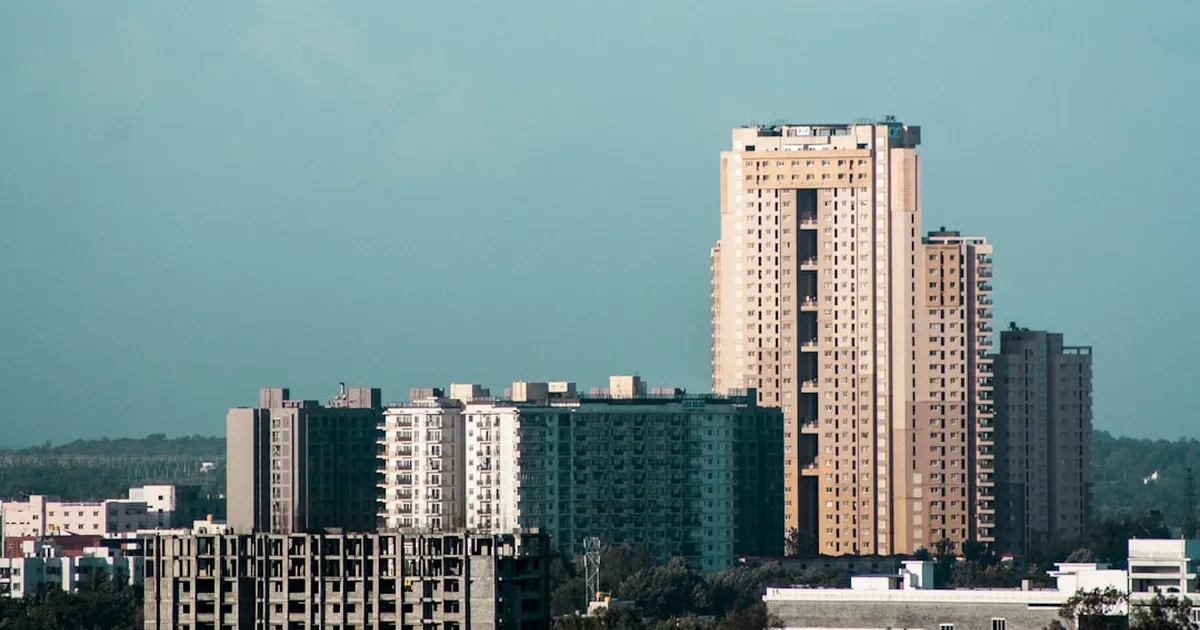
Bengaluru Metro Impact On Property Prices 2026: Which Areas Will See The Biggest Price Surge

Bengaluru Metro Impact On Property Prices 2026: Which Areas Will See The Biggest Price Surge
If you're trying to decide where to buy property in Bengaluru right now, there's one question you absolutely cannot ignore: how will the metro expansion reshape values over the next three to five years? This guide is for homebuyers, investors, and NRIs who want hard data — not vague optimism — about which corridors are genuinely poised for the biggest price appreciation, which are already overpriced, and where the real hidden value still lies. We've analysed Colliers, Knight Frank, JLL, and BMRCL data, cross-referenced with live portal pricing from 99acres and MagicBricks, and layered in the honest risks that most articles skip.
Namma Metro in 2026: The Network at a Glance
Namma Metro has quietly become a transformational force in Bengaluru's urban fabric. As of mid-2026, the network spans 96.1 km across 83 operational stations, making it the third-largest metro system in India. Daily ridership hit a record 10.48 lakh on August 11, 2025, the day the Yellow Line launched — a number that underscores how desperately the city needed this infrastructure. BMRCL has also ordered 96 new trains to reduce headways to a 4-minute gap, which will make the metro genuinely competitive with private vehicles for daily commuters.
The current operational lines are:
- Purple Line: Whitefield (Kadugodi) to Challaghatta — connecting east Bengaluru IT hubs to central and western zones via KR Puram, Indiranagar, and MG Road.
- Green Line: Nagasandra to Silk Institute — serving Peenya, Yeshwanthpur, Rajajinagar, Jayanagar, and Kanakapura Road.
- Yellow Line: RV Road to Bommasandra (19.15 km, 16 stations) — inaugurated August 2025, serving Electronic City, Hebbagodi, Konappana Agrahara, and Bommasandra.
- Blue Line (Phase 2A/2B): Connecting Silk Board to the airport via KR Puram, Nagawara, Hebbal, and Yelahanka — expected to open in phases through 2026.
- Pink Line: Kalena Agrahara to Nagawara — combining underground and elevated sections, with phased commissioning underway.
Beyond these, Phase 3 (the Orange Line, 44.65 km, 31 stations, approved August 2024 at ₹15,611 crore) adds two new elevated corridors: JP Nagar 4th Phase to Kempapura along ORR-West (32.15 km), and Hosahalli to Kadabagere along Magadi Road (12.5 km). Phase 3A — the Red Line connecting Hebbal to Sarjapur (36.59 km) — is estimated at ₹28,405 crore and is one of the most expensive corridors in India due to its mixed elevated and underground alignment. Construction on Phase 3 was pushed to June 2026 due to land acquisition and tree-cutting delays, with operational status targeted by 2029.
How Metro Connectivity Moves Property Prices: The Three Stages
Understanding when to buy is as important as knowing where. Property prices near metro corridors consistently move through three predictable stages, and smart buyers position themselves early in the cycle:
- Stage 1 — Announcement Phase: Prices begin to move as early investors enter. Speculative demand is highest here. Risk is also highest because delays can compress returns.
- Stage 2 — Construction Phase: Moderate appreciation as awareness grows and land near stations becomes scarcer. Developers begin acquiring parcels.
- Stage 3 — Operational Phase: The most visible price jump, driven by actual usability. Ridership data validates the investment thesis and tenant demand spikes.
Historical evidence from Bengaluru itself is compelling. After the Nagasandra–Madavara Green Line extension opened in November 2024, property prices in Madavara doubled from ₹4,500/sqft in 2017 to ₹10,500/sqft by 2024 — a 133% increase over seven years. Properties within 800 metres of stations already command a 5–10% premium even before construction begins, and metro-adjacent properties typically command a 10–20% premium over comparable non-metro locations of similar quality.
The Big Picture: How Much Can Prices Rise?
According to Colliers India, housing prices in key localities along metro corridors are projected to rise by up to 40% by 2027, driven by expanding metro connectivity and strong infrastructure development. Office hubs along the Yellow and Pink Lines are expected to account for 15–20% of the city's total Grade A office stock by 2027, with rental increases of 5–10% in the next one to two years — and that office demand directly fuels residential absorption nearby.
The broader city average tells a similar story. Average residential prices rose from around ₹7,120/sqft in 2023 to nearly ₹9,260/sqft by 2025. As of 2026, the city average stands at approximately ₹9,800/sqft, a 7.3% increase from 2024. Growth corridors along new metro lines are expected to see 12–18% annual appreciation initially, moderating to 8–10% as they mature. Overall Bengaluru property prices are projected to appreciate 45–55% between 2026 and 2030.
Area-by-Area Breakdown: Where the Surge Is Happening
1. Electronic City — The Yellow Line Transformation
Electronic City is arguably the most dramatic metro-driven turnaround story in Bengaluru right now. For years, the area's weak public transport infrastructure acted as a deterrent for homebuyers despite housing massive IT campuses. That has changed decisively. The Yellow Line (RV Road to Bommasandra) opened in August 2025, cutting end-to-end travel time to approximately 31–38 minutes versus 60–90 minutes by road during peak hours. The line already clocks over one lakh daily boardings.
Current flat prices in Electronic City range from ₹5,450 to ₹10,250/sqft, with premium projects like Sobha Madison Heights touching ₹14,550/sqft. Property prices here have moved 24.4% in one year, 51% over three years, and 51% over five years. Analysts forecast a further 5–10% rise in capital values in the near term, with rental values expected to increase 10–15% over the next two quarters as commuting convenience boosts tenant interest. Current rental values average ₹20,000–₹25,000/month for 1BHK, ₹30,000 for 2BHK, and ₹40,000 for 3BHK.
Honest caveat: Much of the initial appreciation has already occurred in established sub-localities. Properties within walking distance of stations will see continued premium growth, but buyers chasing the "announcement effect" may have missed the steepest curve. Emerging micro-pockets like Hongasandra-Kudlu Gate still offer better value with growth potential.
2. Whitefield — Metro Effect Partly Priced In
Whitefield is Bengaluru's most mature IT corridor — home to ITPB, EPIP Zone, IBM, Accenture, SAP, and Wipro. The Purple Line's extension to Whitefield (Kadugodi) has been operational since late 2023 and was the biggest connectivity upgrade in the area's history. The Whitefield station opening appreciated nearby prices by 8–12%. Today, apartment prices range from ₹7,500/sqft in older mid-segment projects to ₹16,000/sqft in premium metro-adjacent builds, with a locality average of around ₹9,800/sqft for ready-to-move inventory. Whitefield has delivered a sustained 8.5% CAGR over seven years and a remarkable 98.3% appreciation over the last five years.
Honest caveat: Because the metro effect is largely priced in, future appreciation will be steadier but slower. Traffic on Whitefield Main Road during peak hours (9–10 AM, 6–8 PM) remains the locality's biggest livability drawback even with the metro. Buyers should pick projects within 1–1.5 km of a metro station to minimise exposure. Some corridors like Sarjapur Road and parts of Whitefield have seen large volumes of launches, meaning oversupply could pressure prices in weaker demand cycles.
3. JP Nagar — Biggest Projected Gains on Phase 3
JP Nagar is the area analysts are most excited about in the Phase 3 story. The Orange Line's Corridor 1 (JP Nagar 4th Phase to Kempapura, 32.15 km along ORR-West) will directly serve this established South Bengaluru residential hub. Analysts project appreciation of 30–35% for JP Nagar over the Phase 3 cycle — the highest projected gains of any corridor. Current apartment prices sit at ₹8,500–₹12,500/sqft. The area already has strong social infrastructure, greenery, and an established residential community that makes it genuinely livable — not just investable. Residential activity in south Bengaluru micro-markets has been limited in recent years (contributing only 10–13% of total unit launches between 2022 and H1 2024), meaning there is significant headroom for developer activity to accelerate as Phase 3 nears.
4. Hebbal and Kempapura — North Bengaluru's Dual Catalyst
Hebbal is poised to become a prominent urban centre with the development of the Blue Line metro and Phase 3 extensions. The Blue Line (Silk Board to Airport via Hebbal and Yelahanka) was expected to open in June 2026, creating a direct rail link between the IT south and the airport north for the first time. Hebbal already benefits from proximity to Manyata Tech Park, direct links to the airport road, and increasing premium office stock. Current apartment prices range from ₹9,000–₹13,000/sqft. Analysts project 28–32% appreciation for Hebbal and Kempapura over the Phase 3 cycle. The proposed Blue Line connecting ORR to the airport is expected to unlock further potential in North Bengaluru beyond what is already priced in.
5. Sarjapur Road — Long Horizon, High Upside
Sarjapur Road recorded approximately 22% price appreciation between 2021 and 2023 on Phase 3A planning announcements alone — before any construction began. Analysts now project 25–30% further appreciation as Phase 3A (Hebbal to Sarjapur Red Line) progresses. However, Phase 3A is now likely delayed to 2031 or beyond due to its complex mixed elevated and underground design. This is the key risk: Sarjapur's upside is real but conditional on infrastructure delivery timelines. It is a higher-patience, higher-volatility play. The corridor has also seen large launch volumes, so investors should watch inventory absorption rates carefully.
6. Hosahalli and Kadabagere — The Early-Stage Western Bet
These western suburban areas are emerging as prime investment spots for early investors due to their promising growth and affordable pricing. Phase 3's Corridor 2 (Hosahalli to Kadabagere, 12.5 km along Magadi Road) will directly serve these localities. Geotechnical soil investigation work on Magadi Road has officially commenced, moving these areas from Stage 1 to Stage 2 of the appreciation curve. Entry prices are significantly lower than established corridors, making these the highest-upside, highest-patience plays in the current cycle. The area of Nagarbhavi — with established residential layouts and proximity to major educational institutions — is also poised for significant appreciation from the direct Orange Line connectivity.
7. Mysore Road, BEL Circle, and Sumanahalli
Often overlooked in metro coverage, these localities will benefit from enhanced connectivity through the Phase 3 project. Healthy price growth is anticipated here, driven by improved access to the Outer Ring Road business district. These areas currently offer more affordable entry points than the established South Bengaluru markets, and the metro connection will directly address their primary weakness: poor public transport.
Area-Wise Price and Appreciation Data Table (2026)
| Area | Metro Line | Current Price (₹/sqft) | Projected Appreciation | Stage | Best For |
|---|---|---|---|---|---|
| Electronic City | Yellow Line (Operational) | ₹5,450–₹10,250 | 5–10% near-term; 24% YoY already achieved | Stage 3 (Operational) | Value buyers, rental investors |
| Whitefield | Purple Line (Operational) | ₹7,500–₹16,000 | 8–10% steady annual | Stage 3 (Mature) | End-users, premium buyers |
| JP Nagar | Orange Line (Phase 3) | ₹8,500–₹12,500 | 30–35% over cycle | Stage 1–2 | Medium-term investors |
| Hebbal / Kempapura | Blue Line + Phase 3 | ₹9,000–₹13,000 | 28–32% over cycle | Stage 2 | Premium investors, end-users |
| Sarjapur Road | Phase 3A Red Line | ₹7,200–₹10,500 | 25–30% (long horizon) | Stage 1 | Long-term investors (5+ yrs) |
| Hosahalli / Kadabagere | Orange Line (Phase 3) | ₹4,500–₹6,500 | Highest upside, early stage | Stage 1–2 | Early-stage investors |
| Yelahanka | Blue Line (Airport) | ₹6,500–₹9,000 | 15–20% | Stage 2 | Mid-segment buyers, NRIs |
| Mysore Road / Nagarbhavi | Orange Line (Phase 3) | ₹5,000–₹8,000 | 10–20% | Stage 1 | Affordable entry, long-term hold |
The Real Risks: What Most Articles Won't Tell You
No honest analysis of Bengaluru's metro-driven real estate market is complete without acknowledging the risks. Here are the ones that actually matter:
- Project delays are the norm, not the exception. Phase 3 construction was already pushed to June 2026 due to land acquisition, tree-cutting, and utility shifting delays. Phase 3A (Hebbal–Sarjapur) is likely delayed to 2031 or beyond. If you buy on the promise of a metro that takes three extra years to arrive, your short-term returns will be compressed significantly.
- The affordability gap is widening dangerously. Over 42% of Bengaluru homebuyers can no longer afford properties priced below ₹1 crore — effectively locked out of the primary residential market. Developers have increasingly pivoted toward premium projects, leaving a critical shortfall in sub-₹80 lakh housing. This concentration of luxury supply creates a two-speed market.
- "Near metro" does not always mean livable. Properties immediately beside a station may be affected by noise, congestion, and construction dust. The optimal distance for both livability and appreciation is 500 metres to 1 kilometre from a station — close enough to walk, far enough to avoid the downsides.
- Oversupply risk in certain corridors. Sarjapur Road and parts of Whitefield have seen large volumes of launches. In weaker demand cycles, this supply concentration could pressure prices and slow absorption.
- Water scarcity and civic infrastructure lag. Rapid, concentrated growth strains local utilities, roads, and water supply when civic upgrades lag behind private development. Buyers must evaluate the last-mile infrastructure, not just the metro headline.
- Regulatory changes. E-Khata enforcement and evolving FAR norms in Karnataka can affect project timelines and resale ease. Always verify RERA registration at rera.karnataka.gov.in before booking any under-construction project.
The Market Context: Is Bengaluru Overpriced in 2026?
This is the question every serious buyer should ask. The honest answer: Bengaluru's housing market is costly but not overvalued in the traditional sense. Prices have risen 70–80% since 2020, but this growth has followed genuine economic expansion — IT sector growth, GCC expansion, office absorption, and net migration — rather than speculative momentum. Unlike cities where prices rose without demand, Bengaluru's projects continue to see strong sales. Transaction volumes increased 22% year-on-year. Inventory levels decreased 18% compared to 2023, indicating healthy absorption.
The real issue is affordability — property prices have outpaced income growth for a large share of the population. Middle-income buyers are being systematically pushed to peripheral areas. But for investors with a 5+ year horizon, the structural fundamentals — 1,700+ startups, GCCs from Amazon, Google, Microsoft, Infosys, Wipro, and a talent pool unlike any other Indian city — remain firmly intact. The market is not crashing. It is consolidating into a phase that rewards quality over hype and long-term fundamentals over short-term speculation.
Buyer Checklist: Before You Buy Near a Metro Corridor
- ✅ Verify the metro line's current stage (announced / under construction / operational) — your return timeline depends on this
- ✅ Check the project's RERA registration at rera.karnataka.gov.in — non-negotiable for under-construction properties
- ✅ Confirm BBMP or BMRDA approval; Gram Panchayat-approved properties need extra legal scrutiny and DC conversion verification
- ✅ Measure actual walking distance to the nearest station — 500m–1km is the sweet spot; anything beyond 1.5 km loses the premium
- ✅ Check last-mile connectivity: auto, feeder bus, or walkable footpaths? A metro 2 km away with no last-mile solution is not a metro advantage
- ✅ Research the builder's track record on delivery timelines — not just RERA registration but actual possession history
- ✅ Evaluate water supply, drainage, and road quality in the immediate 500m radius — civic infrastructure often lags private development
- ✅ For investment purposes, cross-check rental yield data: Bengaluru yields typically sit in mid-single digits (3–5%), so capital appreciation must be the primary return driver
- ✅ If buying in a Phase 3 corridor, build in a 2–3 year buffer beyond the official completion date in your return projections
- ✅ Avoid projects immediately adjacent to elevated metro pillars — noise, vibration, and shadow effects can suppress resale value
FAQ: What Buyers Are Actually Asking
How much premium do metro-adjacent properties command over non-metro areas in Bengaluru?
Based on current market data, properties within 500 metres to 1 kilometre of operational metro stations command a 10–20% premium over comparable non-metro properties of similar quality and configuration. Properties within 800 metres of stations command a 5–10% premium even before construction begins. After the Yellow Line launched, land prices increased 11% for residential properties and 19% for commercial properties within 500 metres of the network. The premium is highest in the first two years after a line becomes operational.
Which Bengaluru metro corridor offers the best entry point for investors in 2026?
For early-stage investors with a 5+ year horizon, the Phase 3 Orange Line areas — particularly Hosahalli, Kadabagere, Nagarbhavi, and JP Nagar — offer the best combination of low entry pricing and high upside potential. JP Nagar is the most analyst-favoured, with projected appreciation of 30–35% over the cycle. For buyers wanting operational connectivity today with some remaining upside, Electronic City on the Yellow Line still offers value, especially in emerging micro-pockets like Hongasandra-Kudlu Gate that haven't yet fully repriced.
Is the Blue Line airport metro going to significantly boost North Bengaluru prices?
Yes, but selectively. Hebbal and Yelahanka are the primary beneficiaries. Hebbal, already anchored by Manyata Tech Park and premium office stock, is projected to see 28–32% appreciation as the Blue Line connects it directly to both the southern IT belt and the airport. Yelahanka, currently priced at ₹6,500–₹9,000/sqft, offers a more affordable entry point with meaningful upside. Devanahalli near the airport remains one of the few places in Bengaluru where 2BHK units under ₹60 lakh are still available, making it attractive for budget-conscious long-term investors.
What is the biggest risk of buying property near a Phase 3 metro corridor right now?
Delay risk is the single biggest concern. Phase 3 construction was already pushed to June 2026 due to land acquisition, tree-cutting, and utility shifting challenges. The Phase 3A Red Line (Hebbal to Sarjapur) is now likely delayed to 2031 or beyond. If you buy in a Stage 1 or Stage 2 corridor expecting the metro to arrive in 3 years and it takes 6, your capital is locked with compressed near-term returns. Always build a 2–3 year buffer into your projections and ensure you have strong end-use rationale — good schools, hospitals, and employment proximity — independent of the metro timeline.
Should I buy ready-to-move or under-construction near a metro station?
For operational metro corridors (Purple, Green, Yellow Lines), ready-to-move properties offer immediate rental income and eliminate construction risk — particularly relevant given Bengaluru's history of delayed possessions. For Phase 3 corridors where the metro is 3–5 years away, under-construction projects from established RERA-registered developers offer the best appreciation upside, provided you have the patience for a longer hold. Buyers currently favour near-completion projects and ready-to-move-in properties to avoid construction delays. If buying under-construction, stick to top-10 developers — Prestige, Brigade, Sobha, Godrej, Puravankara, Salarpuria Sattva — with proven delivery records in Bengaluru.
Conclusion
Bengaluru's metro expansion is the single most powerful driver of residential real estate value in 2026. The Yellow Line has already transformed Electronic City. The Blue Line will reshape North Bengaluru. Phase 3 will unlock an entirely new chapter for JP Nagar, Hebbal, Mysore Road, and the western suburbs. The data is clear: buy near operational or near-completion metro lines for safety, or buy in early-stage Phase 3 corridors for maximum upside — but only if your investment horizon is genuinely 5+ years and you've stress-tested for delays. The fundamentals of Bengaluru remain among the strongest in India. The metro just tells you where those fundamentals will compound fastest.
Questions & Answers (0)
Ask a Question
Get answer immediately here.
Terms & Conditions — Q&A
By submitting a question on RealtyPromoo, you agree to these terms:
1. Content Policy
- Your question must be a genuine real estate query.
- No abusive, defamatory, or promotional content.
- No personal contact info, broker referrals, or spam.
- Questions are reviewed by AI and may be edited for clarity, grammar, or politeness before publication.
2. Publication
- Your first name + last initial (e.g., "Rahul S.") will be displayed publicly with the answer.
- Your full name, phone number, and email are never displayed publicly.
- Once published, your question and answer become part of RealtyPromoo's content.
3. Phone & Email Verification
- OTP verification is mandatory to prevent spam.
- Your phone number and email are stored securely and may be used by RealtyPromoo or its sales team to contact you regarding your query or related properties.
4. Answer Accuracy
- Answers are generated by AI based on publicly available information and the page context.
- Answers are informational only — not financial, legal, or investment advice.
- Always verify pricing, RERA status, and possession dates with the developer before any transaction.
- RealtyPromoo is not liable for decisions made based on AI-generated answers.
5. Pre-RERA / Pre-Launch Projects
- Some listed projects are pre-RERA / pre-launch. These listings are informational only.
- No booking, sale, or agreement is permitted before RERA registration.
- "Express Your Interest" forms collect contact details for future communication, not advance bookings.
6. Moderation
- RealtyPromoo reserves the right to delete, edit, or refuse to publish any question or answer.
7. Privacy
- Your data is handled per our Privacy Policy.
8. Jurisdiction
- These terms are governed by the laws of India.
- Disputes are subject to the courts of Noida, Uttar Pradesh.
Be the first to ask a question. Get an answer immediately.
Questions & Answers
This guide was written by Kusum, Senior Property Analyst (Freelancer) with research support from artificial intelligence. AI assisted in compiling information from regulatory sources, industry references, and expert commentary. The final content was reviewed by our editor before publishing. We update guides when regulations change or when newer best-practice information emerges.
Sources consulted: State RERA portals · Developer official websites · Housing.com / 99acres guides · Industry publications · Expert commentary (quoted in the guide body).
Last reviewed: 27 April 2026 · Spot an error? Let us know
Related Guides
Best Luxury Apartments In Mumbai Under ₹5 Crore In 2026
Discover the 10 best luxury apartments in Mumbai under ₹5 crore in 2026. Real prices, RERA details, area comparisons & expert analysis for smart homebuyers.
Best Luxury Apartments In Hyderabad Under ₹3 Crore In 2026
Ranked guide to the 10 best luxury apartments in Hyderabad under ₹3 crore in 2026. Real prices, RERA details, area data & expert analysis for buyers.
Whitefield Vs Sarjapur Road Bengaluru: Which Is Better To Buy In 2026
Complete 2026 comparison of Whitefield vs Sarjapur Road — prices, rental yields, metro connectivity, schools & investment verdict. Expert analysis by...
Ahmedabad Vs Pune For Luxury Property Investment In 2026
Ahmedabad or Pune for luxury real estate in 2026? Expert analysis of prices, rental yields, stamp duty, top micro-markets & ROI — make the right investment...