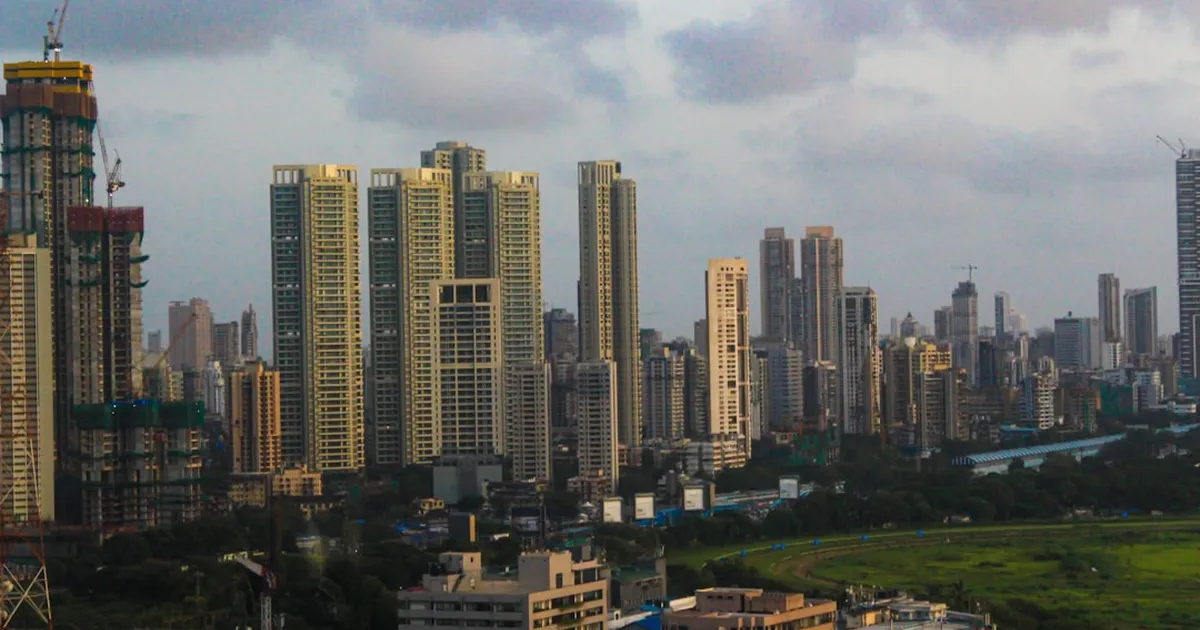
Weighted Average Launch Prices Across Top 8 Indian Cities Rise 16% Annually In Q1 2026 As Mid-segment Drives 46% Of New Supply: Cushman & Wakefield Marketbeat

Weighted Average Launch Prices Rise 16% Annually as Mid-Segment Drives Market in Q1 2026
India's residential real estate market entered 2026 with robust pricing momentum and balanced supply growth. According to Cushman & Wakefield's Residential MarketBeat Report released on April 15, 2026, the top eight cities recorded 75,283 new residential units in Q1 2026—a 2% quarterly increase and 1% year-on-year growth. Weighted average launch prices surged 16% annually and 9% quarterly, signaling sustained buyer appetite and developer confidence across India's major markets. The mid-segment remained the dominant supply driver, accounting for 46% of all new launches, while luxury and high-end segments collectively contributed 41%. The affordable housing segment reached its highest share in ten quarters at 14%, driven by activity in deeper suburban markets.
Three Cities Dominate: Mumbai Sets 14-Quarter High
Mumbai, Bengaluru, and Pune collectively drove 60% of India's new residential launches in Q1 2026, underscoring their position as the country's primary real estate engines. Mumbai alone achieved a record 19,775 units—a 25% quarterly surge and 14-quarter high—with Western Suburbs leading at 25% of launches, followed by Eastern Suburbs (20%), Navi Mumbai (17%), and Thane (15%). Bengaluru contributed 12,664 units, while Pune added 11,371 units. Beyond these three metros, activity remained uneven. Ahmedabad jumped 30% quarter-on-quarter to 6,745 units, while Kolkata posted the sharpest quarterly growth at 48% with 2,222 units. Delhi NCR recorded 9,677 units and Hyderabad 9,126 units, both showing moderation from prior quarters. Shalin Raina, Managing Director of Residential Services at Cushman & Wakefield, noted that this concentration reflects "sustained scale of development activity" driven by "phased project additions, township developments and focused submarket contributions."
Mid-Segment Pricing Accelerates as Affordable Housing Gains Traction
The mid-segment's dominance reflects evolving buyer preferences and developer strategy. With 46% of new supply, the mid-segment captured the largest share of launches, supported by strong demand from first-time homebuyers and upgraders. High-end and luxury categories together accounted for 41% of the market, driven by demand for larger homes among high-net-worth individuals seeking premium amenities and locations. The affordable segment's rise to 14%—its highest level in ten quarters—signals developer focus on deeper suburban markets where land costs remain manageable and buyer demand is growing. This three-tier distribution reflects India's increasingly segmented real estate market, where each category addresses distinct buyer demographics and investment theses.
What This Means for Homebuyers
Rising prices create urgency for mid-segment buyers, particularly in Mumbai, Bengaluru, and Pune where 16% annual price appreciation is outpacing inflation and wage growth. First-time homebuyers should act within the next 1-2 quarters before further price escalation locks them out of preferred micro-markets. However, the surge in affordable housing launches (14% share) offers relief for budget-conscious buyers willing to relocate to emerging suburban corridors like Thane, Navi Mumbai, North Peripheral Pune, and North Hyderabad. Luxury buyers face limited downside risk given strong HNI demand, but mid-segment buyers in secondary cities like Ahmedabad and Kolkata may benefit from growth arbitrage as these markets mature. The report signals a measured supply environment—only 2% quarterly growth—suggesting inventory tightness will persist through 2026, supporting prices but limiting buyer choice.
Expert Analysis: Structural Shift Toward Mid-Segment and Periphery
The Q1 2026 data reflects three structural trends reshaping India's residential market. First, the mid-segment's 46% share indicates developers have cracked the code on affordability without sacrificing margins—likely through modular designs, reduced amenities, and peripheral locations. Second, the rise of affordable housing to 14% suggests government incentives and builder confidence in suburban demand are working. Third, the concentration of growth in Mumbai (25% quarterly jump), Ahmedabad (30% jump), and Kolkata (48% jump) indicates supply cycles are normalizing after the pandemic surge, with developers now phasing launches to match demand. The 16% annual price rise, while substantial, reflects genuine demand rather than speculative frenzy—gross leasing volumes remain healthy, and buyer sentiment remains positive. However, the 1% year-on-year supply growth (versus 16% price growth) signals a widening supply-demand gap that could accelerate price appreciation in 2026-27 if new completions don't accelerate.
What to Expect Next
Expect continued price momentum through Q2 and Q3 2026, with mid-segment launches in Mumbai, Bengaluru, and Pune likely to see 12-18% annual appreciation. Developers will accelerate pre-launches in Ahmedabad, Kolkata, and Hyderabad to capitalize on emerging demand. Affordable housing will continue expanding into Tier-2 suburbs, driven by government incentives and buyer appetite. Interest rate movements remain a wildcard—any RBI rate cuts could supercharge demand, while rate hikes would cool buyer enthusiasm. Watch for RERA filing announcements from major developers; Q2 2026 should see a wave of new project registrations as developers rush to launch ahead of potential policy changes. Institutional investment in residential real estate is also rising, suggesting REITs and funds will increasingly acquire completed projects, potentially stabilizing prices in mature markets.
Key Metrics at a Glance
| Metric | Value | Trend |
| Total New Units (Top 8 Cities) | 75,283 | +2% Q-o-Q, +1% Y-o-Y |
| Weighted Average Launch Price | — | +16% Y-o-Y, +9% Q-o-Q |
| Mid-Segment Share | 46% | Dominant segment |
| High-End & Luxury Share | 41% | Strong HNI demand |
| Affordable Segment Share | 14% | 10-quarter high |
| Mumbai Launches | 19,775 units | +25% Q-o-Q (14-quarter high) |
| Bengaluru Launches | 12,664 units | Strong growth |
| Pune Launches | 11,371 units | Steady momentum |
| Ahmedabad Launches | 6,745 units | +30% Q-o-Q |
| Kolkata Launches | 2,222 units | +48% Q-o-Q (sharpest growth) |
Cities & Micro-Markets Directly Impacted
- Mumbai (Western Suburbs, Eastern Suburbs, Navi Mumbai, Thane): Record 19,775 launches; expect 14-18% price appreciation in mid-segment. Western Suburbs leading at 25% of supply.
- Bengaluru (West, North, Whitefield): 12,664 launches; Financial District and Nanakramguda leading; capital values rising 3% Y-o-Y.
- Pune (NH4 Bypass North, North Peripheral, Aundh-Baner): 11,371 launches; affordable segment growing in North Peripheral corridor.
- Ahmedabad: 30% quarterly jump to 6,745 units; emerging as secondary growth engine.
- Kolkata: Sharpest growth at 48% quarterly; 2,222 units; affordable housing driving activity in deeper suburbs.
- Delhi NCR (Gurugram, Manesar, Dwarka Expressway): 9,677 units; mid-segment dominates at 61% of launches.
- Hyderabad (West Zone, Financial District, North Zone): 9,126 units; West Zone leading at 65% of supply.
- Chennai: Steady performance; part of top-8 growth story.
Buyer Action Items
For Mid-Segment Buyers: Act within Q2 2026 before prices appreciate another 4-5% (typical quarterly pace). Focus on Mumbai Western Suburbs, Bengaluru West, Pune North Peripheral, and Ahmedabad for best value-to-growth ratio.
For Affordable Housing Buyers: Explore launches in Navi Mumbai, Thane, North Peripheral Pune, and North Hyderabad where affordable segment is growing fastest. These areas offer 20-30% lower per-sq-ft pricing than adjacent premium micro-markets.
For Luxury Buyers: Limited inventory in Mumbai's premium addresses (Bandra, Worli, Juhu) and Bengaluru's high-end corridors (Koramangala, Indiranagar) suggests long pre-launch waitlists. Register early for Q2-Q3 launches.
For Investors: Mid-segment rental yields remain healthy (3-4% gross) in Mumbai, Bengaluru, and Pune. Affordable housing in emerging suburbs offers 4-5% gross yields with stronger appreciation potential as infrastructure matures.
Questions & Answers (0)
Ask a Question
Get answer immediately here.
Terms & Conditions — Q&A
By submitting a question on RealtyPromoo, you agree to these terms:
1. Content Policy
- Your question must be a genuine real estate query.
- No abusive, defamatory, or promotional content.
- No personal contact info, broker referrals, or spam.
- Questions are reviewed by AI and may be edited for clarity, grammar, or politeness before publication.
2. Publication
- Your first name + last initial (e.g., "Rahul S.") will be displayed publicly with the answer.
- Your full name, phone number, and email are never displayed publicly.
- Once published, your question and answer become part of RealtyPromoo's content.
3. Phone & Email Verification
- OTP verification is mandatory to prevent spam.
- Your phone number and email are stored securely and may be used by RealtyPromoo or its sales team to contact you regarding your query or related properties.
4. Answer Accuracy
- Answers are generated by AI based on publicly available information and the page context.
- Answers are informational only — not financial, legal, or investment advice.
- Always verify pricing, RERA status, and possession dates with the developer before any transaction.
- RealtyPromoo is not liable for decisions made based on AI-generated answers.
5. Pre-RERA / Pre-Launch Projects
- Some listed projects are pre-RERA / pre-launch. These listings are informational only.
- No booking, sale, or agreement is permitted before RERA registration.
- "Express Your Interest" forms collect contact details for future communication, not advance bookings.
6. Moderation
- RealtyPromoo reserves the right to delete, edit, or refuse to publish any question or answer.
7. Privacy
- Your data is handled per our Privacy Policy.
8. Jurisdiction
- These terms are governed by the laws of India.
- Disputes are subject to the courts of Noida, Uttar Pradesh.
Be the first to ask a question. Get an answer immediately.
Questions & Answers
This article was drafted by Rakshit Chauhan, Junior Real Estate Writer (Freelancer) with research support from artificial intelligence. AI assisted in gathering and summarizing information from primary news sources and official statements, and the final content was reviewed by our editor before publishing. News pages are timestamped at the time of writing and are not updated after publication.
Sources consulted: Primary press releases · Official company statements · Business news publications · Government notifications · State RERA filings (where relevant).
Published: 28 April 2026 · Spot an error? Let us know
Related News
 News
News
Kalpataru Group Launches Kalpataru One Ultra-luxury Project In Worli Mumbai With 4 & 5 Bhk Apartments Starting At ₹35.46 Crore
Kalpataru One Worli is a 5-acre ultra-luxury project with 4 & 5 BHK apartments starting ₹30.60 crore. MahaRERA registered, 45+ amenities, possession March...
 News
News
Sunteck Realty Buys 2-acre Andheri East Land Parcel With ₹2,500 Crore Gdv Near Mumbai Airport
Sunteck Realty acquires 2-acre Andheri East land with ₹2,500 crore GDV near Mumbai International Airport. Third FY26 acquisition. Launch expected 2026.
 News
News
Adani Group Plans ₹1 Lakh Crore Motilal Nagar Redevelopment In Goregaon West Mumbai Spanning 143 Acres
Adani Group's ₹1 lakh crore Motilal Nagar redevelopment in Goregaon West (143 acres) announced April 2026. Details on pricing, timeline, 1,600 sq ft homes...
 News
News
Tata Realty Acquires 38-acre Land Parcel In Bengaluru From Hinduja Group For ₹2,300 Crore
Tata Realty acquires 38 acres in Jala-Yelahanka, Bengaluru for ₹2,300 crore from Hinduja Group. Largest city transaction. Grade A office campus planned...