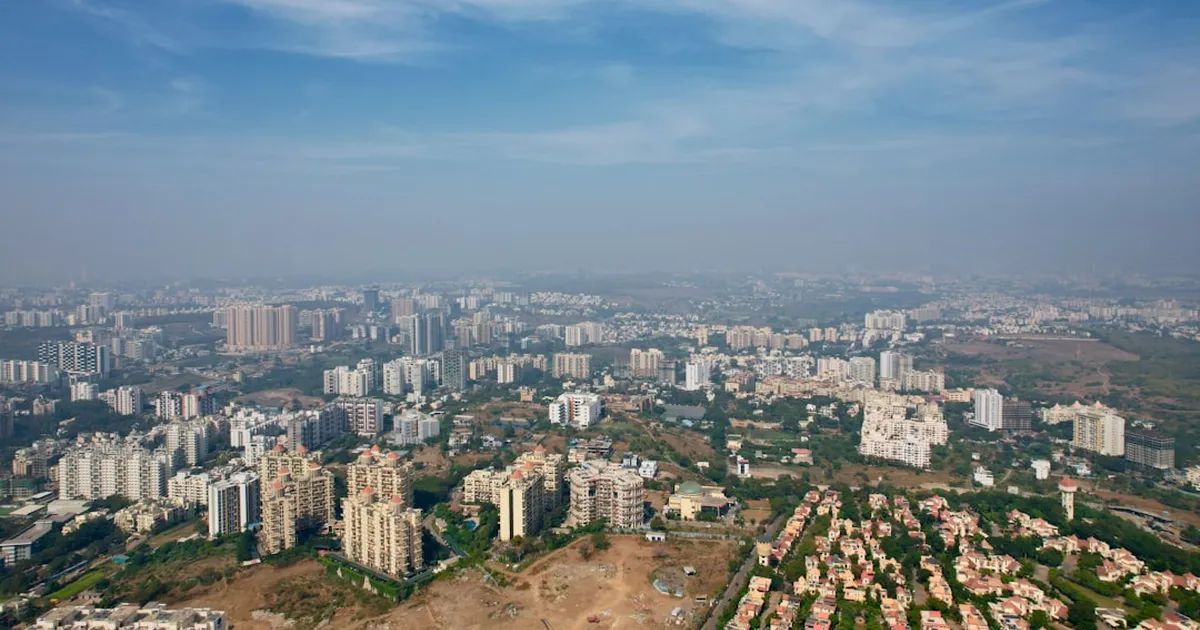
Pune Metro Network Extension Approved By Pmc With New Routes To Boost Residential Demand In Hinjewadi And Kharadi
Maharashtra Approves Two Major Metro Corridors: Kharadi-Khadakwasla Line Poised to Transform East-West Connectivity
The Maharashtra government delivered a major boost to Pune's real estate landscape on February 18, 2026, granting revised administrative approval for two critical metro corridors that will reshape urban connectivity and residential demand across the city. The approval covers the Kharadi-Swargate-Khadakwasla line (25.52 km with 22 elevated stations) and the Nal Stop-Warje spur route (6.12 km with 6 elevated stations), collectively spanning 31.64 kilometres with 28 stations. The project carries a sanctioned cost of ₹9,857.85 crore with a five-year construction timeline, backed by the European Investment Bank and aligned with central government approval already secured in late 2025. This approval represents the culmination of months of coordination between Pune Municipal Corporation, Maharashtra Metro Rail Corporation (Maha Metro), and multiple state agencies—clearing the final administrative hurdle before tender and construction commencement.
What This Means for Homebuyers and Investors
The Kharadi-Khadakwasla corridor approval creates immediate tailwinds for residential demand in Hinjewadi, Kharadi, Hadapsar, and emerging southern suburbs. Kharadi, already a premium IT and residential hub hosting major tech parks like Eon IT Park and Magarpatta, will see accelerated pre-launch activity as developers anticipate metro-driven appreciation. Properties within 500 metres of future metro stations historically command 10-15% annual appreciation premiums in Pune, based on historical performance in Kothrud, Baner, and Ramwadi. The Khadakwasla-Hadapsar-Swargate connection directly addresses a decades-old east-west connectivity gap, making southern suburbs like Katraj and Hadapsar far more attractive for middle to premium housing. Buyers and investors should act strategically: properties in Kharadi and Hadapsar face imminent price strengthening as the tender phase approaches, while Katraj offers value entry points for those willing to wait 4-5 years for completion. The approval also signals state confidence in Pune's growth trajectory, likely attracting major developers to launch new residential projects along the corridor.
Expert Analysis: Why This Approval Matters Now
The February 2026 approval reflects the convergence of three critical factors: central government backing (secured December 2025), PMC local coordination (completed February 2026), and state administrative clearance (February 18, 2026). This sequential approval pattern is essential—without state administrative approval, tender processes cannot commence. The corridor's design—entirely elevated with 28 stations—reduces land acquisition complexity compared to underground alternatives, accelerating construction timelines. The 31.64 km combined network directly complements the operational Purple and Aqua lines (31 km combined) and the nearly-complete Line 3 (Hinjewadi-Shivajinagar, 23.33 km, expected May 2026 commercial operations), creating a multi-nodal metro ecosystem. Historically, Pune's metro announcements trigger 40-60% capital appreciation in immediate corridors within 18-24 months of approval, as seen in Hinjewadi post-Line 3 announcement. The Kharadi approval is particularly significant because it unlocks the city's eastern growth vector—Kharadi's tech parks employ 150,000+ professionals daily, many currently facing 45-90 minute commutes from residential zones; metro connectivity will collapse this to 15-20 minutes, fundamentally reshaping where IT professionals choose to live.
What to Expect Next
The immediate timeline: tender documents will likely be released by Q2 2026, with contractor appointments by Q3 2026. Ground-breaking ceremonies are typically scheduled 2-3 months post-tender award, positioning early 2027 for physical construction commencement. Pre-launch developer activity is already visible in Kharadi and Hadapsar, with multiple projects announced in anticipation of metro approval. By mid-2026, expect significant price escalation in ready inventory within 500m of proposed station sites. The Line 3 completion (May 2026) will serve as a proof-of-concept for metro-driven demand, likely accelerating project launches along the new corridors. State tender approvals and land clearances typically conclude within 12-18 months of administrative approval, so by August-September 2027, the project should enter active construction phase with visible viaduct and station foundation work.
Areas Directly Benefiting from the Approval
- Kharadi: Premium IT hub with existing tech parks; metro will command 15-20% appreciation, with high-rise residential launches expected Q2-Q3 2026.
- Hadapsar: Emerging commercial and residential zone; proximity to Magarpatta IT Park makes it a top choice for professionals; metro will unlock FSI benefits and reduce parking ratios.
- Katraj: Currently undervalued southern suburb; metro completion by 2030-31 will transform it into a growth corridor; early investors face 40-60% appreciation potential.
- Swargate: Central business district; metro integration enhances commercial viability and reduces congestion on Old Mumbai-Pune Highway.
- Hinjewadi: IT corridor already seeing demand surge ahead of Line 3 completion; Kharadi connection will further cement its status as Pune's primary employment hub.
Comparative Market Context
Pune's metro network is now positioned as India's third-largest under active expansion, behind only Delhi and Mumbai. The Kharadi-Khadakwasla approval brings total approved metro length to 106 km (operational + under construction + approved), compared to Bangalore's 72 km and Hyderabad's 80 km. This positions Pune as the fastest metro-expanding city in India by approval-to-construction velocity. For homebuyers, this translates to sustained demand and pricing power—unlike speculative markets, metro-anchored projects in Pune attract both owner-occupiers (IT professionals) and investors, creating stable rental yields of 3-4% annually in Kharadi and Hadapsar. The approval also de-risks the southern suburbs: previously, Katraj and Hadapsar were considered "distant" from city employment; metro connectivity eliminates this perception, making them competitive with established micro-markets like Kothrud and Baner.
Key Risks and Realistic Timelines
While the approval is a major milestone, execution risks remain. Land acquisition for 28 stations, though minimized by elevated design, can still face delays if private property owners resist. The five-year construction timeline assumes no major regulatory or environmental challenges—Pune Metro's Phase 1 faced multiple alignment revisions due to monument protection laws and environmental concerns, adding 4+ years to the original schedule. Tender delays are also possible; the Kharadi project competes for contractor bandwidth with ongoing Swargate-Katraj underground extension (groundbreaking September 2024, completion target February 2029) and Line 3 completion. Buyers should temper expectations: while metro completion is targeted 2030-31, residential appreciation typically peaks 12-18 months before actual opening, meaning the bulk of price gains will materialize by 2029-2030. Projects launched today in Kharadi or Hadapsar will likely see 30-40% appreciation by 2028-2029, with further 10-15% gains post-metro opening.
Questions & Answers (0)
Ask a Question
Get answer immediately here.
Terms & Conditions — Q&A
By submitting a question on RealtyPromoo, you agree to these terms:
1. Content Policy
- Your question must be a genuine real estate query.
- No abusive, defamatory, or promotional content.
- No personal contact info, broker referrals, or spam.
- Questions are reviewed by AI and may be edited for clarity, grammar, or politeness before publication.
2. Publication
- Your first name + last initial (e.g., "Rahul S.") will be displayed publicly with the answer.
- Your full name, phone number, and email are never displayed publicly.
- Once published, your question and answer become part of RealtyPromoo's content.
3. Phone & Email Verification
- OTP verification is mandatory to prevent spam.
- Your phone number and email are stored securely and may be used by RealtyPromoo or its sales team to contact you regarding your query or related properties.
4. Answer Accuracy
- Answers are generated by AI based on publicly available information and the page context.
- Answers are informational only — not financial, legal, or investment advice.
- Always verify pricing, RERA status, and possession dates with the developer before any transaction.
- RealtyPromoo is not liable for decisions made based on AI-generated answers.
5. Pre-RERA / Pre-Launch Projects
- Some listed projects are pre-RERA / pre-launch. These listings are informational only.
- No booking, sale, or agreement is permitted before RERA registration.
- "Express Your Interest" forms collect contact details for future communication, not advance bookings.
6. Moderation
- RealtyPromoo reserves the right to delete, edit, or refuse to publish any question or answer.
7. Privacy
- Your data is handled per our Privacy Policy.
8. Jurisdiction
- These terms are governed by the laws of India.
- Disputes are subject to the courts of Noida, Uttar Pradesh.
Be the first to ask a question. Get an answer immediately.
Questions & Answers
This article was drafted by Lal Jee, Senior Property Analyst (Freelancer) with research support from artificial intelligence. AI assisted in gathering and summarizing information from primary news sources and official statements, and the final content was reviewed by our editor before publishing. News pages are timestamped at the time of writing and are not updated after publication.
Sources consulted: Primary press releases & company statements · Tier-1 business news (Economic Times, Livemint, Moneycontrol, Business Standard) · BSE / NSE corporate disclosures · Government notifications · State RERA filings (where relevant).
Published: 2 May 2026 · Spot an error? Let us know
Projects mentioned in this article
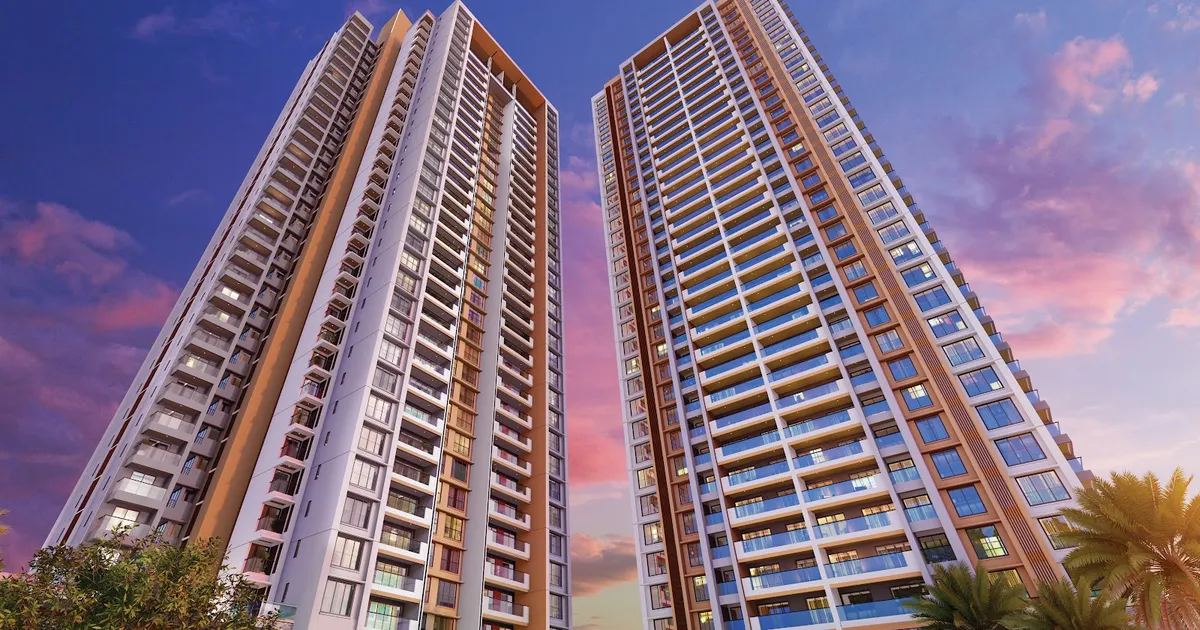 Upcoming
Kolte-patil Marubeni Pune Project
by Kolte-patil Developers Limited
Marubeni-funded sub-project upcoming · Wider Life Republic township: 7 phases delivered · 3 phases under construction · 4 phases planned
Life Republic Township, Marunji, Hinjewadi, Pune
₹70 Lakh - ₹1.9 Cr (indicative)
1 BHK, 2 BHK, 3 BHK (indicative based on township pattern)
Related News
 News
News
Bhartiya City Announces New Residential Township Project On Kanakapura Road South Bengaluru
Bhartiya City announces pre-launch residential township on Kanakapura Road, South Bangalore. 2 & 3 BHK apartments, gated community, expected completion Dec...
 News
News
Marubeni Corporation Joins Fifth Real Estate Development Project In India With Kolte-patil Developers In Pune
Marubeni Corporation joins Kolte-Patil's 900-home Life Republic expansion in Hinjewadi, Pune (₹850 crore GDV). Expected launch Q3-Q4 2026, completion 2029...
 News
News
Oberoi Realty Launches First Delhi Ncr Project In Sector 58 Gurugram With 14.81-acre Ultra-luxury Development On Golf Course Extension Road
Oberoi Realty's first Delhi NCR project: 14.81-acre ultra-luxury development in Sector 58 Gurugram. 450 residences, ₹25–50 crore pricing, formal launch...
 News
News
Kolte-patil Developers Partners With Japan's Marubeni Corporation For Fifth India Real Estate Development Project In Pune
Marubeni Corporation partners with Kolte-Patil Developers for fifth India project in Pune's Life Republic. 1.1M sq ft, 900 homes, ₹850 crore GDV. Launch...