
Listed Indian Realty Firms Close 54 Land Deals Spanning 1,433 Acres In Fy26 Capturing 49% Market Share: Anarock Annual Report

Listed Developers Capture 49% of Land Deals in FY26, Signalling Market Consolidation
India's real estate market is experiencing a structural shift toward consolidation, with listed developers closing 54 land deals spanning 1,433 acres in FY26 and capturing 49% of all land transactions nationwide. This marks a significant jump from their 40% share in FY25, according to research released by real estate consultancy Anarock in late April 2026. Out of 111 total land deals across the country covering 2,994 acres, listed players drove nearly one in every two transactions—a clear indicator of how regulatory complexity and capital intensity are reshaping the competitive landscape.
The data reveals a paradox: while the overall number of land deals fell from 143 in FY25 to 111 in FY26, listed developers held their ground with 54 deals in FY26, nearly matching the 57 deals from the previous year. This resilience while smaller and unorganised players retreated underscores the growing advantage of listed entities in accessing institutional capital and navigating stricter regulatory frameworks. Anarock Chairman Anuj Puri noted that land acquisition is increasingly becoming both capital-intensive and regulation-driven, giving listed developers a clear competitive edge.
Geographic Hotspots: Bengaluru Leads, But NCR Dominates Supply
Bengaluru emerged as the prime hotspot for listed-player land acquisition in FY26, with 17 deals covering over 293 acres closed in the city. Pune followed with 8 deals totalling 78 acres, while the Mumbai Metropolitan Region recorded 7 deals spanning 51 acres. Beyond the top metros, tier-II and tier-III cities including Amritsar, Vadodara, Nagpur, Panipat, Mysore, Raipur, and Coimbatore also attracted significant activity from listed developers.
However, when measuring new housing supply (units launched), the National Capital Region dominated with 66% of new launches coming from listed and Grade A developers combined—the highest share across all major cities. This creates a steepening entry barrier for smaller players who lack the liquidity and capability to develop luxury properties. Across the top seven cities, listed and Grade A developers together contributed 45% of total new housing supply in FY26, up from 43% in FY25.
Why This Matters for Homebuyers
For homebuyers, this consolidation trend carries mixed implications. On one hand, listed developers typically offer greater transparency, regulatory compliance, delivery reliability, and access to institutional financing—factors that matter for large-ticket purchases. The shift away from unorganised players reduces the risk of project abandonment or delayed completions that smaller developers sometimes face.
On the other hand, consolidation can limit choice and potentially support price stability at premium levels. With listed developers controlling nearly half of all new land acquisitions, the market is likely to see fewer ultra-affordable or mid-segment projects launched in the coming years, as these developers typically focus on branded, luxury-oriented developments. Buyers seeking affordable housing or mid-range properties may face tighter supply and potentially higher price points.
The FY26 data also hints at cautious deployment: while developers accumulated significant land in FY26, Anarock noted they are likely to adopt a "more moderate tempo of calibrated new launches" given global macroeconomic uncertainties and tapering housing sales. This suggests that while land banking remains robust, actual project launches—and thus new housing supply—may be measured in the near term.
What Drove This Consolidation?
Several structural factors explain this shift. First, regulatory complexity has risen sharply since the Real Estate (Regulation and Development) Act came into force in 2016. Compliance with RERA, environmental clearances, GST, and state-level regulations requires sophisticated in-house expertise and legal resources that only larger, listed entities can afford. Smaller developers struggle with these compliance costs, making them less competitive in land bidding.
Second, institutional capital has become the primary funding source for large land acquisitions. Listed developers have easier access to bank loans, capital markets, and foreign institutional investment due to transparent balance sheets and governance standards. Unorganised players, by contrast, rely on individual investors or limited bank credit, constraining their ability to bid aggressively for prime land parcels.
Third, the residential market has shifted decisively toward ultra-luxury and branded developments. Listed developers like Godrej Properties (which led with 17 deals for 443.5 acres in FY26), Brigade Group, and others have brand equity and execution track records that attract high-net-worth buyers. This preference further marginalises smaller developers.
Market Consolidation: A Longer Trend
This FY26 consolidation is not a one-year anomaly. The data reflects a multi-year structural shift. In FY24, listed developers accounted for approximately 40% of land deals. By FY25, they held steady at 40%. In FY26, they jumped to 49%—a 9-percentage-point gain in a single year. This acceleration suggests the market is crossing a tipping point where listed players will increasingly dominate prime land supply.
Anarock also noted that the total value of land transacted in the first half of 2025 (H1 2025) stood at ₹30,885 crore, with a development potential of ₹1.47 lakh crore and over 233 million sq. ft. This pace—already 1.15 times the entire FY24 volume—suggests that land banking by listed developers will continue to accelerate, further widening the gap between organised and unorganised players.
What to Expect Next
Over the next 12-18 months, expect listed developers to maintain aggressive land acquisition despite market headwinds. However, project launches are likely to be selective and timed with market demand. The consolidation trend will likely continue, with smaller players either exiting the market, being acquired by larger entities, or retreating to niche segments (affordable housing, tier-II cities) where listed developers have limited interest.
Regulatory bodies may also respond to this consolidation trend by tightening acquisition norms or promoting affordable housing mandates to prevent monopolistic control of prime land. The ultra-luxury focus of listed developers could also face pushback if policymakers prioritise affordable housing supply.
Key Takeaways for Homebuyers
- Reliability: Listed developers offer better delivery track records and regulatory compliance, reducing project risk.
- Choice Constraint: Consolidation is shifting supply toward ultra-luxury and branded projects; affordable and mid-segment options may become scarcer.
- Pricing Stability: Fewer players in the market can support price stability at premium levels, but may limit discounting power for buyers.
- Land Banking: The aggressive land acquisition by listed developers suggests strong pipeline projects will launch over the next 2-3 years, but timing remains uncertain.
- Regional Variation: NCR and Bengaluru are seeing the fastest consolidation; buyers in these cities will encounter fewer unorganised player options.
Questions & Answers (0)
Ask a Question
Get answer immediately here.
Terms & Conditions — Q&A
By submitting a question on RealtyPromoo, you agree to these terms:
1. Content Policy
- Your question must be a genuine real estate query.
- No abusive, defamatory, or promotional content.
- No personal contact info, broker referrals, or spam.
- Questions are reviewed by AI and may be edited for clarity, grammar, or politeness before publication.
2. Publication
- Your first name + last initial (e.g., "Rahul S.") will be displayed publicly with the answer.
- Your full name, phone number, and email are never displayed publicly.
- Once published, your question and answer become part of RealtyPromoo's content.
3. Phone & Email Verification
- OTP verification is mandatory to prevent spam.
- Your phone number and email are stored securely and may be used by RealtyPromoo or its sales team to contact you regarding your query or related properties.
4. Answer Accuracy
- Answers are generated by AI based on publicly available information and the page context.
- Answers are informational only — not financial, legal, or investment advice.
- Always verify pricing, RERA status, and possession dates with the developer before any transaction.
- RealtyPromoo is not liable for decisions made based on AI-generated answers.
5. Pre-RERA / Pre-Launch Projects
- Some listed projects are pre-RERA / pre-launch. These listings are informational only.
- No booking, sale, or agreement is permitted before RERA registration.
- "Express Your Interest" forms collect contact details for future communication, not advance bookings.
6. Moderation
- RealtyPromoo reserves the right to delete, edit, or refuse to publish any question or answer.
7. Privacy
- Your data is handled per our Privacy Policy.
8. Jurisdiction
- These terms are governed by the laws of India.
- Disputes are subject to the courts of Noida, Uttar Pradesh.
Be the first to ask a question. Get an answer immediately.
Questions & Answers
This article was drafted by Tejinder Paul Singh, Real Estate Content Writer (Freelancer) with research support from artificial intelligence. AI assisted in gathering and summarizing information from primary news sources and official statements, and the final content was reviewed by our editor before publishing. News pages are timestamped at the time of writing and are not updated after publication.
Sources consulted: Primary press releases & company statements · Tier-1 business news (Economic Times, Livemint, Moneycontrol, Business Standard) · BSE / NSE corporate disclosures · Government notifications · State RERA filings (where relevant).
Published: 30 April 2026 · Spot an error? Let us know
Projects mentioned in this article
 Upcoming
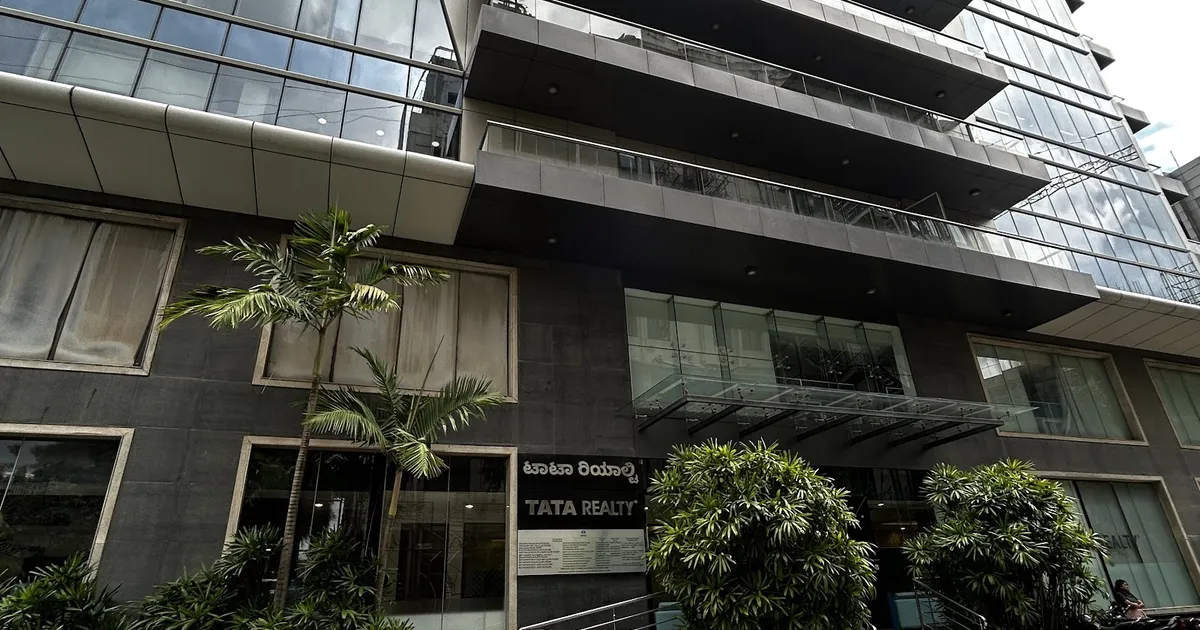
Tata Realty Bengaluru Hinduja Land Project
by Tata Realty
Jala Hobli & Yelahanka Hobli, North Bengaluru, Bangalore
Price on Request
Grade A Office Campus (Commercial)
Related News
 News
News
Sattva Group Launches Sattva Forest Ridge Pre-launch Residential Project In Anjanapura South Bengaluru
Sattva Forest Ridge launches in Anjanapura, JP Nagar 9th Phase: 407 apartments across 4 acres, 95% sold in 9 months. Prices ₹67L–₹1.99Cr. Possession Dec...
 News
News
Puravankara Launches Purva Weaves Premium Residential Project In Bellandur South Bengaluru
Purva Weaves Bellandur: 150+ luxury 3 & 4 BHK apartments, ₹1.86-3.75 Cr, 80% open space, Dec 2028 possession. RERA pending. Prime ORR location near IT hubs.
 News
News
Sattva Group Launches Pre-launch Sales For Sattva Ozone Residential Project In Kannamangala Devanahalli Bengaluru
Sattva Ozone in Devanahalli: 16-acre luxury residential project with 2, 3, 4 BHK apartments. Pre-launch phase, possession December 2029. Premium North...
 News
News
Puravankara Launches Purva Aerocity Pre-launch Residential Project In Chikkajala North Bengaluru
Purva Aerocity Chikkajala pre-launch: 300 luxury 2/3/3.5 BHK apartments on 7.5 acres, 9km from airport. Launch Feb-June 2025. Prices from ₹1.71 Cr. RERA...