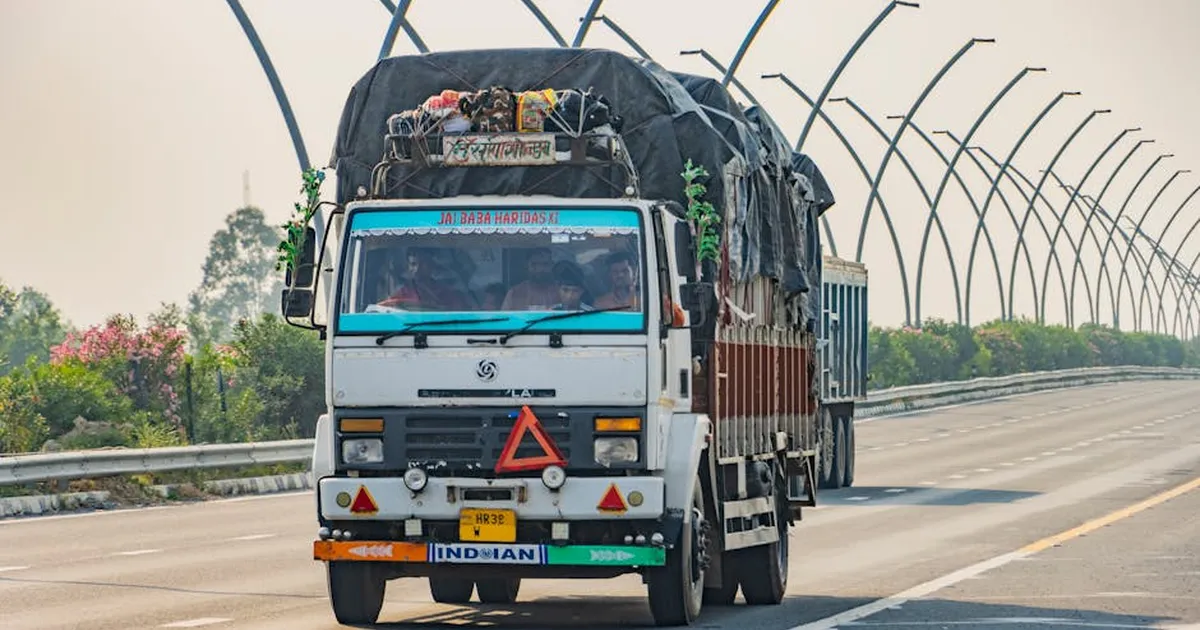
Ganga Expressway Inaugurated By Pm Modi, Set To Boost Connectivity And Real Estate Growth

PM Modi Inaugurates 594-km Ganga Expressway: A Transformational Milestone for UP Real Estate
Prime Minister Narendra Modi inaugurated the much anticipated expressway on April 29, 2026. The Ganga Expressway is a partially opened 594 km long, 6-lane (expandable to 8 lanes), greenfield National Expressway along the Ganges River connecting eastern and western boundaries of Uttar Pradesh state in India. The total expected project cost in 2021 was ₹37,350 crores, including the land acquisition cost of around ₹9,500 crores. The 594-km Ganga Expressway, one of India's largest greenfield infrastructure projects that was completed in less than 3.5 years, connecting Meerut with Prayagraj in Uttar Pradesh. The inauguration ceremony was held in Hardoi district in the presence of Governor Anandiben Patel and Chief Minister Yogi Adityanath, marking a historic moment in India's infrastructure development.
What the Expressway Delivers: Key Features & Connectivity Impact
The project will reduce travel time from about 11 hours to nearly six hours and open new economic opportunities across the state. Uttar Pradesh government is establishing 11 industrial corridors across all 12 districts — Meerut, Hapur, Bulandshahr, Amroha, Sambhal, Badaun, Shahjahanpur, Hardoi, Unnao, Rae Bareli, Pratapgarh, Prayagraj — creating millions of jobs over time. The expressway is also equipped with Advanced Traffic Management Systems (ATMS), emergency trauma centers, and helipads for air ambulances, prioritizing passenger safety above all else. A 3.5 km stretch in Shahjahanpur district has been developed as a dedicated Emergency Landing Facility (ELF) for the Indian Air Force (IAF), facilitating aircraft landing and strengthening the corridor's strategic capabilities.
The expressway spans 519 villages across its 594-km alignment and includes multiple bridges crossing the Ganga and Ramganga rivers, plus strategically placed service areas, fuel stations, EV charging stations, and food plazas to support long-distance travel. Adani Road Transport Limited (ARTL), the roads arm of Adani Enterprises Limited (AEL), developed 464 km, or nearly 80 per cent of the alignment, deploying over 12,000 workers at peak construction. The remaining stretch was developed by IRB Infrastructure.
Economic Impact: Job Creation & Financial Projections
The Ganga Expressway is expected to generate roughly 3,00,000 direct and indirect employment opportunities over a 10-year period, according to the UP government's estimates. According to the UP-government's estimates, the expressway is expected to generate Rs 25,000-30,000 crore in annual logistics savings, create around 3 lakh jobs over the next decade and contribute over Rs 1 lakh crore to the state's GDP, while improving freight velocity and reducing inventory holding costs across sectors.
Modi noted the expressway will bolster the socioeconomic growth of Uttar Pradesh by providing faster movement of cargo and farm produce, augmenting farmers' income and creating jobs for youth. The corridor will particularly benefit agricultural regions, enabling faster market access for farm produce and supporting the establishment of cold chain facilities and agro-processing clusters across districts like Pratapgarh, Shahjahanpur, and Hardoi.
Real Estate Transformation: Price Appreciation & Market Dynamics
Real estate experts say the expressway marks a structural shift from city-centric growth to a corridor-driven development model, opening up Tier II and III cities as new investment hubs. According to Knight Frank India, this creates a "new geography of value creation" driven by industrial and logistics-led growth rather than proximity to metros.
With current prices in Meerut averaging ₹6,500–₹6,700 per sq. ft., and improved connectivity to the Yamuna Expressway and Noida International Airport, these markets are well-positioned for 30–40% appreciation over the next few years. At present, Meerut's residential prices are averaging around ₹6,400–₹6,600 per sq. ft., and as developer interest deepens alongside infrastructure-led demand, we anticipate a 25–35% price appreciation in the medium term, especially across emerging micro-markets aligned with the expressway.
In the near term, stakeholders estimate that well-connected locations along the corridor could witness price appreciation of 8–12% over the next 12–18 months, particularly in plotted developments and mid-income housing segments. This is expected to be supported by a reduction in logistics costs of around 15–20% and the expansion of demand from NCR into adjoining regions.
District-Wise Development Outlook: Emerging Growth Nodes
Meerut is expected to evolve as a key residential hub due to spillover demand from NCR, while agro-processing clusters such as Pratapgarh (amla), Shahjahanpur (botanical products), and Hardoi (dairy) are likely to benefit from enhanced connectivity. Cold chain infrastructure is anticipated to grow in Pratapgarh, Unnao, and Hapur, whereas districts like Amroha, Badaun, Shahjahanpur, and Hardoi are projected to see manufacturing-led expansion.
Santhosh Kumar, Vice Chairman, ANAROCK Group, noted, "The Ganga Expressway is expected to position Uttar Pradesh as a key industrial corridor… driving the emergence of Budaun, Shahjahanpur and Sambhal as major warehousing hubs." Warehousing and logistics projects are likely to take off within the first three years, followed by residential and commercial development in subsequent years.
Phased Development Timeline: What to Expect Over Next 5 Years
In the first phase (0–3 years), Grade A warehousing and logistics facilities are expected to emerge rapidly within a 5 km radius of the interchange nodes, driven by improved connectivity and early price discovery. The second phase (2–5 years) will witness industrial activation, increased residential demand in district towns, and expansion of retail, commercial infrastructure. This phased approach reflects how the corridor will unlock value sequentially—logistics first, followed by industrial clusters, then residential spillover as connectivity matures and confidence in the region strengthens.
NCR Spillover Effect: Ghaziabad & Greater Noida Positioned for Gains
On the heels of the recent connectivity boost from the Delhi-Dehradun Expressway, the Ganga Expressway inaugurated on April 29, 2026 is now emerging as the primary economic engine for the National Capital Region (NCR). While the 594 km corridor stretches from Meerut to Prayagraj, real estate experts and urban planners identify Ghaziabad as the 'strategic anchor' that will reap the most immediate capital gains. Industry stakeholders indicated that locations along the Yamuna Expressway, Greater Noida, and adjoining belts could see increased demand, with near-term price appreciation estimated at 8–12% over the next 12–18 months.
A proposed 74 km link connecting the Ganga Expressway with the Yamuna Expressway is expected to improve access towards the Noida International Airport, bringing western UP districts such as Hapur and Bulandshahr closer to the aviation hub. This planned connectivity will create a continuous east-west spine from Delhi through NCR into eastern UP, fundamentally reshaping regional real estate dynamics.
Tourism & Pilgrimage Economy: Secondary Growth Driver
The expressway will connect seven major tourist destinations, Garhmukteshwar, Kalkidham, Belhadevi, Chandrika (Shakti Peeth), Triveni Sangam, boosting the tourism economy in the region, the press release stated. The state is home to Prayagraj site of the Maha Kumbh, the world's largest human gathering, Varanasi Kashi Vishwanath temple, Mathura-Vrindavan, Ayodhya Ram Temple and dozens of other pilgrimage sites that collectively draw hundreds of millions of visitors annually. The Ganga Expressway will reduces travel time across this sacred geography. A journey from Meerut to Prayagraj that once required the better part of a day can now be completed in approximately five to six hours. This dramatic reduction in travel time will unlock enormous latent demand for hospitality, retail, and service infrastructure along the corridor.
Logistics & Supply Chain Efficiency: Cost Savings for Businesses
From a logistics perspective, the Ganga Expressway will significantly reduce freight movement costs and improve supply chain efficiency. Agricultural produce, manufactured goods, and industrial materials will be able to move faster between regions, benefiting farmers, MSMEs, and large industries alike. The improved connectivity is also expected to attract investments in warehousing, cold storage, and manufacturing clusters along the corridor. As per the release, the expressway will allow for the saving of about 30 per cent of fuel.
Key Risks & Challenges Buyers Should Consider
While the growth potential is significant, buyers should be aware of several cautionary factors. First, land acquisition across 12 districts remains ongoing for Phase 2 extensions—regulatory delays could push timelines. Second, early-stage appreciation heavily depends on industrial clusters and warehousing projects materializing within 3 years; if these stall, residential demand may not follow as projected. Third, toll rates are substantial—at ₹1,515 for a full 594-km journey in a private car, commuting costs for daily users will be significant. Fourth, the expressway's success depends on complementary infrastructure (water supply, electricity, waste management) in district towns, which may lag behind road completion. Finally, farmland acquisition involved over 100,000 farmers—social friction and land disputes could emerge if farmers feel inadequately compensated or if promised employment doesn't materialize.
What This Means for Homebuyers: Action Timeline
Immediate (Next 6 months): Expect rapid land price discovery in Meerut, Hapur, and Ghaziabad. Early-mover advantage is highest now before developer interest consolidates and prices firm. Medium-term (6-18 months): Watch for RERA filings of warehousing and logistics projects—these will validate the corridor's commercial viability. Residential projects will likely launch in Q4 2026 and Q1 2027. Long-term (18+ months): As industrial activity stabilizes and rental demand emerges, residential prices should appreciate 25–35% from current levels, but this assumes execution on promised infrastructure.
For NCR-based buyers seeking affordable options with growth potential, Ghaziabad and Hapur offer the best risk-reward balance. For those targeting pure appreciation, Meerut and Bulandshahr offer higher upside but face execution risk. For long-term hold investors, Prayagraj and Kanpur offer lower entry costs and tourism-driven demand, but require patience for 3–5 years before meaningful appreciation.
Questions & Answers (0)
Ask a Question
Get answer immediately here.
Terms & Conditions — Q&A
By submitting a question on RealtyPromoo, you agree to these terms:
1. Content Policy
- Your question must be a genuine real estate query.
- No abusive, defamatory, or promotional content.
- No personal contact info, broker referrals, or spam.
- Questions are reviewed by AI and may be edited for clarity, grammar, or politeness before publication.
2. Publication
- Your first name + last initial (e.g., "Rahul S.") will be displayed publicly with the answer.
- Your full name, phone number, and email are never displayed publicly.
- Once published, your question and answer become part of RealtyPromoo's content.
3. Phone & Email Verification
- OTP verification is mandatory to prevent spam.
- Your phone number and email are stored securely and may be used by RealtyPromoo or its sales team to contact you regarding your query or related properties.
4. Answer Accuracy
- Answers are generated by AI based on publicly available information and the page context.
- Answers are informational only — not financial, legal, or investment advice.
- Always verify pricing, RERA status, and possession dates with the developer before any transaction.
- RealtyPromoo is not liable for decisions made based on AI-generated answers.
5. Pre-RERA / Pre-Launch Projects
- Some listed projects are pre-RERA / pre-launch. These listings are informational only.
- No booking, sale, or agreement is permitted before RERA registration.
- "Express Your Interest" forms collect contact details for future communication, not advance bookings.
6. Moderation
- RealtyPromoo reserves the right to delete, edit, or refuse to publish any question or answer.
7. Privacy
- Your data is handled per our Privacy Policy.
8. Jurisdiction
- These terms are governed by the laws of India.
- Disputes are subject to the courts of Noida, Uttar Pradesh.
Be the first to ask a question. Get an answer immediately.
Questions & Answers
This article was drafted by Kunal Shah, Senior Property Analyst (Freelancer) with research support from artificial intelligence. AI assisted in gathering and summarizing information from primary news sources and official statements, and the final content was reviewed by our editor before publishing. News pages are timestamped at the time of writing and are not updated after publication.
Sources consulted: Primary press releases & company statements · Tier-1 business news (Economic Times, Livemint, Moneycontrol, Business Standard) · BSE / NSE corporate disclosures · Government notifications · State RERA filings (where relevant).
Published: 4 May 2026 · Spot an error? Let us know
Projects mentioned in this article
 Under Construction
Max Estates 128
by Max Estates Limited (Max Estates 128 Pvt. Ltd.)
Sector 128, Noida Expressway, Noida
₹9.28 Cr - ₹18.04 Cr
4 BHK, 5 BHK, Penthouse
 Pre-Launch
Birla Khar West
by Birla Estates (aditya Birla Real Estate Ltd)
Single redevelopment project covering two housing societies — Anmol Co-operative Housing Society and Bhartiya Bhavan Co-operative Housing Society — developed jointly with Parinee Real Estate Builders. Total saleable area: 2.9 lakh sq ft. Estimated revenue potential: ₹1,700 crore. No public phasing split announced yet.
Khar West, Mumbai
₹11.2 Cr - ₹30 Cr
3 BHK, 4 BHK, 5 BHK
 New Launch/Under Construction
Lnt Green Reserve
by L&T Realty (Larsen & Toubro)
Sector 128, Noida Expressway, Noida
₹6 Cr - ₹12 Cr
3 BHK, 4 BHK, 5 BHK
 New Launch / Under Construction
Ganga Anantam 85
by Ganga Realty
Sector 85, New Gurgaon, Gurugram
₹3.50 Cr - ₹5.12 Cr
3 BHK, 3.5 BHK, 4 BHK
Related News
 News
News
India's Real Estate Sector Attracts Record Usd 5.1 Billion Capital Inflows In Q1 2026, Up 72% Yoy: Cbre India Market Monitor
India's real estate sector attracts record $5.1 billion capital inflows in Q1 2026, up 72% YoY. Domestic investors and REITs lead growth across Bengaluru...
 News
News
Domestic Capital Dominates Indian Real Estate For Third Straight Quarter As Q1 2026 Inflows Hit 5-year High: Cushman And Wakefield
India's Q1 2026 institutional real estate inflows hit USD 1.6B, highest first-quarter since 2021. Domestic investors account for 76%, signaling structural...
 News
News
Versova-bandra Sea Link Project To Reshape Mumbai Western Suburbs Luxury Real Estate With Enhanced Coastal Connectivity
Versova-Bandra Sea Link reaches 32% completion in April 2026, targeting July 2027 finish. Property prices surge across Bandra, Juhu, Versova as connectivity...
 News
News
Real Estate Developers Acquire 3,093 Acres Of Land In 2025 Investing ₹54,818 Crore
Developers acquired 3,093 acres for ₹54,818 crore in 2025. Discover how this ₹92,000 crore construction boom will impact property prices and homebuyer...