Developers Cut Land Buying 56% in Jan-Sep, Signalling Caution on New Supply
Land Buying Falls 56% in Jan-Sep as Developers Pull Back
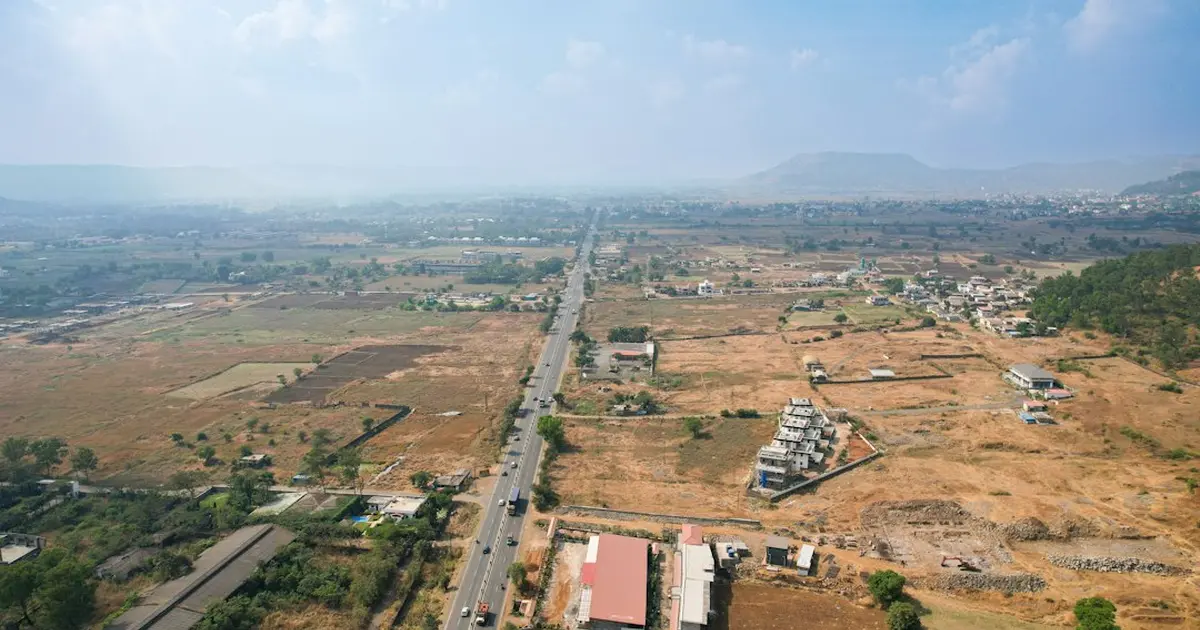
Developers bought far less land in the first nine months of 2026 than they did a year earlier. Across the country, 76 land deals covering about 1,445 acres were completed between January and September, against 99 deals over roughly 3,292 acres in the same stretch of 2025. The number of transactions fell about 23 per cent and the acreage fell about 56 per cent. For a buyer, this is an early signal about where new homes will come from in the next two or three years, and it deserves a careful reading rather than a quick reaction.
What the Numbers Show
The slowdown is not a random dip. It follows three years of fast expansion in land acquisition, and the latest figures suggest developers have become more selective about how much capital they lock into land. The mix of deals has also shifted. Joint development agreements made up 19 of the 76 transactions, or 25 per cent, compared with about 12 per cent in 2022. Under such an arrangement, the landowner contributes the plot while the developer handles construction, financing and execution, and both sides share the revenue or the completed area. Developers are leaning on this route because it spreads risk and avoids a large upfront payment.
Large parcels have become rare. Deals involving 50 acres or more dropped to five in the nine-month period, from 12 a year earlier. The combined acreage of those large deals fell from about 2,398 acres to about 588 acres. That is a sharp change, because big parcels are what usually feed multi-tower townships and long-running launch pipelines.
Impact on Homebuyers
If you are considering a purchase, the first thing to understand is that land buying today has a lag of several years before it reaches your door. A plot bought now typically needs approvals, design work and construction before any flat is handed over. So a fall in acquisition does not mean new homes will disappear overnight. It does mean that the pipeline of projects that begin construction in the next cycle may be thinner than the supply that was planned during the 2025 peak.
For prices, the picture is mixed. Land costs have been rising, and developers say those costs, along with doubts about whether some projects remain viable, are behind the slowdown. When land becomes expensive and developers hold back, the pressure tends to show up in launch prices for new projects, particularly in locations where demand is strong and supply is limited. Buyers of ready homes in established areas may face less immediate change, while buyers of projects that have not yet begun construction should look closely at the builder's financial strength before paying any booking amount.
Who benefits? Developers with healthy balance sheets and clear project economics are likely to keep buying, and they may find less competition for well-located parcels. Smaller builders that depend heavily on fresh land purchases may find it harder to launch new phases. For you, that means the risk of a stalled project is worth weighing more carefully than the headline price.
Should you wait or act? There is no single answer. If you need a home for your own use and the project you are looking at is already under construction with a clear track record, the slowdown is less relevant to your decision. If you are buying at the pre-launch or early stage, take time to verify the approvals, the developer's delivery history and the payment schedule, and do not let the scarcity narrative push you into signing quickly.
Expert Analysis
Why is this happening? Three forces appear to be working together. First, land prices have climbed after a long run of demand, which raises the cost of every new project. Second, financing has become more demanding, and lenders and developers both want stronger evidence that a scheme will sell and close on time. Third, approval timelines remain uncertain in many places, and that uncertainty makes large, multi-year land commitments harder to justify.
The data also shows a geographic shift. Between 2022 and September 2026, the seven major markets accounted for around 86 per cent of land deals, but only about 57 per cent of the acreage bought in that span. The Mumbai Metropolitan Region led in acreage, followed by the National Capital Region. Nearly half of the large transactions since 2022 took place outside the seven major markets. This suggests that the next wave of big townships may be built further from the metro cores, where land is cheaper and parcels are larger. Buyers looking outside the largest cities should therefore keep an eye on which secondary corridors attract consistent land buying.
History offers a caution. Land cycles in India have often swung between periods of aggressive buying and long pauses, and the buyers who suffered most were usually those who bought at the top of a boom without checking the builder's execution record. The current slowdown is a reminder that the quality of the developer matters at least as much as the location.
What to Expect Next
Over the coming months, watch for three things. The first is whether developers who have paused land buying resume at a steady pace or continue to hold back. The second is whether joint development deals keep growing as a share of the market, since that would signal that builders are sharing risk with landowners rather than buying outright. The third is how launch activity responds in the cities that lead in land acquisition. A sustained fall in launches would eventually show up in fewer new options for buyers, while a stable launch pipeline would suggest that the slowdown is mainly a pause in speculative buying.
Related Projects & Areas Affected
- Mumbai Metropolitan Region: Led land acquisition over the 2022 to 2026 period with about 2,798 acres, so its new-launch pipeline is most exposed to any change in buying pace.
- National Capital Region: Ranked second with about 2,012 acres, where large parcels and township plans are closely tied to the pace of land deals.
- Ahmedabad: Recorded about 1,460 acres across 14 transactions, placing it among the smaller markets that have attracted sizeable parcels outside the seven major metros.
- Bengaluru, Pune and Hyderabad: Part of the seven major markets, where buyers should compare launch pipelines with the developer's delivery history before committing.
- Secondary cities with 50-acre-plus parcels: Nearly half of the large transactions since 2022 took place outside the major markets, making these corridors worth watching for future township supply.
Questions & Answers (0)
Terms & Conditions — Q&A
By submitting a question on RealtyPromoo, you agree to these terms:
1. Content Policy
- Your question must be a genuine real estate query.
- No abusive, defamatory, or promotional content.
- No personal contact info, broker referrals, or spam.
- Questions are reviewed by AI and may be edited for clarity, grammar, or politeness before publication.
2. Publication
- Your first name + last initial (e.g., "Rahul S.") will be displayed publicly with the answer.
- Your full name, phone number, and email are never displayed publicly.
- Once published, your question and answer become part of RealtyPromoo's content.
3. Phone & Email
- Your phone number is required so our team can share the answer with you on WhatsApp and assist with your query.
- Your phone number and email are stored securely and may be used by RealtyPromoo or its sales team to contact you regarding your query or related properties.
4. Answer Accuracy
- Answers are generated by AI based on publicly available information and the page context.
- Answers are informational only — not financial, legal, or investment advice.
- Always verify pricing, RERA status, and possession dates with the developer before any transaction.
- RealtyPromoo is not liable for decisions made based on AI-generated answers.
5. Pre-RERA / Pre-Launch Projects
- Some listed projects are pre-RERA / pre-launch. These listings are informational only.
- No booking, sale, or agreement is permitted before RERA registration.
- "Express Your Interest" forms collect contact details for future communication, not advance bookings.
6. Moderation
- RealtyPromoo reserves the right to delete, edit, or refuse to publish any question or answer.
7. Privacy
- Your data is handled per our Privacy Policy.
8. Jurisdiction
- These terms are governed by the laws of India.
- Disputes are subject to the courts of Noida, Uttar Pradesh.
Be the first to ask a question. Get an answer in seconds.
Questions & Answers
This article was drafted by Gajendra Singh, Senior Property Analyst (Freelancer) with research support from artificial intelligence. AI assisted in gathering and summarizing information from primary news sources and official statements, and the final content was reviewed by our editor before publishing. News pages are timestamped at the time of writing and are not updated after publication.
Sources consulted: Primary press releases & company statements · Tier-1 business news (Economic Times, Livemint, Moneycontrol, Business Standard) · BSE / NSE corporate disclosures · Government notifications · State RERA filings (where relevant).
Published: 12 November 2026 · Spot an error? Let us know
Locations covered
Cities
Localities
Related News
 News
Marathon Moves Toward Full Control of Monte South in Byculla
Marathon plans Monte South Tower D in Byculla, Mumbai. Upcoming, FY29 launch targeted, Rs 1,800 crore GDV and a Rs 40,000 per sq ft project-wide average.
 News
Godrej Joins MICL for 900-Foot Marine Lines Tower: What Buyers Should Weigh
Godrej joins MICL on the sea-facing MICL Godrej Marine Lines in South Mumbai. 4 and 5 BHK homes from ₹27.19 Cr; launch planned FY 2026-27.
 News
Shriram's 9.1-Acre Doddagubbi JDA Puts North-East Bengaluru on Watch
Shriram Properties signs a JDA for a 9.1-acre Doddagubbi site in North-East Bengaluru. 2 and 3 BHK lake-facing homes, launch in FY2026-27, price on.
 New Launch
Sattva Amritya Launch in Jigani Puts South Bengaluru's Outer Corridor on Watch
Sattva Group's Sattva Amritya, a New Launch on Jigani Main Road, Bangalore, offers 1-3 BHK homes from Rs 70.32 lakh. Our market view for South Bengaluru.