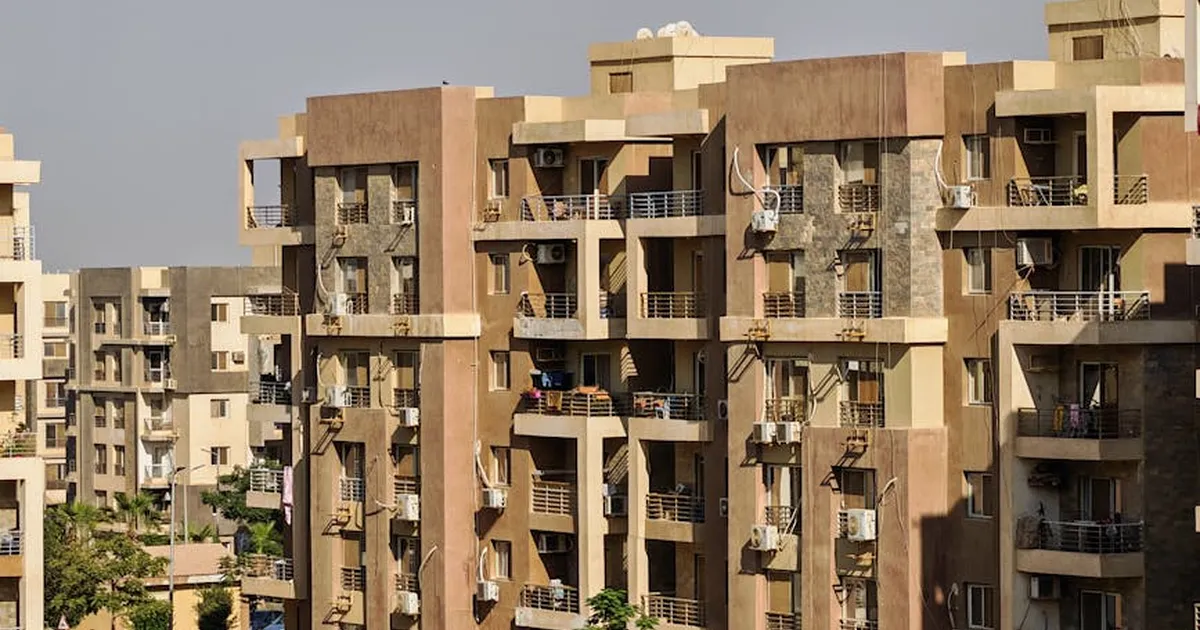
Ahmedabad Records 6,745 New Residential Units In Q1 2026 With 30% Quarterly Jump As City Emerges Fastest-growing Metro

Ahmedabad Records 6,745 New Residential Units in Q1 2026 — 30% Quarterly Jump Signals Fastest Metro Growth
Ahmedabad's residential real estate market has entered a growth phase that rivals India's largest metros. In the first quarter of 2026, the city recorded 6,745 new residential unit launches—a 30% jump from the previous quarter and 29% year-on-year growth. This performance significantly exceeds the city's three-year quarterly average by approximately 31%, according to the Cushman & Wakefield Residential MarketBeat Report released in March 2026. The surge reflects accelerating developer confidence and strong buyer demand across multiple price segments, positioning Ahmedabad among India's fastest-growing residential markets alongside Mumbai, Bengaluru, and Pune.
The East Peripheral submarket led launches with 32% of total supply, followed by the North corridor at 25% and West Peripheral at 24%. Key emerging hotspots include Hanspura and Kathwada, areas that are experiencing rapid infrastructure upgrades tied to metro expansion and Commonwealth Games 2030 preparations. The mid-segment continued to dominate new supply at 46% of launches, while high-end and luxury categories together accounted for 41%—a significant shift that underscores growing demand from high-net-worth individuals seeking larger, premium homes. Affordable housing contributed 40% of full-year supply in Q4 2025, driven by strong activity in peripheral submarkets where land availability remains higher.
Impact on Homebuyers
The 30% quarterly jump creates both opportunities and challenges for homebuyers. Price momentum is building—the city recorded 1.4% average price appreciation in Q1 2026, with housing demand jumping 21.4% year-on-year. This means buyers who delay face the risk of paying higher prices for the same property in coming quarters. However, the surge in supply across multiple submarkets provides genuine choice. Buyers seeking affordable housing (₹50 lakh to ₹1 crore segment) will find options in emerging areas like Gota, Shela, and Odhav, where prices range from ₹3,800–₹5,000 per sq. ft. Mid-segment buyers (₹1–2 crore range) should focus on established corridors like South Bopal, Bopal, and Shela, where properties command ₹5,000–₹7,500 per sq. ft. with strong rental yields of 3.9–4.3%. Premium buyers will find concentrated activity around SG Highway, Satellite, and Prahlad Nagar, where prices range from ₹8,000–₹14,000 per sq. ft.
Location selection has become critical. Properties near Ahmedabad Metro Phase 2 stations—now operational as of January 2026—are absorbing faster and showing better appreciation potential. Areas like Chandkheda and Motera, which benefit from metro connectivity and Commonwealth Games infrastructure development, are expected to appreciate 12–15% annually through 2028. Conversely, poorly connected peripheral areas risk slower absorption and lower appreciation. First-time homebuyers should act before Q2 2026 launches, as the market is transitioning from a buyer's advantage to a seller's market.
Expert Analysis
The 30% quarterly jump reflects three converging factors: infrastructure maturation, Commonwealth Games momentum, and accumulated buyer demand from 2025. Developers launched over 22,000 units in H1 2025, but sales absorption lagged initially. By Q1 2026, buyer sentiment has shifted decisively—demand is catching up, creating a healthy supply-demand balance rather than oversupply. This is a marker of market maturation, not irrational exuberance. Cushman & Wakefield's Shalin Raina noted that the concentration of activity across Mumbai, Bengaluru, and Pune (60% of India's new launches) highlights sustained scale, while Ahmedabad's 30% quarterly growth signals it is transitioning from a secondary market to a primary growth engine.
The Commonwealth Games 2030 announcement has accelerated infrastructure timelines. Metro Phase 2 completion in January 2026 was ahead of schedule, and the Sardar Vallabhbhai Patel Sports Enclave development (₹5,000–6,000 crore investment planned) is forcing rapid upgrades in North and North-West Ahmedabad. These infrastructure catalysts are legitimate, not speculative. Historical precedent from Delhi's 2010 Commonwealth Games shows that properties in well-connected zones near sports venues appreciated 10–15% in the year leading up to the event, with sustained growth post-event. Ahmedabad is better positioned than Delhi was in 2010—the city already has GIFT City (India's first International Financial Services Centre), a functioning metro, and a diversified economy anchored by IT, pharmaceuticals, and manufacturing.
What to Expect Next
Q2 2026 launches are expected to remain strong but slightly moderated from Q1's 30% jump. Developers will focus on completing sales for Q1 launches before announcing new projects. By Q3–Q4 2026, expect a second wave of launches tied to metro station completion and sports infrastructure progress. The mid-segment will continue driving volumes—expect 45–50% of all launches to remain in the ₹50 lakh to ₹1.5 crore range. Rental demand will accelerate as working professionals relocate to Ahmedabad for GIFT City jobs and IT sector expansion. Rental yields of 3.9–4.3% will remain competitive compared to Mumbai (2.5–3%) and Bengaluru (3–3.5%). By year-end 2026, expect cumulative annual launches to reach 22,000–24,000 units, making Ahmedabad the fourth-largest residential market by volume after Mumbai, Bengaluru, and Pune.
Key Micro-Markets & Areas Benefiting Most
- South Bopal: Fastest-growing suburb with ₹4,000/sqft pricing, 4.1% rental yield, and metro connectivity completed in Q1 2026.
- Chandkheda: North corridor hotspot expecting 8–10% appreciation through 2028 due to metro and Commonwealth Games proximity.
- Motera: North-West zone near Sardar Vallabhbhai Patel Sports Enclave, expected 10–12% annual appreciation through 2030.
- Shela: Affordable emerging zone at ₹3,500/sqft with 4.3% rental yield, attracting first-time homebuyers and investors.
- SG Highway Corridor: Premium residential and IT employment hub with ₹9,500–₹13,500/sqft pricing, 3.7% rental yield, and strong absorption.
Market Segment Breakdown & Pricing
| Segment | Price Range (per sq. ft) | % of Q1 2026 Launches | Key Localities | Rental Yield |
|---|---|---|---|---|
| Affordable | ₹3,800–₹5,000 | 40% | Narol, Odhav, Vastral, Shela, Gota | 4.1–4.3% |
| Mid-Segment | ₹5,000–₹7,500 | 46% | Bopal, South Bopal, Shela, Vaishnodevi | 3.9–4.1% |
| Premium | ₹8,000–₹14,000 | 41% (high-end + luxury combined) | Satellite, Prahlad Nagar, Thaltej, SG Highway | 3.5–3.7% |
Risks & Cautions for Buyers
Not all locations will appreciate equally. Poorly connected peripheral areas—those without confirmed metro connectivity or proximity to employment hubs—risk underperformance. If RBI raises interest rates further, the ₹50 lakh to ₹1 crore segment (which accounts for 50% of market volume) will face affordability pressure, potentially slowing absorption. Construction cost inflation, driven by global uncertainties and input price volatility, could compress developer margins and delay project completions. Overpriced projects marketed solely on Commonwealth Games proximity (without actual infrastructure completion) should be avoided—focus on areas with tangible metro connections and employment opportunities. The unsold inventory standing at 36,231 units with a 7.6 quarters-to-sell ratio indicates a healthy market, but pockets of slower-moving inventory exist in poorly planned developments on the city's fringe.
Long-Term Growth Outlook
Analysts expect property prices to grow another 10–12% between 2026 and 2027, depending on location and project quality. Over the past five years, Ahmedabad has demonstrated average annual appreciation of 9–11% across residential categories, with areas along major arterial roads and the outer ring road performing best. The city's investment score stands at 73/100 according to current market data, reflecting robust demand dynamics and healthy inventory levels. The Ahmedabad Metro Phase 2 expansion (28.25 km added to the network) will enhance connectivity across peripheral zones, while GIFT City's growth as a financial hub and Dholera Smart City development will create satellite demand for housing and commercial spaces. These multi-year infrastructure projects provide structural support for sustained appreciation beyond 2030.
For NRI investors and end-users, Ahmedabad offers competitive pricing, strong rental demand, and excellent infrastructure growth compared to traditional metros. The city's cultural connection, transparent regulatory environment (RERA compliance is strong), and solid returns make it increasingly attractive for diaspora investment. By 2028, expect Ahmedabad to consolidate its position as India's fourth-largest residential market by volume, with pricing that remains 30–40% below Mumbai and Bengaluru for comparable quality.
Questions & Answers (0)
Ask a Question
Get answer immediately here.
Terms & Conditions — Q&A
By submitting a question on RealtyPromoo, you agree to these terms:
1. Content Policy
- Your question must be a genuine real estate query.
- No abusive, defamatory, or promotional content.
- No personal contact info, broker referrals, or spam.
- Questions are reviewed by AI and may be edited for clarity, grammar, or politeness before publication.
2. Publication
- Your first name + last initial (e.g., "Rahul S.") will be displayed publicly with the answer.
- Your full name, phone number, and email are never displayed publicly.
- Once published, your question and answer become part of RealtyPromoo's content.
3. Phone & Email Verification
- OTP verification is mandatory to prevent spam.
- Your phone number and email are stored securely and may be used by RealtyPromoo or its sales team to contact you regarding your query or related properties.
4. Answer Accuracy
- Answers are generated by AI based on publicly available information and the page context.
- Answers are informational only — not financial, legal, or investment advice.
- Always verify pricing, RERA status, and possession dates with the developer before any transaction.
- RealtyPromoo is not liable for decisions made based on AI-generated answers.
5. Pre-RERA / Pre-Launch Projects
- Some listed projects are pre-RERA / pre-launch. These listings are informational only.
- No booking, sale, or agreement is permitted before RERA registration.
- "Express Your Interest" forms collect contact details for future communication, not advance bookings.
6. Moderation
- RealtyPromoo reserves the right to delete, edit, or refuse to publish any question or answer.
7. Privacy
- Your data is handled per our Privacy Policy.
8. Jurisdiction
- These terms are governed by the laws of India.
- Disputes are subject to the courts of Noida, Uttar Pradesh.
Be the first to ask a question. Get an answer immediately.
Questions & Answers
This article was drafted by Rahul Reddy, Senior Property Analyst (Freelancer) with research support from artificial intelligence. AI assisted in gathering and summarizing information from primary news sources and official statements, and the final content was reviewed by our editor before publishing. News pages are timestamped at the time of writing and are not updated after publication.
Sources consulted: Primary press releases & company statements · Tier-1 business news (Economic Times, Livemint, Moneycontrol, Business Standard) · BSE / NSE corporate disclosures · Government notifications · State RERA filings (where relevant).
Published: 3 May 2026 · Spot an error? Let us know
Projects mentioned in this article
 New Launch
Prestige Eaton Park Sarjapur Road Bengaluru
by Prestige Group
Sarjapur Road (yamare Village, Within The Prestige City), Bangalore
₹2.13 Cr - ₹3.5 Cr+
3 BHK, 4 BHK
Related News
 News
News
Sattva Group Launches Pre-launch Residential Plotted Development Sattva Plots Dabaspete Near Bengaluru
Sattva Plots Dabaspete pre-launch residential plotted development in Dabaspete, North Bangalore. Customizable plots 1200-2400 sq ft, RERA registration expected...
 News
News
Sattva Group Launches Pre-launch Residential Project Sattva Varthur Road In East Bengaluru
Sattva Group's 75-acre Varthur Road township in East Bangalore now in pre-launch. 2/3/4 BHK luxury apartments, 70% green space, near Whitefield IT hub. EOI...
 News
News
Sattva Group Launches Sattva Forest Ridge Pre-launch Residential Project In Anjanapura South Bengaluru
Sattva Forest Ridge launches in Anjanapura, JP Nagar 9th Phase: 407 apartments across 4 acres, 95% sold in 9 months. Prices ₹67L–₹1.99Cr. Possession Dec...
 News
News
Sattva Group Launches Pre-launch Sales For Sattva Ozone Residential Project In Kannamangala Devanahalli Bengaluru
Sattva Ozone in Devanahalli: 16-acre luxury residential project with 2, 3, 4 BHK apartments. Pre-launch phase, possession December 2029. Premium North...