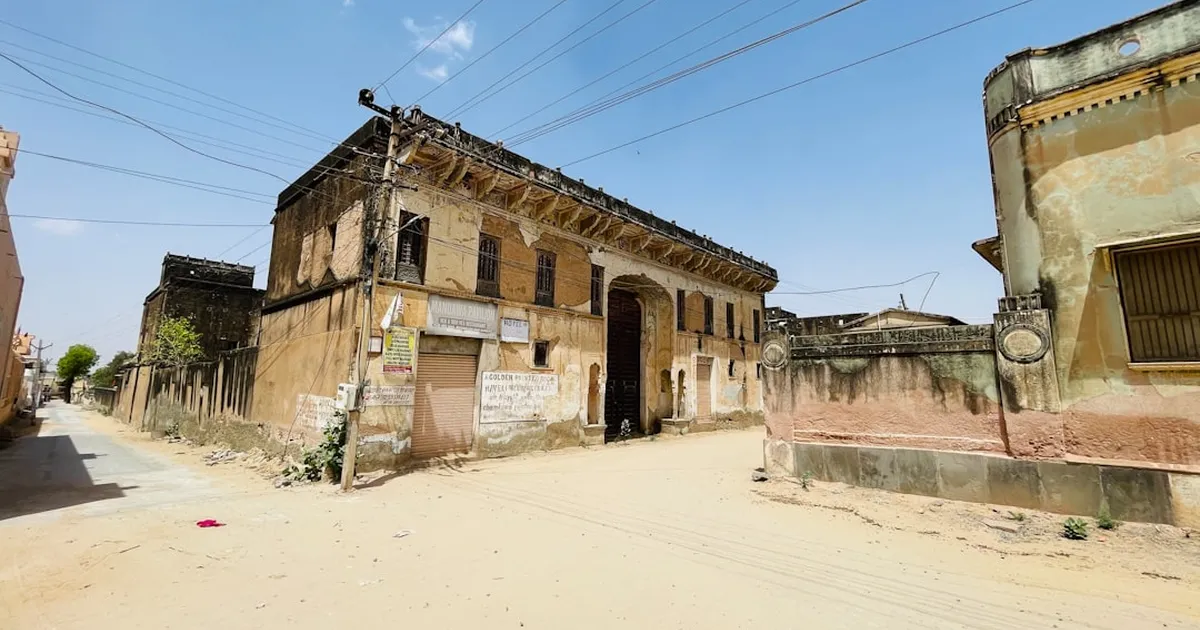
Rajasthan Stamp Duty And Property Registration Charges Guide 2026

Rajasthan Stamp Duty & Property Registration Charges: The Complete 2026 Guide
Whether you're buying a 3BHK flat in Jaipur's Vaishali Nagar, a plot in Jodhpur's Paota, or a heritage villa in Udaipur — the property price you negotiate is never the final number. Add stamp duty, registration charges, and labour cess, and you could be looking at an additional 7–8% on top of the deal value. For a ₹75 lakh home in Jaipur, that's potentially ₹5.5 lakh extra sitting quietly in government coffers. This guide breaks down every charge, every exemption, and every hack that helps you legally reduce your outgo in 2026.
What Are Stamp Duty and Registration Charges? (And Why They're Non-Negotiable)
Stamp duty is a state tax levied on property transaction documents — your sale deed, gift deed, lease deed — to make them legally valid. Registration charges, on the other hand, are the fees you pay to officially record that transaction in government land records. Together, they give you legal ownership that can be defended in court, used as collateral for home loans, and transferred to your legal heirs without dispute.
In Rajasthan, stamp duty is governed under the Rajasthan Stamps Act, and registration is managed through E-Panjiyan — the state's Registration and Stamps Department portal. Missing either payment doesn't just delay your paperwork — an unregistered property has no legal validity whatsoever. You can't sell it, can't mortgage it, and critically, cannot use it as evidence in any court of law.
One important nuance that catches first-time buyers off guard: these charges are calculated on whichever is higher — your actual sale agreement value or the government's DLC (District Level Committee) rate for that locality. So if you're buying a plot at ₹45 lakhs but the DLC rate pegs it at ₹50 lakhs, your charges are computed on ₹50 lakhs. Period.
Rajasthan Stamp Duty Rates 2026: At a Glance
| Buyer Category | Stamp Duty (Urban) | Stamp Duty (Rural) | Labour Cess | Registration Fee | Effective Total (Urban) |
|---|---|---|---|---|---|
| Male Buyer | 6% | 5% | 20% of stamp duty | 1% | ~8.2% |
| Female Buyer (General) | 5% | 4% | 20% of stamp duty | 1% | ~7.0% |
| Female Buyer (SC/ST/BPL) | 4% | 4% | 20% of stamp duty | 1% | ~5.8% |
| Joint Ownership (Male + Female) | 5.5% | — | 20% of stamp duty | 1% | ~7.6% |
| Disabled (40%–80% disability) | 4% | 4% | 20% of stamp duty | 1% | ~5.8% |
| Disabled (above 80% disability) | 0% | 0% | Nil | 1% | 1% |
| PMAY/CM Jan Awas Yojana (EWS) | 0.5% | 0.5% | As applicable | 1% | ~1.6% |
Important note on Labour Cess: This is often the most overlooked charge. The 20% labour cess is not 20% of the property value — it is 20% of the stamp duty amount. So on a 6% stamp duty, you effectively pay an additional 1.2% of the property value as cess. The funds are used exclusively for construction worker welfare initiatives including healthcare and education support. Don't mistake it for a negligible charge; on a ₹1 crore property, it adds up to ₹1.2 lakh for a male buyer.
Stamp Duty by Deed Type: The Full Picture
Most buyers only think about sale deeds. But Rajasthan has specific rates for every type of property transaction document. Here's what you need to know:
| Document / Deed Type | Standard Stamp Duty | Concessional Rate / Notes |
|---|---|---|
| Sale Deed (Male buyer, Urban) | 6% | No rebate for men |
| Sale Deed (Female buyer, Urban) | 5% | 1% concession vs. male rate |
| Gift Deed (Close relatives: father, mother up to 60 yrs, brother, sister, husband, son) | 2.5% | Reduced rate for blood relations |
| Gift Deed (to Widow, from family) | 0% | Fully exempt |
| Gift Deed (to wife of Martyr / minor children of Martyr) | 0% | Fully exempt |
| Partition Deed (Ancestral property) | 0% | Fully exempt — agricultural land included |
| Partition Deed (Non-ancestral property) | 3% | Reduced rate for family partitions |
| Lease Deed (PMAY / CM Awas Yojana) | 0.5% | Affordable housing concession |
| Lease Deed (LIG — low income housing) | 1% | Of consideration value |
| Agricultural Land (Rural, for farming) | Exempt | No stamp duty on rural agriculture transfers |
| Power of Attorney (PoA) | Variable | Must be registered; rates by transaction type |
The gift deed rules deserve special attention from families planning generational wealth transfers. Gifting to a daughter or wife attracts the lowest rates, and when a widow receives property from her own family, the state waives stamp duty entirely — a genuinely compassionate policy that can save families lakhs on valuable inherited assets.
How to Calculate Your Total Outgo: Step-by-Step with Real Numbers
Let's cut through the confusion with concrete examples that reflect actual Jaipur market conditions in 2026.
Step 1: Determine the base value. Take whichever is higher — your sale agreement value or the DLC (circle) rate for that locality. If your flat in Mansarovar is priced at ₹60 lakh but the DLC rate shows ₹65 lakh, all calculations are on ₹65 lakh.
Step 2: Apply the stamp duty rate. For a male buyer in urban Rajasthan, that's 6% of the base value.
Step 3: Add 20% Labour Cess on stamp duty only — not on total property value. This is where many buyers miscalculate.
Step 4: Add 1% registration fee. Uniform across all cities, all deed types, all genders.
Example 1 — Male Buyer, ₹50 Lakh Property (Urban Jaipur):
Stamp Duty: 6% of ₹50,00,000 = ₹3,00,000
Labour Cess: 20% of ₹3,00,000 = ₹60,000
Registration Fee: 1% of ₹50,00,000 = ₹50,000
Total Statutory Cost: ₹4,10,000 (8.2% of property value)
Example 2 — Female Buyer, ₹50 Lakh Property (Urban Jaipur):
Stamp Duty: 5% of ₹50,00,000 = ₹2,50,000
Labour Cess: 20% of ₹2,50,000 = ₹50,000
Registration Fee: 1% of ₹50,00,000 = ₹50,000
Total Statutory Cost: ₹3,50,000 (7.0% of property value)
Saving vs. male buyer: ₹60,000 on a ₹50 lakh deal
Example 3 — Female Buyer, ₹1 Crore Property:
Stamp Duty: ₹5,00,000 | Labour Cess: ₹1,00,000 | Registration: ₹1,00,000
Total: ₹7,00,000 vs. ₹8,20,000 for a male buyer — saving: ₹1,20,000
These savings are real and substantial. On high-value properties in Jagatpura, Sitapura, or Ajmer Road corridors, registering in a woman's name or as a joint owner (male + female) can mean lakhs of rupees in savings — money that could fund a kitchen renovation or two EMIs.
Exemptions and Concessions You Must Know in 2026
Rajasthan's exemption framework is more nuanced than most buyers realise. Here are the key categories:
- Women Buyers: 1% concession on urban sale deeds (5% vs 6%). SC/ST/BPL women pay only 4%.
- Persons with Disabilities (40%–80%): Concessional rate of 4% stamp duty.
- Persons with Disabilities (above 80%): Full stamp duty exemption — zero percent. Registration fee of 1% still applies.
- Martyr's Family: Transfers of residential property gifted to the wife or minor children of a martyr are fully exempt.
- Widows: Property gifted to a widow by her own family members or her deceased husband's immediate family attracts zero stamp duty.
- Ancestral Property Partition: Division of ancestral property including agricultural land among family members is completely waived.
- Agricultural Land (Rural): Transactions of rural lands for farming purposes are exempt from stamp duty.
- Affordable Housing Schemes: Properties under PMAY or Chief Minister Jan Awas Yojana attract a highly concessional 0.5% stamp duty.
- Senior Citizens: Concessions available on certain deed types — verify current notification on E-Panjiyan before registration.
One honest caution here: exemption eligibility and supporting documentation requirements change periodically. Always verify your specific concession entitlement on the official e-Panjiyan portal at the time of registration, not just at the time of negotiating the deal. Getting this wrong at the Sub-Registrar's office is an avoidable headache.
How to Pay Stamp Duty in Rajasthan: Online & Offline Process
Rajasthan has made the process relatively streamlined through the e-Panjiyan portal, though offline visits to the Sub-Registrar's Office (SRO) remain an option for those less comfortable with digital payments.
Online Process via e-Panjiyan
- Step 1: Visit the official e-Panjiyan portal (epanjiyan.nic.in). New users must register with mobile number and create login credentials.
- Step 2: Select "Property Valuation" and enter property location type (urban/rural), document type (sale deed, gift deed, etc.), district, SRO, and tehsil details.
- Step 3: Enter property area and details. The system auto-calculates DLC-based land value.
- Step 4: Proceed to the stamp duty page. Enter execution date and face value. Click "Calculate Stamp Duty" — the system displays the exact duty and registration fee payable.
- Step 5: Generate a CRN (Challan Reference Number) and proceed to e-GRAS for payment. Accepted modes include NEFT, RTGS, IMPS, credit card, debit card, and UPI.
- Step 6: After payment, download and print the e-stamp certificate.
- Step 7: Book a time slot at your preferred Sub-Registrar's Office for the final registration appointment.
Offline Process at Sub-Registrar's Office
- Visit the SRO with all documents, payment receipts, and completed deed.
- Submit identity proofs for buyer, seller, and two witnesses.
- Complete biometric verification (fingerprint and photograph).
- Deed is registered and permanently recorded in government land records.
A practical reality check: SRO offices in Jaipur can be busy, particularly at month-end. The online slot booking system helps, but arrive early. Many buyers report 2–4 hour waits even with prior appointments at busy SROs like Jaipur North and Jaipur South. Bring a complete document set with 3–4 photocopies of everything — originals plus copies will be required.
Documents Required for Property Registration in Rajasthan
- Original sale deed / gift deed (executed on stamp paper of appropriate value)
- Aadhaar card of buyer and seller (strongly preferred; passport or Voter ID accepted as alternatives)
- PAN card of both parties (mandatory for transactions above ₹5 lakh)
- Two passport-size photographs of buyer and seller
- Encumbrance Certificate (to verify the property is free from loans or legal disputes)
- NOC from Housing Society / Apartment Association (if applicable)
- Property tax receipts (latest paid receipts)
- Identity and address proof of two witnesses
- E-stamp certificate / challan for stamp duty payment
- Relationship proof (for gift deeds claiming family concessions)
A word of caution: Stamp duty in Rajasthan is valid for six months from the date of payment. If your registration appointment is delayed beyond this window — which occasionally happens with dispute-prone properties — you may need to re-stamp. For foreign documents, the validity reduces to just three months. Plan your timeline accordingly.
Rajasthan vs Other States: Is the Rate Competitive?
Many buyers wonder if Rajasthan is expensive or cheap relative to other major states. The honest answer: it's middle-of-the-road. At 6% for men with 20% cess (effective ~7.2%), Rajasthan is not the cheapest, but far from the most expensive.
| State | Stamp Duty (Male) | Stamp Duty (Female) | Registration Fee | Verdict |
|---|---|---|---|---|
| Rajasthan | 6% + 20% cess | 5% + 20% cess | 1% | Average |
| Maharashtra (Thane/Pune) | 7% | 6% | 1% | Higher |
| Tamil Nadu / Kerala | 8% | 8% | 1% | Much Higher |
| Gujarat | 4.9% | 4.9% | 1% | Cheaper |
| Delhi / NCR | 6% | 4% | 1% | Similar for men; better for women |
| Uttar Pradesh | 7% | 6% | 1% | Higher |
| Meghalaya | 10% | 8% | 1% | Highest in India |
The labour cess is a Rajasthan-specific charge that makes the state's effective rate higher than it appears at first glance. If you're comparing a deal in Jaipur versus Ahmedabad or Surat, factor this in — Gujarat's lower base rate with no similar cess makes it genuinely more affordable for a similar property value.
Tax Benefits: Recovering Some Cost Under Section 80C
Here's the silver lining that many buyers forget to claim: stamp duty and registration charges paid in a financial year are eligible for income tax deduction under Section 80C of the Income Tax Act, up to a maximum of ₹1.5 lakh. If you're buying a property in FY 2025–26 and paying, say, ₹1.5 lakh in stamp duty, you can claim the full amount. For a buyer in the 30% tax bracket, that's a genuine tax saving of ₹45,000. For buyers under the old tax regime, this is a deduction worth claiming without fail.
Note: This deduction applies only to individuals buying residential property for self-use — not for commercial properties or properties bought purely for investment rental income. Consult your CA for specifics based on your tax filing regime.
Smart Strategies to Legally Reduce Your Stamp Duty Bill
- Register in a woman's name or as co-owner: Joint ownership (male + female) attracts 5.5% instead of 6%. Sole female ownership gets you 5%. On a ₹1 crore property, the difference is ₹60,000–₹1,20,000.
- Check if your property qualifies for PMAY / CM Awas Yojana: EWS and LIG category homes under these schemes attract only 0.5%–1% stamp duty — an enormous saving for affordable housing buyers.
- Verify DLC rates before finalising your deal: If the DLC rate is close to your agreement value, there's less risk of a surprise uplift. In some peripheral areas of Jaipur (Chomu, Sanganer periphery), DLC rates can be significantly lower than market prices, which actually works in your favour.
- Time your registration: Stamp duty paid is valid for six months. Don't rush if market conditions are uncertain, but don't delay into a new financial year where rates could change.
- Claim the 80C deduction without fail: It's free money if you're under the old tax regime — ₹1.5 lakh deduction can be entirely covered by your stamp duty and registration payment.
- Gift deed planning for families: Transferring property to a daughter, wife, or son via gift deed attracts only 2.5% — less than half the regular sale deed rate. For genuine family transfers, this is worth structuring correctly with a lawyer.
Refund of Stamp Duty: When and How
Most buyers assume stamp duty is completely non-refundable. That's partially true — once a property is registered in your name, you cannot get the stamp duty back. However, if a sale agreement is cancelled before registration and within six months of the stamp duty payment, a refund can be claimed — subject to a 10% deduction on the amount paid. A valid cancellation deed signed by all parties, stamped, and officially recorded with the government registrar is required as supporting proof. The refund process runs through the Sub-Registrar's office where the original payment was made.
Late payment of stamp duty carries a serious penalty — up to 2% per month on the deficit amount, with a maximum of 200% of the original duty. Authorities can also impound your documents and refuse registration entirely until dues are cleared. Don't underestimate or under-report property values to save a few thousand rupees — the penalty plus interest can dwarf the original saving.
Pre-Registration Checklist: Don't Show Up at the SRO Without These
- ☐ Sale deed / relevant deed drafted and reviewed by a qualified lawyer
- ☐ DLC rate confirmed for the specific locality on e-Panjiyan
- ☐ Stamp duty calculated on the higher of DLC rate or agreement value
- ☐ Labour cess correctly factored in (20% of stamp duty, not of property value)
- ☐ e-GRAS challan generated and payment completed online
- ☐ e-stamp certificate downloaded and printed
- ☐ Time slot booked at the relevant Sub-Registrar's Office
- ☐ Aadhaar card, PAN card (buyer + seller) — originals + 3–4 photocopies
- ☐ Two witnesses arranged with valid ID proofs
- ☐ Encumbrance Certificate obtained (verify no existing loans on property)
- ☐ Property tax receipts — latest available
- ☐ Concession eligibility documents (disability certificate, relationship proof for gift deeds, etc.)
- ☐ 80C deduction: note FY of payment for tax filing
Frequently Asked Questions
Is stamp duty in Rajasthan the same across all cities — Jaipur, Jodhpur, Udaipur?
Yes and no. The base rate is uniform at 6% for male buyers across urban areas in all Rajasthan cities. However, DLC (circle) rates vary significantly by city and locality. A plot in Vaishali Nagar, Jaipur may have a DLC rate of ₹6,000 per sq yard while a similar-sized plot in Udaipur's old city area could have a different DLC rate entirely. The stamp duty percentage is the same; the base on which it's calculated changes. Always verify the DLC rate for your specific locality before finalising your budget.
What happens if I don't register my property after paying stamp duty?
An unregistered property has zero legal standing. You are not considered the legal owner, cannot mortgage it, cannot resell it, and the sale document is inadmissible as evidence in court. Stamp duty, once paid, is typically non-refundable after registration — and even if registration is cancelled within six months, you'll receive only 90% back. Additionally, stamp duty paid in Rajasthan is valid for just six months — miss that window and you'll need to re-stamp, potentially at higher DLC rates.
Can NRI buyers get the women's concession on stamp duty in Rajasthan?
Yes. Stamp duty rates for Non-Resident Indians (NRIs) are generally the same as for resident Indians. Female NRIs buying property in Rajasthan can avail the gender-based concession, paying 5% instead of 6%. Standard documentation requirements apply, along with PAN card or Form 60 submission. For NRIs, a Power of Attorney may also be involved — ensure it is properly stamped and registered to be legally binding in Rajasthan.
Are stamp duty and registration charges included in home loan amounts?
Most banks and HFCs do not include stamp duty and registration charges in the home loan principal. These charges must be paid from your own funds before the Sub-Registrar completes registration. Lenders typically release the loan amount to the seller only after the property is registered — which means you need to have the stamp duty and registration amount ready in your own account before closing. Some lenders offer a separate "top-up" for these charges, but it's not standard. Budget for this specifically.
What is the penalty for paying inadequate stamp duty in Rajasthan?
Undervaluing a property to reduce stamp duty is both illegal and risky. If the Sub-Registrar or revenue authorities discover a deficit — either at the time of registration or later — they can impound the document, demand recovery of the deficit duty, and levy a penalty of up to 2% per month on the shortfall, capped at 200% of the original duty amount. In extreme cases, imprisonment is also provided for under the Rajasthan Stamp Act. The risk is simply not worth the saving — especially when DLC rates are publicly available and cross-checked automatically by the e-Panjiyan system.
Conclusion
Stamp duty and registration charges in Rajasthan add a real 7–8% to your property's total cost — too significant to ignore or calculate vaguely. The key action items are clear: check the DLC rate first, register in a woman's name where possible, and verify every exemption claim on e-Panjiyan before walking into the SRO. If you're buying under PMAY or CM Jan Awas Yojana, the 0.5% stamp duty is a substantial concession worth actively pursuing. Budget properly, claim your Section 80C deduction, and you'll navigate this process without expensive surprises.
This guide was written by Meena Singh, Senior Market Analyst with research support from artificial intelligence. AI assisted in compiling information from regulatory sources, industry references, and expert commentary. The final content was reviewed by our editor before publishing. We update guides when regulations change or when newer best-practice information emerges.
Sources consulted: State RERA portals · Developer official websites · Housing.com / 99acres guides · Industry publications · Expert commentary (quoted in the guide body).
Last reviewed: 24 April 2026 · Spot an error? Let us know
Related Guides
Stamp Duty And Registration Charges In Bangalore: What's New In 2026?
Complete guide to stamp duty and registration charges in Bangalore 2026 — updated slabs, new 2% registration fee, real calculations, tax benefits, and expert...
South Mumbai Luxury Real Estate Buyer's Guide 2026: Top Projects, Price Trends & Rera Updates
Complete 2026 guide to South Mumbai luxury real estate: real prices, top projects, RERA updates, area comparison & expert analysis for HNI buyers.

Mumbai Coastal Road Impact On Real Estate 2026: Price Surge In Worli, Bandra & South Mumbai
Deep-dive expert analysis of Mumbai Coastal Road's impact on property prices in Worli, Bandra & South Mumbai in 2026 — with real data, project names & risks.
Rera Approved Projects In Gurugram 2026: The Ultimate Buyer's Checklist
Complete 2026 guide to RERA approved projects in Gurugram — 25-point buyer checklist, sector prices, project comparisons, red flags & HRERA expert analysis.