Golf Course Road Vs Golf Course Extension Road, Gurugram: Which Corridor Is Actually Worth Buying In Right Now?

The Real Story Behind Gurugram's Two Most Coveted Corridors
If you're seriously considering buying a home — or making a real estate investment — in Gurugram, you've almost certainly heard both names: Golf Course Road (GCR) and Golf Course Extension Road (GCER). They share a name. They share a city. But they are fundamentally different in character, pricing, investment maturity, and what kind of buyer they suit. This guide is for anyone who wants an honest, data-backed answer to the question that thousands of buyers ask every year: which one is actually worth buying in right now?
We'll break down both corridors across every dimension that matters — current prices, appreciation history, rental yields, infrastructure, social ecosystem, builder quality, risks, and buyer sentiment. By the end, you won't just know the differences. You'll know which corridor matches your specific goals.
Understanding the Two Corridors: What You're Actually Comparing
Golf Course Road (GCR) is the original. It stretches through DLF Phases 1 to 5, anchored by the iconic DLF Golf and Country Club, and runs through some of Gurugram's most established sectors — primarily Sectors 42, 43, 53, 54, and 56. This is where DLF built its trophy assets: The Aralias, The Magnolias, and The Camellias. It is India's most recognisable luxury real estate address, sometimes described as the "Beverly Hills of Delhi-NCR." Land is almost entirely built out. Supply is scarce and fiercely guarded.
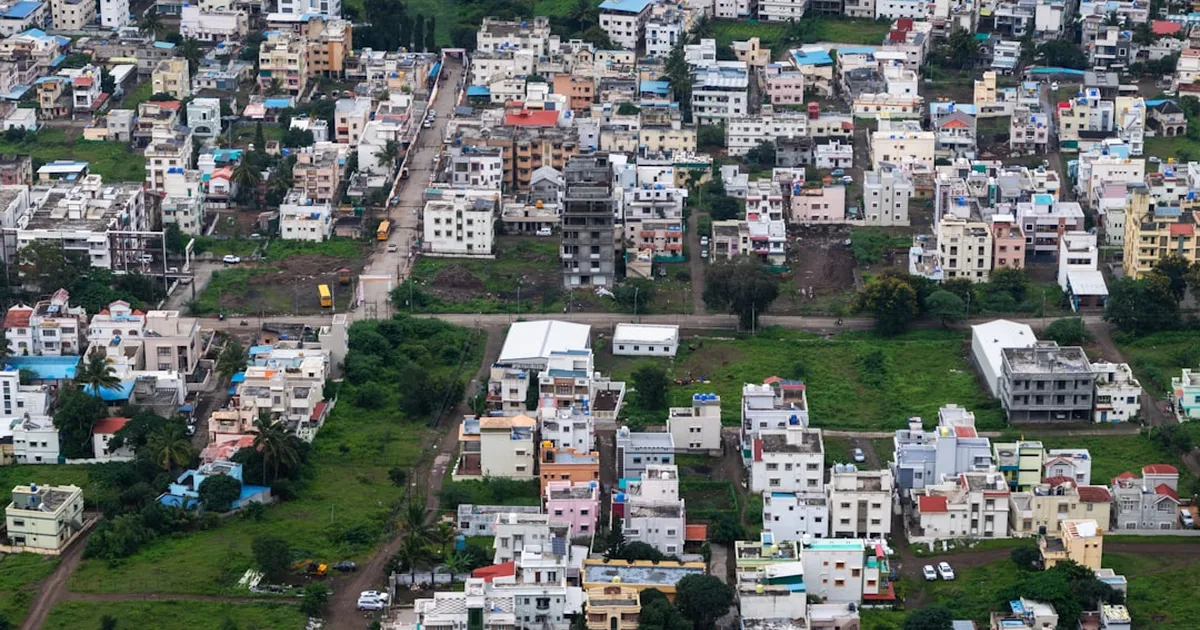
Golf Course Extension Road (GCER) diverges from GCR at around Sector 55/56 and extends south toward Sohna Road, passing through Sectors 57 to 67A and beyond, eventually linking to the Southern Peripheral Road (SPR). It was designed to ease traffic between old and new Gurugram. Over the last decade, it has transformed from a quieter offshoot into one of India's most active luxury real estate corridors, with builders like DLF, M3M, Emaar, Smartworld, Birla, Adani, and TARC all staking their claim here.
One is a mature trophy market. The other is a high-velocity growth corridor. Both have delivered extraordinary returns — but for different reasons and different buyer types.
Side-by-Side: GCR vs GCER at a Glance
| Parameter | Golf Course Road (GCR) | Golf Course Extension Road (GCER) |
|---|---|---|
| Key Sectors | Sectors 42, 43, 53, 54, 56, DLF Phases 1–5 | Sectors 57–67A, connecting to SPR |
| Average Price (2025) | ₹21,384–₹27,302 per sq ft (Magicbricks data) | ₹19,200–₹37,899 per sq ft (range across project types) |
| Ultra-Luxury Top End | ₹72 Cr – ₹190 Cr+ (DLF Camellias penthouses) | ₹8 Cr – ₹15 Cr (premium new launches) |
| Rental Yield (Luxury) | 3–4% (with absolute rent in lakhs/month) | 4.2–5.5% (better percentage yield) |
| Price Appreciation (2019–2024) | 65–80% over 5 years; specific assets up 100%+ | ₹8,800 → ₹20,000+ per sq ft (126%+ in 5 years) |
| Metro Access | Rapid Metro (11.7 km loop); Sikanderpur Yellow Line | Currently feeder-dependent; dedicated metro line approved |
| Airport Distance | ~25–30 min drive to IGI Airport | ~30–40 min drive to IGI Airport |
| Key Developers | DLF (dominant), Godrej, Tulip, TREVOC | DLF, M3M, Emaar, Smartworld, Birla, Adani, TARC, Ireo |
| Land Availability | Near zero — almost fully built out | Still active; new launches ongoing |
| Market Maturity | Fully mature — trophy/legacy market | High-growth corridor — actively evolving |
| Buyer Profile | UHNIs, NRIs, C-suite executives, billionaires | HNIs, NRIs, senior professionals, upgraders |
| Supply Pipeline | Extremely limited; mostly resale | Active new launches; diverse options |
| Resale Liquidity | Very high at the top; limited at boutique projects | Strong mid-segment; slower at ultra-high ticket |
Golf Course Road: India's Most Prestigious Address — Deep Dive
There is a reason Golf Course Road commands India's highest residential prices outside of a few Mumbai micro-markets. It has everything working in its favour simultaneously: scarcity of land, a globally recognised brand (DLF), proximity to Cyber City, and a resident community that includes Fortune 500 executives, Bollywood celebrities, startup unicorn founders, and high-profile NRIs. Between 2019 and 2024, properties here rose by 65–80%. That's not speculation — it's verified transaction data.
The numbers from the ultra-luxury end are genuinely staggering. DLF The Camellias — widely regarded as India's finest residential complex — saw its penthouse sell for ₹190 crore in December 2024, setting a national record. DLF The Aralias, which was priced at ₹10 crore in 2020, is now transacting at ₹22.5 crore. DLF Magnolias moved from ₹13 crore in March 2020 to ₹28–32 crore by 2023. And DLF The Crest surged from ₹6 crore in March 2022 to ₹13.5 crore by May 2023 — over 100% in barely 14 months.
Rentals on GCR have also been extraordinary. The Aralias commands around ₹5.5 lakh per month for a 5,800 sq ft apartment (up from ₹2.5 lakh pre-pandemic). DLF Magnolias rents at ₹6 lakh per month for a 6,400 sq ft fitted apartment. The Camellias sits at the very top — ₹8–9 lakh per month for a 7,400 sq ft home. The tenant base is exclusively corporate honchos, MNC executives, and NRIs who value prestige and certainty above all else.
Social Infrastructure on GCR: The corridor has world-class schools within reach — The Shri Ram School, Amity International, Lancers International, Scottish High are within a 3–4 km radius. Hospitals including Fortis, Medanta, and Artemis are easily accessible. Retail includes DLF Galleria, Ardee Mall, and direct proximity to DLF CyberHub's dining and entertainment. The Rapid Metro's 11.7 km loop directly connects GCR residents to Cyber City and Sikanderpur Metro Station, linking to Delhi's Yellow Line.
Honest Negatives on Golf Course Road
- Entry cost is prohibitive. The meaningful entry point on GCR today is ₹10 crore+, and most new launches (like Tulip Monsella, Godrej Miraya, Godrej Sora) are priced between ₹11 crore and ₹28 crore. This is a market for genuine UHNIs.
- Maintenance costs are enormous. At DLF Camellias, monthly maintenance easily runs several lakhs. Lifestyle costs — from concierge to housekeeping to club memberships — are also premium.
- Peak-hour traffic is a genuine problem. Actual residents on 99acres consistently cite traffic as the most frustrating aspect of living on GCR. During rains, documented reports mention travel time losses of 2–3 hours.
- Very limited supply. Almost nothing new launches on GCR itself. If you want to buy here, you're primarily looking at secondary market transactions, which makes due diligence more complex.
- Boutique project liquidity risk. Smaller, boutique luxury projects on GCR have a limited buyer pool at exit. Factor in your exit strategy before committing.
Notable Projects on Golf Course Road (Current Market)
| Project | Sector | Price Range | RERA No. | Status |
|---|---|---|---|---|
| DLF The Camellias | Sector 42 | ₹72 Cr – ₹99 Cr+ | Ready to Move | Resale |
| DLF The Magnolias | Sector 42 | ₹44 Cr – ₹65 Cr | Ready to Move | Resale |
| DLF The Crest | Sector 54 | ₹10.33 Cr – ₹28.62 Cr | Ready to Move | Resale |
| Tulip Monsella | Sector 53 | ₹11.49 Cr – ₹18 Cr | GGM/554/286/2022/29 | Active |
| Godrej Miraya | Sector 43 | ₹14.8 Cr+ | GGM/870/602/2024/97 | New Launch |
| TREVOC Royal Residences | Sector 56 | ₹7.13 Cr – ₹9.13 Cr | GGM/863/595/2024/90 | Active |
| Godrej Sora | Sector 53 | ₹8.31 Cr – ₹13 Cr | GGM/976/708/2025/79 | New Launch |
| DLF Park Place | Sector 54 | ₹6.7 Cr – ₹9.52 Cr | Ready to Move | Resale |
Golf Course Extension Road: The High-Velocity Challenger — Deep Dive
GCER is the story of what happens when a well-located corridor gets the right combination of developer confidence, infrastructure investment, and macro tailwinds all at the same time. In 2019, new launches here were priced at around ₹8,800 per sq ft. By 2025, that average had crossed ₹37,899 per sq ft on certain premium launches — a jump of over 330% in six years. The India Sotheby's International Realty and CRE Matrix report also documented a 379% increase in total sales value in a single year. These are extraordinary numbers by any standard.
DLF's own confidence in the corridor tells you something important. Earlier, DLF sold all 1,137 units — priced at ₹7 crore and above — worth over ₹8,000 crore, within just three days of launch on GCER. The buyers? NRIs, corporate executives, startup founders, lawyers, doctors. This wasn't speculative froth. This was genuine end-user and HNI demand from people who actually wanted to live here.
The buyer profile on GCER today is notably diverse. Around 20–25% of buyers are NRIs from the US, Canada, and the Middle East. Nearly 40% are senior IT and finance professionals from Gurugram and South Delhi. About 10–12% are startup founders or senior executives hunting for larger, branded homes. This mix matters — it creates a deep and resilient tenant and buyer base that doesn't evaporate in a market slowdown.
The GCER Social Ecosystem: Schools including DPS International, Heritage Xperiential Learning, Shriram Millennium School, and St. Xavier's High School serve the corridor. Medanta and Artemis hospitals are within practical distance. Retail options include M3M Urbana, Good Earth, and an emerging strip of boutique retail and fine dining along the main boulevard. Sectors 63A, 66, and 67 have become the most sought-after pockets, sitting closest to commercial activity and social infrastructure.
The key draw for investors specifically is the rental yield story. GCER is currently delivering 4.2–5.5% gross rental yields, beating GCR's 3–4% by a meaningful margin. Smaller 2 and 3 BHK units deliver the strongest percentage yields, while 4 BHK luxury apartments attract the highest absolute rents. Rental demand is driven by proximity to Southern Peripheral Road's growing commercial cluster (sometimes called "Cyber City 2"), Udyog Vihar, and the broader DLF Cyber City ecosystem.
Honest Negatives on Golf Course Extension Road
- Traffic is a real and documented problem. Choke points near Sector 56–57 intersections, especially during school hours, are well-documented by residents. A local resident was quoted saying: "the section between sectors 62 and 69 is the most affected" by traffic jams, partly due to encroachments.
- Metro connectivity is still future-dependent. Unlike GCR's operational Rapid Metro, GCER currently depends on feeder routes and cabs. The dedicated 13.6 km metro line connecting GCER to Sector 5 has been approved, with DPRs invited — but construction hasn't started. Buyers buying on this expectation are taking a timeline risk.
- Some under-construction projects carry delivery risk. GCER saw a flood of launches through the 2010s, and some projects from that era are still not delivered on schedule. Always check a builder's RERA registration and delivery track record before booking under-construction inventory.
- Rapid urbanisation is creating dust and construction noise. Residents in sectors still under development face regular disruption. Buyers planning to move in immediately should assess whether their chosen sector is fully developed.
- At the top end, prices may already be pricing in future growth. With average prices at ₹37,000+ per sq ft on premium launches, some analysts caution that near-term appreciation may moderate as affordability ceilings approach.
Notable Projects on Golf Course Extension Road (Current Market)
| Project | Sector | Price Range | RERA No. | Best For |
|---|---|---|---|---|
| DLF The Arbour | Sector 63 | ₹8.49 Cr+ | GGM/671/403/2023/15 | Luxury end-use / investment |
| TARC Ishva | Sector 63A | ₹7.7 Cr – ₹10.48 Cr | GGM/865/597/2024/92 | Premium luxury buyers |
| Trump Tower | Sector 65 | On request | GGM/734/466/2023/78 | UHNIs / brand-driven buyers |
| Emaar Urban Oasis | Sector 62 | ₹4.56 Cr – ₹11.32 Cr | GGM/741/473/2023/85 | Mid-luxury + investors |
| M3M Altitude | Sector 65 | ₹11.46 Cr – ₹11.53 Cr | GGM/821/553/2024/48 | Luxury HNI buyers |
| Puri The Aravallis | Sector 61 | ₹4.53 Cr – ₹5.66 Cr | GGM/592/324/2022/67 | Mid-segment upgraders |
| Anant Raj Estate Residences | Sector 63A | ₹8.16 Cr – ₹12.43 Cr | GGM/785/517/2024/12 | Luxury buyers |
| Silverglades The Legacy | Sector 63A | ₹6.58 Cr – ₹16.46 Cr | GGM/861/593/2024/88 | Luxury + investment |
| Mahindra Luminare | Sector 59 | ₹5.15 Cr – ₹13 Cr | 47 OF 2017 | Established mid-luxury |
Infrastructure & Connectivity: What's Different, What's Coming
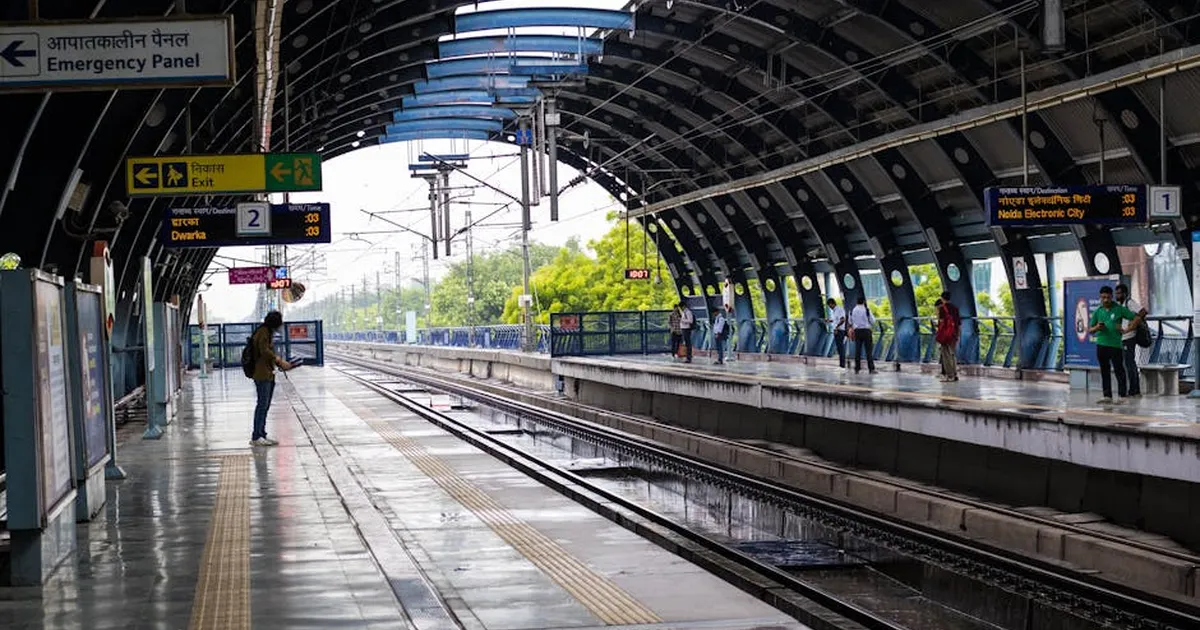
Connectivity is where the two corridors diverge most sharply today — but the gap is narrowing fast. GCR currently has the advantage: the Rapid Metro runs an 11.7 km loop directly connecting Cyber City to Golf Course Road sectors, integrating with Delhi Metro's Yellow Line at Sikanderpur. Resident testimonials consistently rate this as a genuine daily convenience. The airport is 25–30 minutes away. NH-48 and MG Road provide robust road access.
GCER's connectivity story is more about the future. The HMRTC has invited DPR tenders for a dedicated 13.6 km metro line connecting Golf Course Extension Road to Sector 5 via Millennium City Centre Metro Station. This line will cover key locations including Hong Kong Market in Sector 57, Ardee City, and Signature Tower. GCER is also expected to benefit from the approved 64 km Namo Bharat RRTS network and a proposed 36 km metro line from Sector 56 to Pachgaon. On the road side, Sector 66 recently received a ₹7.4 crore model road upgrade with cycle tracks, smart drainage, and solar lighting.
GCER already has strong multi-directional road connectivity: it links directly to Golf Course Road, Sohna Road, NH-48, SPR, and the Delhi-Mumbai Expressway. The Vatika Chowk area serves as a key interchange point for multiple future corridors. Once the metro line is operational, analysts expect GCER values to receive an additional meaningful uplift — metro-linked corridors across NCR have consistently seen sustained appreciation post-commissioning.
Price Appreciation History: The Numbers Tell an Unambiguous Story
Gurugram as a whole has been on a remarkable run. Average residential prices across the city surged 50.37% in just two years — from ₹11,055 per sq ft in Q3 2023 to ₹16,624 per sq ft in Q3 2025. From 2021–2024, the broader market clocked a CAGR of 20–25%. Premium micro-markets like GCR and GCER outperformed this average significantly.
On GCR specifically, between 2019 and 2024, properties rose 65–80% on average — but specific blue-chip assets (Aralias, Magnolias, Camellias) delivered 100–125% capital appreciation in that period. The limited supply and high-profile buyer base have made these assets extremely resistant to price correction. GCR contributed nearly 28–30% of Gurugram's total real estate transaction value in 2025, despite forming less than 3% of the city's housing stock — a remarkable concentration of value.
On GCER, new launches rose from ₹8,800 per sq ft in 2019 to crossing ₹20,000 per sq ft in 2024, and premium launches hit ₹37,899 per sq ft in 2025 — a trajectory that rivals almost any investment class in the country for that period. Colliers India has identified GCER as one of the five corridors that will lead Gurugram's next real estate growth cycle. The corridor delivered 30–70% annual appreciation on select launches, and rental yields of 4.2–4.7% — beating older luxury corridors.
Rental Market Comparison: Who Wins on Yields?
This depends on what metric you optimise for. On pure percentage yield, GCER wins — 4.2% to 5.5% gross versus GCR's 3–4%. On absolute rental income, GCR's top properties are in a different universe: ₹5.5–9 lakh per month at the Aralias, Magnolias, and Camellias. But you need ₹20–65 crore in capital deployed to generate those rents.
For a buyer putting in ₹5–10 crore, a well-chosen 3 BHK in a high-demand GCER project near Sectors 63A or 65 can generate ₹1.5–3 lakh per month in rent, delivering a stronger percentage return on capital while also benefiting from appreciation. GCER's rental demand comes from a diverse pool: MNC expat executives, senior corporate professionals, NRIs with family in Gurugram, and staff relocating to nearby SPR commercial hubs. This diversity of tenant demand reduces vacancy risk.
GCR's rental market is deep but narrow at the top — the tenant pool for ₹5–9 lakh/month properties is global corporates and UHNIs, not ordinary professionals. Occupancy is typically high, but finding the right tenant takes time and the right broker network.
What Real Buyers Are Saying: Unfiltered Sentiment
Buyers on GCR consistently praise the greenery (tree-lined avenues, Aravalli views), the security, and the sheer convenience of proximity to offices, Cyber City, metro, and premium retail. "Getting to work takes less than 10 minutes," said one verified GCR resident on a property portal. However, the same buyers repeatedly flag the traffic during peak hours as genuinely annoying, and note that maintenance charges are "very high" — not just a theoretical concern.
GCER buyers love the newer, larger apartment configurations, the integrated township experience (amenities within the complex), and the sense that they're living in a "future-ready" community. Developers like Smartworld and Birla are delivering product quality that rivals GCR at meaningfully lower prices. The criticisms are also consistent: construction noise and dust from neighbouring under-development sectors, peak-hour traffic at Sector 56–57 intersections, and a general feeling that "civic infrastructure needs to catch up" with the pace of residential development.
The Investment Verdict: Who Should Buy Where
This isn't a situation where one corridor is simply "better." The right answer depends on your budget, timeline, and purpose.
- Buy on Golf Course Road if: You have ₹10 crore or more to deploy and are seeking capital preservation, trophy asset ownership, the most liquid luxury address in North India, and maximum lifestyle prestige. GCR properties have near-zero distress sales and some of the highest resale value retention in the country. This is where wealth is stored, not just grown.
- Buy on Golf Course Extension Road if: Your budget is ₹4–12 crore, you want stronger rental yields, you believe in infrastructure-led appreciation (the GCER metro line is a major catalyst), and you want access to new construction with modern amenities at prices that still offer appreciation headroom. GCER is the better choice for investors optimising for total return (income + capital appreciation) relative to capital deployed.
- For NRI buyers: Both corridors are strong, but GCER's branded projects by DLF, M3M, and Emaar offer better price discovery, transparent documentation, dedicated NRI desks, and project scales that facilitate virtual buying. GCR is attractive for legacy and lifestyle, but secondary market due diligence is heavier.
- For end-users with families: GCER's integrated township model — where schools, hospitals, retail, and offices are clustered within or near the same development — is arguably more practical for daily life. GCR has the lifestyle amenities and address prestige, but the integrated ecosystem is arguably better-planned on GCER.
Pre-Purchase Checklist: Buying in Either Corridor
- ✅ Verify RERA registration of the specific tower and phase — not just the project — on the Haryana RERA portal (hrera.org.in)
- ✅ Check the builder's delivery track record: How many projects delivered on time in the last 5 years?
- ✅ Confirm occupation certificate (OC) status for ready-to-move properties — many projects have possession without OC
- ✅ Get an independent property valuation before agreeing to the asking price, especially on GCR resale transactions
- ✅ Verify encumbrance certificate and title chain going back at least 15 years for resale properties
- ✅ Calculate total cost of ownership: stamp duty (7% men / 5% women / 6% joint), registration, GST on under-construction (5%), and monthly maintenance (which can exceed ₹1–5 lakh/month at ultra-luxury projects)
- ✅ For GCER: assess which sectors are fully developed vs. still under development — your daily living experience differs significantly
- ✅ Check bank loan approval status — most nationalised banks have pre-approved specific GCR and GCER projects; this is a quality signal
- ✅ Visit the project at peak hour (Monday–Thursday, 9 AM and 6 PM) to experience the actual commute, traffic, and noise level
- ✅ Engage a buyer's advocate / independent advisor, not just the developer's sales team, particularly for transactions above ₹5 crore
Frequently Asked Questions
Is Golf Course Road or Golf Course Extension Road better for investment in 2025–26?
Both are strong, but they serve different investor profiles. GCR is ideal for capital preservation with a very long holding horizon and trophy asset ownership. GCER offers better percentage yields (4.2–5.5% vs. 3–4% on GCR) and more headroom for appreciation, making it better for buyers with ₹4–12 crore budgets who want total return optimisation. If the GCER metro line gets operationalised on schedule, it will be a significant value catalyst.
What is the average price per square foot on Golf Course Extension Road in 2025?
It varies significantly by project type. On 99acres, the current average across GCER apartments is around ₹19,200–₹19,300 per sq ft. However, premium new launches — particularly by DLF, M3M, and branded developers — command ₹25,000–₹37,899 per sq ft, as reported by India Sotheby's and CRE Matrix. Entry-level secondary market inventory in older projects starts lower.
Is there a metro on Golf Course Extension Road?
Not yet in operational form. GCER residents currently access metro via feeder routes to the Rapid Metro on GCR (Sector 55–56 area) or via Delhi Metro Yellow Line stations. HMRTC has invited DPR tenders for a dedicated 13.6 km metro corridor connecting GCER to Sector 5 via Millennium City Centre. Construction is expected to begin after DPR finalisation. Buyers betting on this catalyst should factor in realistic timelines of 4–7 years before it's operational.
Which corridor has better schools and hospitals?
Both are well-served, but in different ways. GCR has immediate proximity to established institutions: The Shri Ram School, Amity International, Lancers International, Fortis, and Medanta. GCER's premium school belt includes DPS International, Heritage Xperiential Learning, and Lotus Valley International — all highly regarded. For hospitals, Medanta is accessible from both corridors. The difference is driving time: GCR residents are typically 5–10 minutes from multiple top hospitals; GCER residents may be 10–20 minutes.
Is Golf Course Road fully built out? Can I buy a new apartment there?
Almost entirely built out. Most prime land has already been developed by DLF and other established builders. New launches are rare — Godrej, Tulip, and TREVOC have launched projects, but the pipeline is thin and prices on new launches start at ₹7–15 crore minimum. The majority of buying on GCR today is through the secondary/resale market, which requires careful due diligence on titles and OC status.
What are the biggest risks specific to GCER investments?
Three key risks deserve attention. First, delivery delays: some projects launched in the early 2010s are still not completed, particularly those by developers who faced financial difficulties. Always prioritise RERA-registered projects from builders with demonstrated delivery records (DLF, M3M, Emaar, Birla). Second, traffic: the corridor is genuinely congested during peak hours and the civic infrastructure in some sectors lags behind the pace of residential development. Third, price normalisation risk: with weighted average prices on premium launches at ₹37,000+ per sq ft, the gap between GCER and GCR has narrowed substantially. Near-term appreciation may be more moderate than the exceptional 2021–2025 run.
The Bottom Line: Our Expert Verdict
Golf Course Road is India's most prestigious residential address — and it will remain that way. It delivers capital preservation, status, exceptional resale liquidity at the top end, and trophy asset ownership that UHNIs and NRIs actively seek. But the entry price is very high, new inventory is scarce, and you're buying into a mature market where the biggest appreciation is already behind you. It suits buyers for whom the address itself is the goal.
Golf Course Extension Road is the more dynamic choice for 2025 and beyond. It offers meaningful appreciation headroom (especially with the metro catalyst approaching), better rental yields, more diverse product options, active new inventory from India's top developers, and an integrated lifestyle ecosystem that works well for families. It's priced high but not yet at GCR's level, which means buyers can still enter with reasonable upside expectations. The risks are real but manageable through careful project and developer selection.
Our recommendation: if you have ₹10 crore or more and are buying for legacy, prestige, and capital store-of-value, GCR makes sense as an addition to your portfolio. If you have ₹4–10 crore and want the best combination of lifestyle, rental yield, and medium-term appreciation, GCER — specifically Sectors 63A, 65, and 66 — is the smarter buy in 2026. And if you're sitting on the fence: ask yourself whether you're buying a home or buying an address. The answer will tell you everything about which corridor deserves your capital.
This guide was written by Manoj Singh, Founder & Editor-in-Chief with research support from artificial intelligence. AI assisted in compiling information from regulatory sources, industry references, and expert commentary. The final content was reviewed by our editor before publishing. We update guides when regulations change or when newer best-practice information emerges.
Sources consulted: State RERA portals · Developer official websites · Housing.com / 99acres guides · Industry publications · Expert commentary (quoted in the guide body).
Last reviewed: 20 April 2026 · Spot an error? Let us know
Related Guides