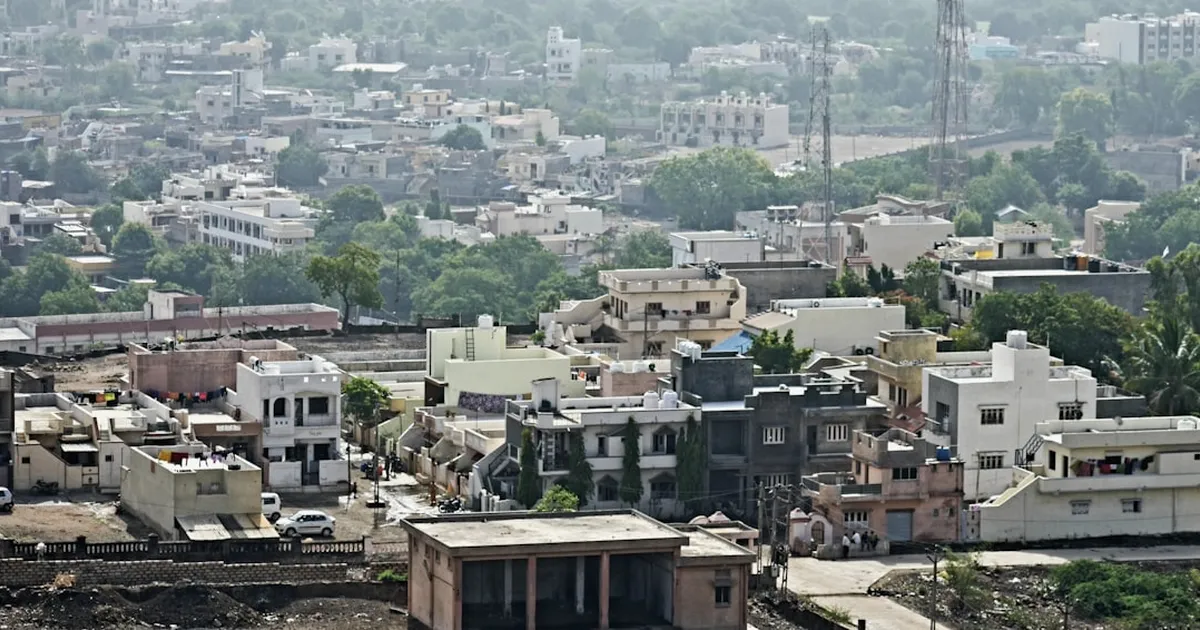
Maha Govt Freezes Ready Reckoner Rates For 2026–27, Offering Relief To Real Estate Sector

Maharashtra Government Freezes Ready Reckoner Rates for 2026-27: What It Means for Homebuyers
On March 31, 2026, the Maharashtra government officially announced a complete freeze on the Annual Statement of Rates—commonly known as Ready Reckoner (RR) rates—for the financial year 2026-27. Effective immediately from April 1, 2026, property valuation benchmarks across all rural, urban, and influence zones will remain exactly at their 2025-26 levels. This pivotal policy decision, finalized by Revenue Minister Chandrashekhar Bawankule under the guidance of Chief Minister Devendra Fadnavis, brings a collective sigh of relief to the state's real estate sector.
The administration opted for a 0% hike, actively dismissing widespread speculation that rates would jump by 5% to 8% in rapidly developing infrastructure corridors. This freeze breaks a recent upward trend; for context, the state enforced an average rate hike of 4.39% in 2025-26, with Mumbai seeing a 3.39% rise and municipal corporation areas facing a steep 5.95% increase. Despite stabilizing the rates, the state's revenue engine remains robust. Maharashtra collected ₹60,568.94 crore in stamp duty and registration fees from over 45.6 lakh documents in the preceding fiscal year, achieving nearly 95% of its ambitious ₹63,500 crore target.
Impact on Homebuyers: Relief Amid Rising Costs
For homebuyers, the freeze on RR rates translates directly into tangible financial savings. Because stamp duty, registration charges, and property taxes are calculated based on either the builder's agreement value or the government's RR rate—whichever is higher—a stable RR rate prevents an automatic, artificial inflation of your closing costs. If you are buying a ₹1 Crore apartment in a high-growth corridor like Kalyan or Pune, where a 5% to 8% hike was heavily projected, you are effectively saving lakhs in mandatory upfront tax payouts.
Based on our interactions with active property seekers, buyer sentiment leading up to April was highly anxious, with many adopting a 'wait-and-watch' approach due to fears of an impending tax hike. The official freeze has transformed this anxiety into relief, though buyers must remain realistic. While the base government rate is frozen, developers are still grappling with rising raw material costs and inflationary pressures, meaning actual market property prices may still inch upward. Furthermore, the government continues to charge mandatory floor premiums for high-rise apartments, meaning a unit on the 20th floor will still attract a significantly higher valuation than one on the ground floor. The freeze simply ensures the government isn't adding fuel to the fire, making this a strategic window of opportunity for fence-sitters to lock in their purchases before market prices outpace the tax relief.
Expert Analysis: Why Did the Government Hold the Line?
Our research team views this policy maneuver as a highly pragmatic response to a fragile global economic climate. The real estate sector has been navigating severe headwinds, including geopolitical tensions in West Asia (notably the US-Israel-Iran conflict) which have disrupted supply chains and increased the cost of construction materials. Industry bodies like CREDAI had been aggressively lobbying for a status quo, warning that a "double blow" of rising construction costs and higher taxation could severely cripple housing demand.
By choosing volume over margin, the Maharashtra government is ensuring that transaction velocity remains high. Historically, aggressive RR rate hikes have led to market stagnation. For example, the steep 5.86% hike in 2017-18 visibly slowed down registrations, whereas the modest 1.74% hike during the 2020-21 pandemic year kept the market afloat. The fact that the state generated over ₹60,000 crore in revenue without a rate hike proves that keeping property taxes predictable and affordable stimulates higher transaction volumes, benefiting both the state exchequer and the end-user.
Historical Ready Reckoner Rate Trends in Maharashtra
To understand the significance of the 2026-27 freeze, it is essential to look at the historical context of rate revisions across the state. The table below illustrates the fluctuating taxation landscape homebuyers have navigated over the past decade.
| Financial Year | Average Rate Revision | Market Context |
| 2017-18 | +5.86% | Aggressive hike leading to a temporary market slowdown in major metros. |
| 2020-21 | +1.74% | Minimal hike implemented to cushion the pandemic's severe economic impact. |
| 2022-23 | +4.81% | Post-pandemic recovery adjustment; rates were subsequently held for two years. |
| 2025-26 | +4.39% | Steep hikes in municipal zones (up to 5.95%) causing buyer friction and affordability concerns. |
| 2026-27 | 0.00% (Freeze) | Relief measure amid global inflation, supply chain issues, and geopolitical tensions. |
What to Expect Next
Looking ahead, we anticipate a short-term surge in property registrations throughout Q1 and Q2 of FY 2026-27 as buyers capitalize on the stabilized tax environment. Developers are likely to leverage this policy freeze in their marketing campaigns to clear unsold inventory, particularly in the mid-income and affordable housing segments. Meanwhile, the state government will quietly continue its backend technical updates—correcting village land records, updating digital platforms like I-Sarita, and rationalizing micro-level pricing divisions to reflect ground realities. Homebuyers should monitor local market dynamics closely, as developers might eventually pass on their accumulated construction cost burdens by raising base selling prices before the upcoming festive season.
Related Projects & Areas Directly Affected
The freeze will have a pronounced impact on high-growth micro-markets where massive infrastructure projects were expected to trigger steep RR rate hikes.
- Kalyan-Dombivli (KDMC) Region: Buyers exploring projects near the under-construction Metro Line 5 avoid a projected 6-8% tax penalty, sustaining buyer interest in massive townships like Lodha Palava and Runwal Gardens.
- Pune Municipal Limits: Areas like Baner and Hinjewadi, which suffered a steep 6.12% hike in recent years, will benefit from the stabilization, aiding IT professionals investing in premium projects by Godrej Properties and VTP Realty.
- Navi Mumbai (Panvel): With the upcoming NMIA (Navi Mumbai International Airport) driving up actual market prices, the RR freeze prevents a double-whammy of high prices and high taxes for buyers in townships like Hiranandani Fortune City.
- Mumbai Luxury Markets: High-ticket transactions in South Mumbai and Bandra will save millions in absolute stamp duty terms, maintaining sales momentum for premium developers like Macrotech Developers (Lodha) and Oberoi Realty.
This article was drafted by Jyoti Rawat, Senior Property Analyst (Freelancer) with research support from artificial intelligence. AI assisted in gathering and summarizing information from primary news sources and official statements, and the final content was reviewed by our editor before publishing. News pages are timestamped at the time of writing and are not updated after publication.
Sources consulted: Primary press releases · Official company statements · Business news publications · Government notifications · State RERA filings (where relevant).
Published: 24 April 2026 · Spot an error? Let us know
Related News
 News
News
Mitsui Fudosan Partners With Mahindra Lifespaces For Bengaluru Residential Project
Discover how the Mitsui Fudosan and Mahindra Lifespaces JV for the ₹1,900 crore Mahindra Blossom project in Whitefield impacts Bengaluru homebuyers.
 News
News
Housing Sales Fall 4% In Q1 2026; Mumbai, Ncr, Pune Drag Amid High Prices
India's housing sales dropped 4% in Q1 2026 to 84,827 units. Explore our expert analysis on why Mumbai, NCR, and Pune are dragging amid high property prices.
 News
News
Real Estate Developers Acquire 3,093 Acres Of Land In 2025 Investing ₹54,818 Crore
Developers acquired 3,093 acres for ₹54,818 crore in 2025. Discover how this ₹92,000 crore construction boom will impact property prices and homebuyer...
 News
News
Amar Builders Acquires 13.22-acre Land Parcel In Pune's Mundhwa For ₹300 Crore
Amar Builders acquires 13.22 acres in Pune's Mundhwa for ₹300 crore. Discover how this major land deal impacts East Pune homebuyers, prices, and traffic.