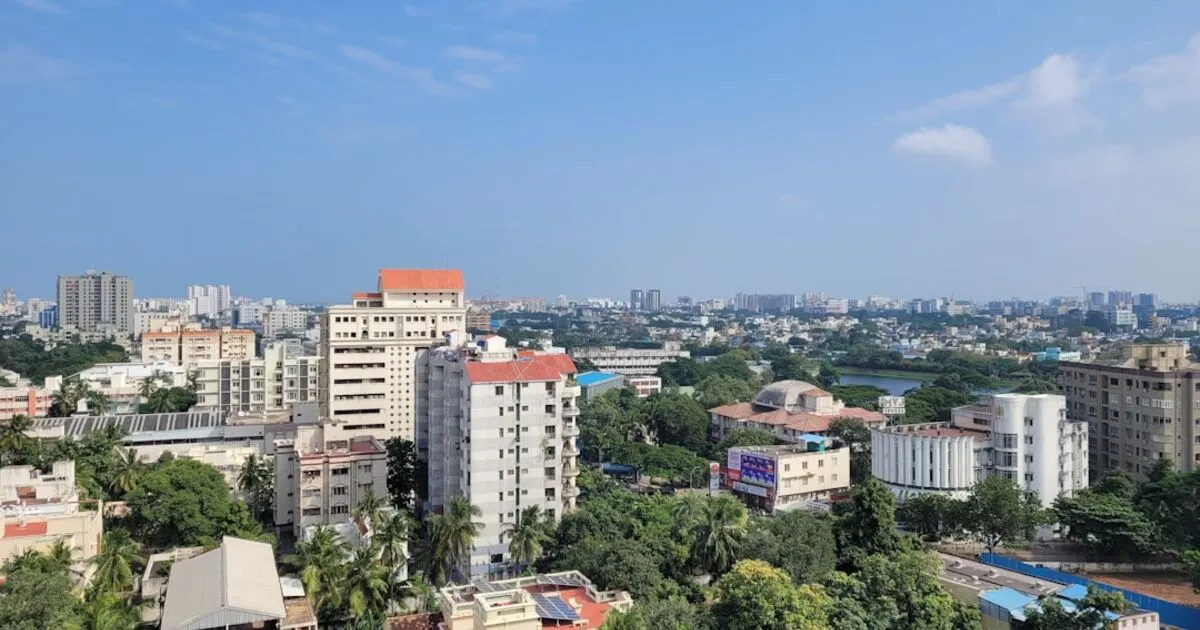
Chennai
About Chennai Real Estate
Chennai — India's fourth-largest city and the capital of Tamil Nadu — is one of the country's most resilient and fundamentally driven real estate markets. Unlike speculative hotspots, demand here is anchored in hard economic reality: a massive IT/ITeS corridor along Old Mahabalipuram Road (OMR), one of Asia's largest automobile manufacturing clusters at Oragadam and Sriperumbudur, a thriving port economy, and a growing financial services and BPO sector. Major employers include Infosys, TCS, Cognizant, Hyundai, Ford (historically), and dozens of global GCCs.
The city's residential market has been on a steady, non-euphoric growth trajectory. Between 2021 and 2025, prices across most localities appreciated 30–50%, with certain micro-markets nearly doubling. Crucially, this growth is end-user led — not speculative — which means corrections tend to be shallow and brief. In 2025, Chennai emerged as the standout performer among India's top seven residential markets, recording 31% year-on-year sales growth to reach 14,837 units, even as some larger metros saw double-digit declines. New launches also grew 45% — the highest supply growth among all tracked cities. The market is firmly in a sustained, healthy expansion phase, not a speculative boom.
Why Invest in Chennai
Price Appreciation: The Hard Numbers
Chennai property prices have delivered consistent, above-inflation returns across the board. Here is what the data shows across key corridors over the last five years:
- OMR (Old Mahabalipuram Road): Prices rose from approximately ₹4,800 to ₹6,950 per sq ft between 2020 and 2025 — around 45% appreciation in five years.
- Velachery: Up 41% over five years, 21% over three years.
- Avadi (North Chennai): Up 47.5% in five years, 24.2% in three years — one of the fastest-appreciating affordable pockets.
- Guindy, KK Nagar, Anna Nagar West: 3-year appreciations of 87%, 71%, and 70% respectively for select property types — among the highest in the city.
- Teynampet: A staggering 121% appreciation over three years, driven by scarcity and luxury demand in prime central Chennai.
Compare this to a fixed deposit returning roughly 7–7.5% annually, gold averaging about 12% per year over five years, and the Nifty 50 returning 15–17% (with significantly higher volatility). Real estate in the right Chennai micro-market has delivered comparable or better returns with far lower liquidity risk for long-term holders — while also generating a rental income stream of 3–6% per annum.
Infrastructure Projects Driving the Next Wave
- Chennai Metro Phase II (₹63,246 crore): A transformative 118.9 km network of 128 stations across three corridors — Corridor 3 (Madhavaram to SIPCOT, 45.8 km), Corridor 4 (Lighthouse to Poonamallee Bypass, 26.1 km), and Corridor 5 (Madhavaram to Sholinganallur, 47 km). The Yellow Line (Corridor 4) partial stretch from Poonamallee Bypass to Vadapalani is targeted for operation in 2026. The full Phase II network is expected to be completed in sections between 2026 and 2028. Once done, Chennai's metro will span 173 km.
- Chennai Peripheral Ring Road (₹12,301 crore): A 132.87 km, six-lane, access-controlled expressway linking Ennore Port to Mahabalipuram — Chennai's first expressway of its kind. Section 4 (Sriperumbudur to Singaperumalkoil) is fully constructed; Section 3 is 79% complete. Full operational target is 2026.
- Bengaluru–Chennai Expressway (NE7, 262 km): This greenfield, four-lane access-controlled expressway connecting Sriperumbudur (Tamil Nadu) to Hoskote (Karnataka) is expected to be fully commissioned by mid-2026. This will cut travel time between the two cities to approximately 2.5 hours and turbocharge land values around Sriperumbudur and the OMR–GST corridor.
- Parandur Greenfield Airport: A second international airport for Chennai, planned near Parandur (about 55 km from the city centre). The project is in advanced approval stages and is expected to eventually relieve pressure off Chennai International Airport, creating a new real estate growth axis along the Poonamallee–Sriperumbudur belt.
- GCC Climate Budget (₹1,341 crore): The Greater Chennai Corporation has allocated substantial funds for stormwater drain construction (240+ km), lake restoration, and flood mitigation — directly addressing buyer concerns about flooding risk.
Price Trends
Locality-Wise Property Price Data (2025–2026)
| Locality | Avg Price (₹/sq ft) | 1-Year Change | 3-Year Change | Segment |
|---|---|---|---|---|
| Nungambakkam | ₹19,850 | ~5% | ~25% | Ultra-Premium |
| T Nagar / Teynampet | ₹17,600–₹15,000+ | ~6% | 121.6% | Premium–Luxury |
| Mylapore | ₹15,000 | -2.0% | -6.8% | Premium (oversupplied) |
| Porur | ₹7,650–₹14,050 | 7.3% | ~35% | Mid-Premium |
| Velachery | ₹8,650–₹11,600 | 2.2–8.1% | 21.3% | Mid-Premium |
| OMR (Sholinganallur–Navalur) | ₹7,000–₹10,800 | 4.5–6% | 29.6% | Mid-Premium |
| Anna Nagar | ₹10,000–₹13,000 | ~8% | ~40% | Premium |
| Medavakkam / Perumbakkam | ₹5,500–₹8,100 | ~6% | ~22% | Mid-Segment |
| Madhavaram | ₹7,400–₹7,800 | ~8% | ~45% | Affordable–Mid |
| Avadi | ₹5,900 | 8.3% | 24.2% | Affordable |
| Tambaram / Chromepet | ₹4,500–₹6,000 | ~7% | ~20% | Affordable–Mid |
Which areas are appreciating fastest — and why? The data tells a clear story. Central localities like Teynampet have skyrocketed due to extreme land scarcity and luxury demand, but these may be harder to sustain. The real action for investors is in the mid-ring: Madhavaram, Avadi, and Porur are all benefitting directly from Metro Phase II corridors — properties near upcoming metro stations are pricing in future accessibility. OMR's 29.6% three-year appreciation is driven by relentless IT employment demand; Velachery's slightly slower growth reflects its already-elevated base price. Notable red flag: Mylapore has actually declined about 2% year-on-year and nearly 7% over three years — a reminder that even heritage localities can face headwinds when supply exceeds demand or properties age without renovation.
Top Localities for Homebuyers
1. Anna Nagar — The All-Rounder
Arguably Chennai's most livable locality for families. Anna Nagar is planned, green, and well-maintained — rare in a South Indian metro. It has excellent schools (DAV, SBOA, Chettinad Vidyashram all within 3–5 km), hospitals (Fortis Malar, Apollo nearby), and shopping at City Centre Mall. Prices run ₹10,000–₹13,000/sq ft, which is expensive but justifiable given the quality of life. Best for: established families and senior professionals who want zero compromise on amenities.
2. Velachery — The IT Commuter's Sweet Spot
Positioned between OMR and Guindy, Velachery gives professionals access to both corridors without living in either. The Velachery MRTS station and metro proximity make car-free commuting viable. Prices of ₹8,650–₹11,600/sq ft are at a slight premium over OMR but justified by superior social infrastructure. Best for: working professionals with families, NRIs seeking rental income (average monthly rent ₹30,581).
3. OMR (Sholinganallur to Navalur) — The IT Corridor
This 25-km stretch is the backbone of Chennai's technology economy. TIDEL Park, Ascendas IT Park, RMZ Millennia, Ramanujan IT City — the employment density is extraordinary. Sholinganallur and Thoraipakkam offer the best combination of proximity to work, established gated communities, and strong rental yields. Navalur and Padur are popular for ready-to-move apartments with strong demand from mid-level IT employees. Prices average ₹7,000–₹10,800/sq ft. Best for: IT professionals and investors targeting rental income.
4. Porur — West Chennai's Rising Star
Porur has transformed from a peripheral suburb to a legitimate residential hub, largely because of its access to DLF Cybercity, L&T Infotech, and the upcoming Metro Phase II Yellow Line. At ₹7,650–₹14,050/sq ft, it offers better value than central Chennai for similar employment access. Average monthly rent of ₹28,229 makes it attractive for landlords too. Watch for traffic congestion on the Porur junction approach — it remains a daily frustration for residents.
5. Medavakkam / Perumbakkam — Value for Families
These adjacent localities in South Chennai offer genuine value for first-time buyers and budget-conscious families. Multiple schools, the nearby Velachery MRTS link, and proximity to OMR employment without OMR pricing make these areas compelling. Casagrand Zenith at ₹8,100/sq ft is one of the most searched projects here. Best for: first-time homebuyers with a ₹50–80 lakh budget.
6. Madhavaram — North Chennai's Quiet Achiever
Often overlooked but delivering impressive numbers — prices have grown from ₹4,500 to ₹7,400–₹7,800/sq ft over five years, with early investors seeing over 50% returns. The Metro Phase II Red Line connecting Madhavaram to SIPCOT will be a game-changer once operational. Social infrastructure is catching up fast. Best for: patient investors and budget buyers willing to trade immediate convenience for future appreciation.
7. Nungambakkam — Premium Central Living
Home to corporate offices, consulates, and Loyola College. This is premium Chennai real estate at ₹19,850/sq ft — prices that reflect extreme land scarcity. Kilpauk Metro Station on the Green Line is nearby. Traffic and lack of green space are genuine negatives. Best for: high-income families, expats, and those who need to be in the central business district daily.
8. Tambaram / Chromepet — Affordable South Chennai
Still one of Chennai's best-value corridors for genuine homebuyers. At ₹4,500–₹6,000/sq ft, a 1,000 sq ft 2BHK in a decent project is achievable under ₹60 lakh. GST Road connectivity is strong, and Chromepet itself has good schools. The catch: distances from major IT employment hubs mean longer commutes. Best for: budget-first buyers, government employees, and small business owners.
9. ECR (East Coast Road) — Scenic Living with a Trade-off
ECR is Chennai's aspirational address for those who want beach proximity and boutique resort-style living. Premium villas and high-end apartments dot the coastline. The scenery is unmatched, restaurants are excellent, and the air quality is better than inland areas. The downside is real: connectivity to employment hubs is poor, flooding risk during the northeast monsoon is genuine, and coastal erosion is a long-term concern for plots very close to the shoreline.
10. Avadi — Affordable North Chennai with Metro Upside
At ₹5,900/sq ft average, Avadi is among the most affordable localities with real appreciation potential. Land prices have jumped 47.5% over five years. Industrial employment nearby (defence establishments, manufacturing) and the proposed Metro extension to Avadi make this a credible long-term choice. Social infrastructure is still developing — factor in school and hospital distances before committing.
Top Localities for Investors
1. OMR / Sholinganallur — High Yield, Steady Appreciation
The most reliable investment corridor in Chennai. Rental yield of 6% — the highest in the city — combined with 4.5–6% annual price growth and a vast, stable tenant base of IT professionals creates a compelling risk-return profile. Average monthly rent of ₹35,468 for a 2BHK means rents comfortably service home loan EMIs. The pending Metro Phase II Corridor 5 (Madhavaram–Sholinganallur) will add further access and demand once operational by 2027–28.
2. Madhavaram — Pre-Metro Pricing
Madhavaram is at a pricing inflection point. At ₹7,400–₹7,800/sq ft, it remains affordable relative to its connectivity future. Metro Phase II Corridor 3 (Madhavaram to SIPCOT) and Corridor 5 (Madhavaram to Sholinganallur) both originate here — when operational, Madhavaram will effectively be a transfer hub. Investors who bought in 2020 have already seen 50%+ gains. Still room to run before metro completion.
3. Porur / Valasaravakkam — Yellow Line Beneficiary
The Metro Phase II Yellow Line (Lighthouse to Poonamallee) passes through Porur, Valasaravakkam, Saligramam, Vadapalani, and Kodambakkam. Properties adjacent to upcoming stations are already repricing. Appreciation in nearby zones has touched double digits in recent periods. Current pricing of ₹7,650/sq ft for Porur represents a buying window before stations go operational. West Chennai's industrial and IT employment base (DLF Cybercity) provides organic rental demand.
4. Pallavaram — Airport Proximity + New Projects
Pallavaram has emerged as an investment hotspot in 2025–26 with significant new project launches and strong capital appreciation. Its location directly under the Chennai International Airport flight path (approximately 3 km from the terminal) means existing employment, logistics demand, and transit connectivity. The upcoming Parandur greenfield airport project, once confirmed, may also create secondary benefits for the GST Road corridor that Pallavaram sits on.
5. Sriperumbudur / Oragadam — Industrial Zone Appreciation
These satellite towns are Chennai's manufacturing spine. Hyundai, Kia, Flextronics, Nokia, and dozens of tier-1 suppliers employ hundreds of thousands of workers. The Bengaluru–Chennai Expressway (NE7), expected fully operational by mid-2026, will dramatically cut travel time to Bengaluru and increase Sriperumbudur's attractiveness for logistics and industrial real estate. Residential plots here are affordable — expect 3–5 years for meaningful appreciation, but the thesis is strong.
6. Avadi — Highest 5-Year Appreciation in the Affordable Segment
Avadi has delivered 47.5% appreciation over five years at a very low base price, making it one of the best risk-adjusted bets in North Chennai. The proposed Metro extension from Koyambedu to Avadi (21.6 km, state government approved) will be the next catalyst. Land prices have appreciated 165.5% over 10 years — patient capital is handsomely rewarded here. Rental yield is modest, so this is strictly a capital appreciation play.
Infrastructure & Connectivity
Chennai Metro — Phase I (Operational)
Chennai's existing metro network spans 54.1 km with 41 stations across two lines:
- Green Line (Line 1): Wimco Nagar to St Thomas Mount — 23.1 km, 18 stations. Key stations: Wimco Nagar, Tiruvottiyur, Korrukupet, Washermanpet, Broadway, Chennai Central, Government Estate, LIC, AG-DMS, Teynampet, Nandanam, Saidapet, Little Mount, Guindy, St Thomas Mount.
- Blue Line (Line 2): Wimco Nagar to Chennai Airport — 31 km, 23 stations. Key stations: Wimco Nagar through Egmore, Kilpauk, Arumbakkam, Koyambedu, Vadapalani, Ashok Nagar, Ekkattuthangal, Guindy, Chennai Airport.
Chennai Metro Phase II (Under Construction)
- Corridor 3 / Purple Line: Madhavaram to SIPCOT — 45.8 km, expected completion 2028
- Corridor 4 / Yellow Line: Lighthouse to Poonamallee Bypass — 26.1 km, 27 stations. Key stations include: Lighthouse, Alwarpet, Nandanam, Kodambakkam, Vadapalani, Saligramam, Valasaravakkam, Porur Junction, Ramachandra Hospital, Poonamallee. Partial stretch (Poonamallee Bypass to Vadapalani) targeted for launch in 2026.
- Corridor 5 / Red Line: Madhavaram to Sholinganallur — 47 km, 48 stations, expected completion 2028
- Total Phase II cost: ₹63,246 crore. Once complete, the full network will be 173 km.
Road Network
- Chennai Peripheral Ring Road (CPRR): 132.87 km, 6-lane access-controlled expressway from Ennore Port to Mahabalipuram. Cost ₹12,301 crore. Section 4 complete; partial opening expected 2026.
- Bengaluru–Chennai Expressway (NE7): 262 km greenfield 4-lane expressway connecting Sriperumbudur to Bengaluru. Full commissioning expected mid-2026.
- Chennai Outer Ring Road (ORR): Already operational, connecting major employment corridors in the west and south.
- GST Road (NH48), OMR (Rajiv Gandhi Salai), ECR, GNT Road, Anna Salai: Primary arterials providing connectivity across city quadrants.
Airport
Chennai International Airport (MAA) is located in Meenambakkam, approximately 16 km from T Nagar (20–35 minutes by road, depending on traffic). The airport is served by the Blue Line Metro (Chennai Airport station), making it one of the few Indian airports with direct metro connectivity. An international expansion is ongoing. The Parandur Greenfield Airport, proposed about 55 km west of the city, is in the planning and land acquisition stage.
Rail & Bus
Chennai Central and Chennai Egmore are the two major railway stations, handling long-distance trains to all major Indian cities. The MRTS (Mass Rapid Transit System) runs from Beach to Velachery (21 km), and is being merged with Chennai Metro Rail for unified operations. Chennai's CMBT (Chennai Mofussil Bus Terminus) in Koyambedu is among the largest bus terminals in Asia, with services to all Tamil Nadu districts and neighbouring states.
Government Policies & Regulations
TNRERA — Tamil Nadu's Real Estate Regulator
The Tamil Nadu Real Estate Regulatory Authority (TNRERA) is the state's RERA body, established in 2017. Its official website is tnrera.in, and its office is located at No. 1A, 1st Floor, Gandhi Irwin Bridge Road, Egmore, Chennai – 600008. All projects where land area exceeds 500 sq m or the unit count exceeds eight must be registered with TNRERA before any marketing or sale.
As a buyer, you should always verify a project's TNRERA registration number before booking. Unregistered projects are a red flag — TNRERA has levied fines of up to 10% of project value and criminal penalties against violators. TNRERA also allows buyers to file complaints online for issues like delayed possession, non-delivery, or structural defects.
Stamp Duty & Registration Charges
Tamil Nadu has one of the highest stamp duty and registration burdens in India. Budget accordingly:
- Stamp Duty: 7% of the guideline value or actual sale price, whichever is higher
- Registration Fee: 4% of the guideline value or actual sale price, whichever is higher
- Total effective burden: 11% on your property's value — among the steepest in the country
- Women buyers concession (from April 2025): Women purchasing property valued below ₹10 lakh pay a reduced registration fee of 3% instead of 4%
- Guideline value: Set by the Tamil Nadu Registration Department, varies by locality. In urban Chennai, guideline values have been revised upward significantly. Always check the TNREGINET portal before finalising your deal price — if the guideline value exceeds your deal price, duty is calculated on the higher amount.
Practical example: On a ₹60 lakh apartment, stamp duty alone is ₹4.20 lakh and registration fee is ₹2.40 lakh — a total of ₹6.60 lakh in government charges on top of your purchase price. A further 1–2% in transfer charges and other incidentals can push your total acquisition cost to 12–13% above the base price. Plan this as part of your home loan budget.
Recent Policy Developments
- Tamil Nadu introduced a composite valuation system for apartments in 2023, replacing the earlier separate land + building registration process, making registration faster for apartment buyers.
- Guideline values in Chennai can now be revised at shorter intervals under the 2025 update, meaning the gap between market prices and guideline values may close faster — increasing stamp duty outgo for buyers in rising localities.
- A new rule from May 2025 prohibits builders from blocking public roads with walls or gates in residential layouts, improving urban planning in new housing developments.
- CMDA (Chennai Metropolitan Development Authority) oversees building approvals and FSI norms; the DTCP (Directorate of Town and Country Planning) governs suburban areas outside the CMDA zone.
Living in Chennai
Climate — The Hardest Adjustment
Be honest with yourself before you relocate. Chennai has a tropical wet-and-dry climate with temperatures ranging from 25°C to 40°C through most of the year, and humidity that makes even 32°C feel brutal. The city experiences two monsoons — the southwest monsoon (June–September) brings moderate rain, while the northeast monsoon (October–December) dumps the bulk of annual rainfall in intense, sometimes flood-causing spells. The 2015 Chennai floods killed over 400 people and displaced millions. While the GCC has since invested in 240+ km of new stormwater drains and the government is taking flood risk more seriously, buyers of properties in low-lying areas (particularly parts of OMR, Velachery, and Perungudi) should check flood zone maps before purchasing.
Water Supply — A Real Concern
Water scarcity is a genuine quality-of-life issue in Chennai, particularly during April–June before the monsoons arrive. The city depends on four major reservoirs (Red Hills, Cholavaram, Poondi, Chembarambakkam) plus desalination plants and tanker supply. In drought years, areas in North Chennai and parts of the suburban periphery can go days without piped supply, forcing expensive tanker dependency. New gated communities with borewells and rainwater harvesting systems fare better. When choosing a property, ask specifically about the project's water sourcing strategy — it is not a trivial question in Chennai.
Air Quality & Environment
Chennai's air quality is moderate by Indian metro standards — generally better than Delhi, Mumbai, or Bengaluru's peak pollution days. The city benefits from sea breeze along coastal areas and the northeast monsoon's cleansing effect. Industrial zones in North Chennai and around GST Road have poorer air quality. ECR and Besant Nagar command a premium partly because of their cleaner coastal air.
Safety
Chennai is widely regarded as one of India's safest major cities. Its crime rate is low compared to Delhi-NCR or Mumbai, and residents — including women — consistently rate it as relatively safe for daily life. The people are known to be welcoming, and the city has a stable social fabric underpinned by strong community and neighbourhood culture.
Food, Culture & Weekend Getaways
Chennai punches well above its weight on food culture. From hole-in-the-wall idli-dosa places to fine dining at ITC Grand Chola and Hyatt Regency, the range is genuinely impressive. Marina Beach — the world's longest urban beach — is a 4 km promenade that hundreds of thousands use daily. Kapaleeshwarar Temple in Mylapore, the San Thome Cathedral, and the Semmozhi Poonga botanical garden are cultural anchors. Weekend escapes are excellent: Mahabalipuram (UNESCO World Heritage Site, 60 km south via ECR), Pondicherry (150 km, 2 hours), Tirupati (approximately 135 km), and Yelagiri Hills for cooler weather. Shopping malls include Phoenix Marketcity (Velachery), Express Avenue (Royapettah), and VR Chennai (Anna Nagar). Loyola College, IIT Madras, and IIM Calcutta's Chennai campus represent the city's deep commitment to education.
Traffic
Traffic congestion is real and worsening, particularly on OMR during IT peak hours (8–10 AM, 6–8 PM) and on arterials like Anna Salai, Arcot Road, and the Porur junction. The metro does help meaningfully for those near stations. When evaluating a property, check the commute at peak hour specifically — a 12 km distance can take 45–60 minutes in the wrong corridor.
FAQ
Is Chennai good for property investment in 2025–26?
Yes, for the right reason: Chennai's demand is end-user driven, not speculative. JLL data confirms 31% sales growth in 2025, the highest among India's top seven cities. Rental yields of 3–6% in key localities plus 7–15% annual price appreciation in select corridors make Chennai competitive with other metros. It is not a get-rich-quick market — it is a steady, reliable wealth-building market. The biggest risks are floods (in low-lying micro-markets) and water scarcity impacting liveability.
What is the best area to buy a flat in Chennai?
It depends entirely on your purpose. For families, Anna Nagar, Velachery, and Adyar remain the gold standard — superb schools, hospitals, and daily convenience, albeit at ₹8,000–₹13,000/sq ft. For IT professionals, OMR (Sholinganallur to Navalur) is unbeatable for work-life proximity at ₹7,000–₹10,800/sq ft. For investors seeking appreciation, Madhavaram and Porur near upcoming metro stations offer the best forward-looking value. For first-time buyers on a budget, Medavakkam, Tambaram, or Avadi deliver decent homes under ₹50–60 lakh.
Chennai vs Bengaluru — which is better for real estate investment?
Both are compelling but serve different buyer profiles. Bengaluru prices have risen sharply over 2022–24 and are now at a higher base; Chennai still offers relative affordability with better rental yields in comparable corridors. Bengaluru's IT employment base is deeper. Chennai wins on stability, lower speculative risk, and upcoming infrastructure investment. For pure capital appreciation over 5 years, both are strong; for rental yield today, Chennai's OMR edge is hard to beat. Chennai also has significantly lower stamp duty and registration rates than Karnataka — wait, it does not: Tamil Nadu's 11% total stamp duty + registration is actually among the highest in India, compared to Karnataka's roughly 5.6% stamp duty. This is a genuine cost disadvantage for Chennai buyers and must be factored into ROI calculations.
What is the property price forecast for Chennai in 2026–2028?
The underlying fundamentals — IT employment growth, Metro Phase II completion, the Bengaluru–Chennai Expressway, and the Peripheral Ring Road — all point to continued appreciation in the 7–12% annual range for well-located properties. Areas near soon-to-open Metro Phase II stations (Porur, Madhavaram, Sholinganallur along Corridor 5) are likely to see above-average growth as construction uncertainty clears. Affordable peripheral areas tied to the Bengaluru–Chennai Expressway (Sriperumbudur, Oragadam) could see sharper moves. Central Chennai pricing is near saturation — expect moderate 4–6% appreciation there.
What is the stamp duty in Chennai?
Stamp duty in Chennai (and all of Tamil Nadu) is 7% of the guideline value or actual market value, whichever is higher. Registration fee is an additional 4%, making the total 11% — one of the highest in India. On a ₹1 crore property, you will pay ₹7 lakh in stamp duty and ₹4 lakh in registration fee, totalling ₹11 lakh in government charges. Budget this before you finalise your loan amount. You can check current guideline values for any specific survey number on the TNREGINET portal (tnreginet.gov.in).
How do I verify if a Chennai project is RERA registered?
Visit tnrera.in and search by project name, developer name, or RERA registration number (which all registered projects must display in their advertisements). Always do this before paying even a token advance. TNRERA has taken strict action — fines, criminal charges, and refund orders — against builders who sell without registration. For complaints post-purchase, you can file online through the TNRERA portal for a nominal fee; cases are typically resolved within 60 days.
What are the risks of buying property in Chennai?
Be aware of these specific risks: (1) Flood risk in parts of OMR, Velachery, Perungudi, and low-lying South Chennai — check FEMA flood maps and confirm your specific survey number's elevation. (2) Water scarcity in suburban pockets, particularly North Chennai — ask your developer about the project's independent water sourcing. (3) High transaction costs — at 11–13% in stamp duty and charges, your breakeven horizon on resale is 2–3 years at minimum. (4) Project delays — always check TNRERA for project status and ensure your builder has a clean delivery record. (5) Traffic congestion on OMR — do the commute at peak hour before you decide, not after.
Localities in Chennai
Projects in Chennai
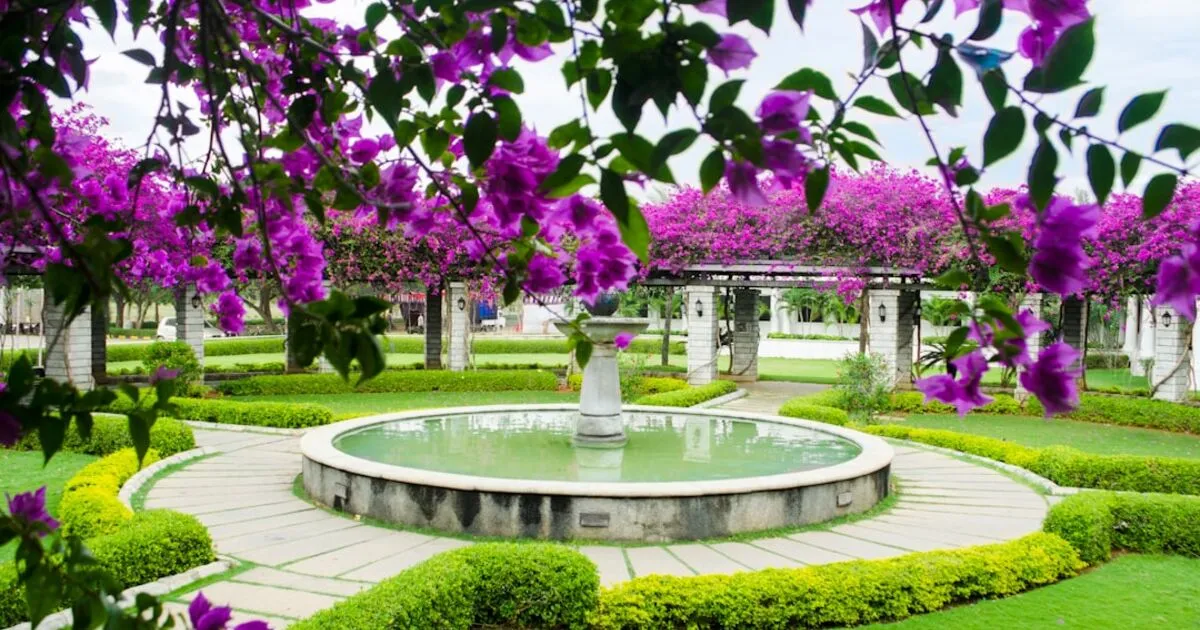
Prestige Pallavaram Gardens
₹1.05 Cr – ₹3.42 Cr